Why How You Display Your Graded Cards Matters More Than You Think
You spent months hunting down that PSA 10 rookie card. You paid for grading, waited weeks for the results, and now it sits in a drawer. Or worse — on a shelf in a cheap plastic case that yellows in six months and offers zero UV protection.
The truth is simple: a graded card is an investment, and how you display it is part of that investment. The right display doesn't just protect your cards from light damage, dust, and accidental bumps. It transforms your collection from a hidden stack of plastic slabs into something you actually want to look at every day — and something that impresses anyone who walks into your room.
Whether you're working with a single desk corner or an entire collector room, this guide covers the best graded card display ideas for every budget, space, and collection size.
Part 1: Desktop Display Ideas — Making Your Best Cards the Centerpiece
Single-Slab Desktop Display: The Statement Piece
For your absolute best card — the one that makes your heart skip a beat — nothing beats a premium single-slab display case. These cases elevate the card to eye level, protect it with UV-filtering glass or acrylic, and turn it into a legitimate piece of room decor.
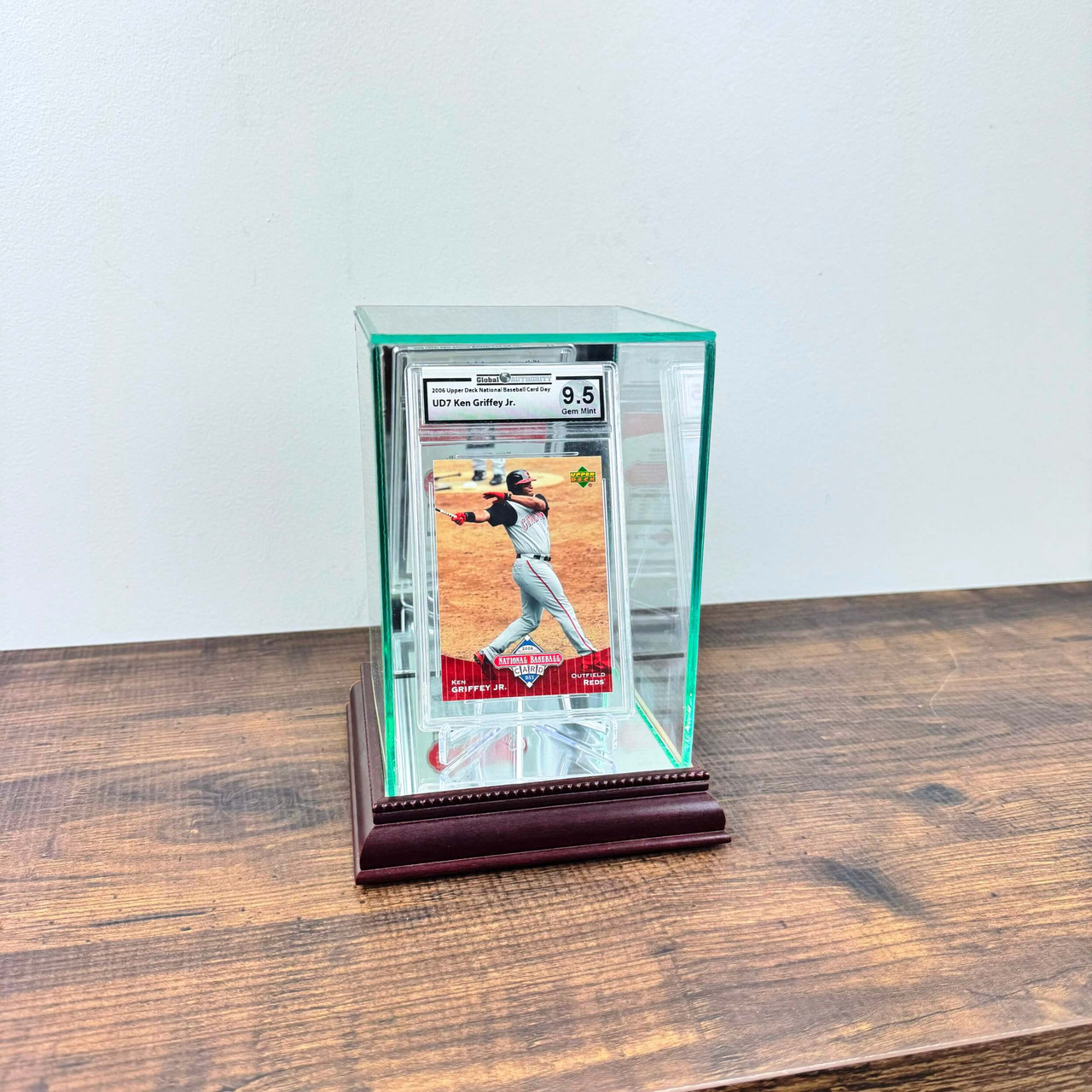
Premium single graded card desktop display case with UV-protective glass and solid wood base — perfect for your most valuable card as a desk centerpiece
The key features to look for:
-
UV-filtering material (glass or acrylic with 98%+ UV blockage)
-
Weighted base to prevent tipping
-
Vertical orientation so the card faces you at eye level while seated
-
Proper slab fit — no rattling, no shifting
A single-slab display on your desk, bookshelf, or nightstand turns your best card into a daily reminder of why you collect. It's the first thing people notice when they enter your space.
Multi-Slab Desktop Frames: Telling a Story
Some cards belong together. A trio of cards from the same set. Your PSA 10, 9, and 8 of the same rookie. A complete evolution line from your favorite Pokémon set. Multi-slab desktop frames let you group related cards into a single visual narrative.
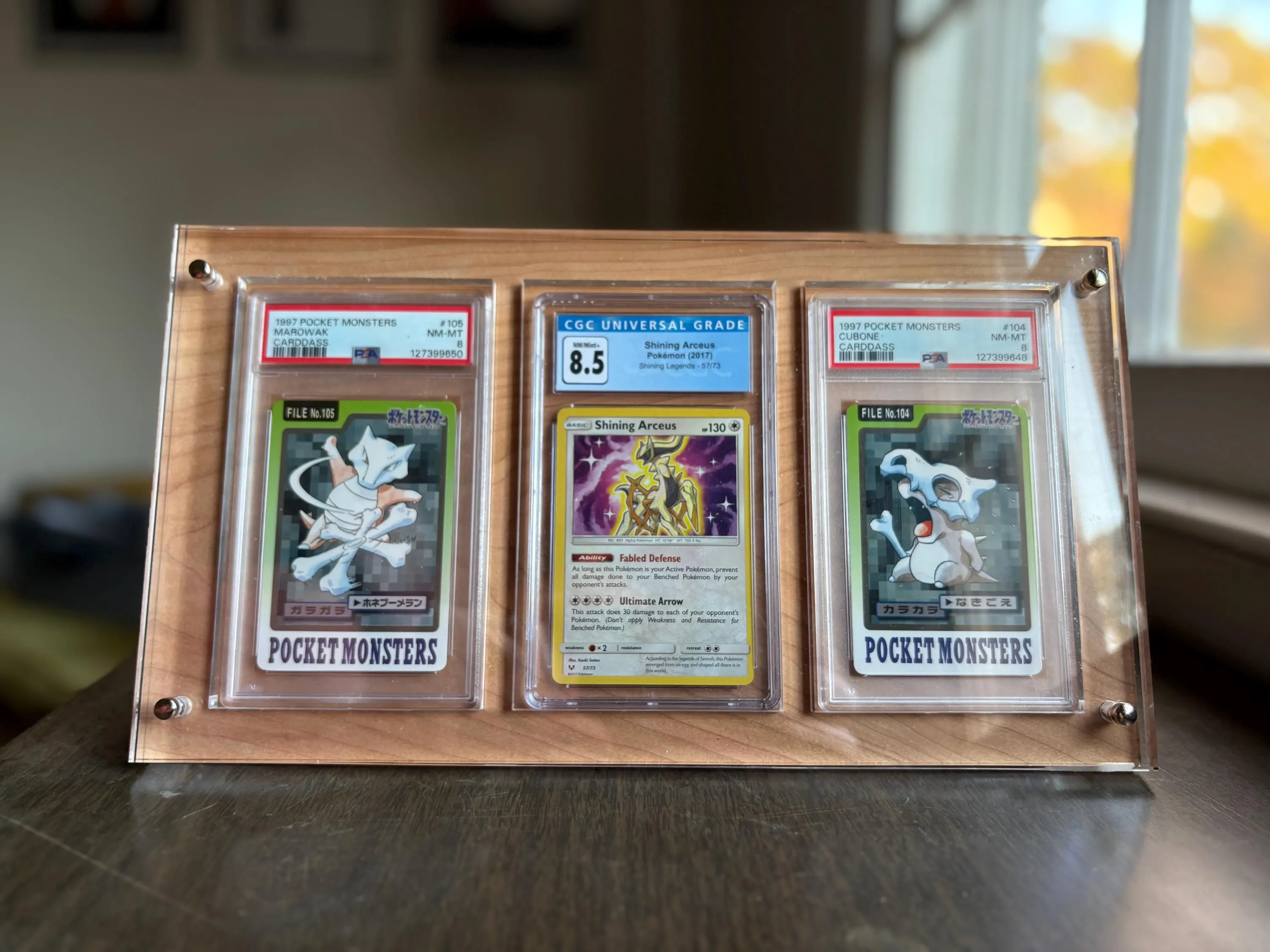
Acrylic and solid wood multi-slab desktop display frame — ideal for grouping related cards into a cohesive visual story
These frames work especially well for:
-
Set progressions (rookie, sophomore, MVP season)
-
Parallel variations (base, refractor, superfractor)
-
Theme collections (all cards from one player, one team, or one era)
The solid wood backing adds warmth and a gallery-quality feel that plain acrylic can't match.
Acrylic Stand Displays: Minimal and Modern
If your aesthetic leans modern and minimal, clear acrylic stand displays are the way to go. They disappear visually, letting the card itself be the star. No wood grain, no colored backing — just crystal-clear protection.
Clear acrylic PSA graded card display stand — minimalist design that puts full focus on the card itself.
These stands are perfect for:
-
Clean, contemporary desk setups
-
Photography and social media content
-
Temporary displays when you're deciding what to feature
The downside? They offer minimal UV protection compared to enclosed cases. Use them for cards you're actively showcasing, not for long-term display in bright rooms.
Part 2: Wall Display Ideas — Building Your Collector Room Gallery
Floating Wall Shelves: The Gallery Wall Approach
Floating shelves are the most flexible wall display option. You control the spacing, the height, and the number of cards per shelf. Want to display 50 cards in a grid? Done. Want to highlight 5 cards with generous spacing? Also done.
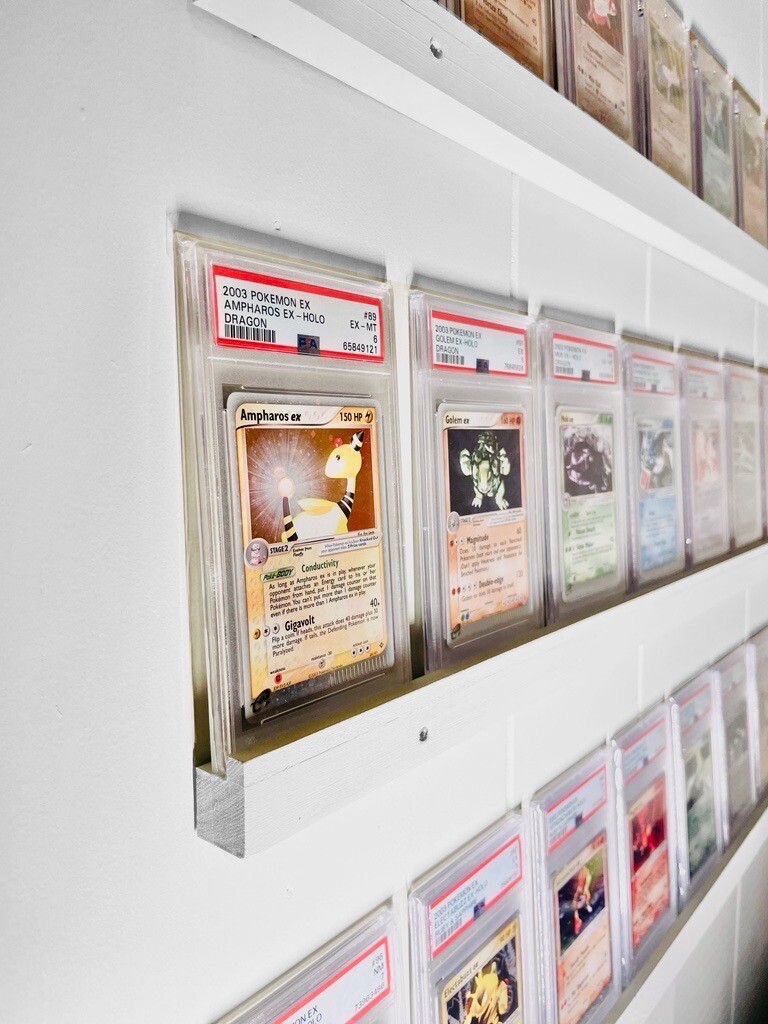
White floating wall shelves holding PSA graded slabs — clean gallery wall aesthetic for modern collector rooms.
The best floating shelves for graded cards have:
-
A shallow lip or groove that holds slabs upright without visible supports
-
Clean edges that don't distract from the cards
-
Sturdy mounting that can handle the weight of multiple slabs
Pro tip: Install shelves at varying heights to create visual rhythm. A straight grid looks organized; staggered heights look curated.
Lockable Wall Frames: Security Meets Style
If you're displaying high-value cards on a wall that visitors can access, a lockable frame adds peace of mind without sacrificing aesthetics. These frames look like standard picture frames but include a locking mechanism and UV-protective cover.
Lockable wall frame with pro-grade protection and compact design — security without compromising on style
Lockable frames are ideal for:
-
Collector rooms with frequent visitors
-
Office displays in professional settings
-
Cards worth $500+ that you want visible but protected
Multi-Slot Wall Cabinets: Maximum Impact Per Square Foot
When you have 20, 30, or 50+ graded cards to display, individual frames become impractical. Multi-slot wall cabinets solve this by housing dozens of slabs in a single, cohesive unit.
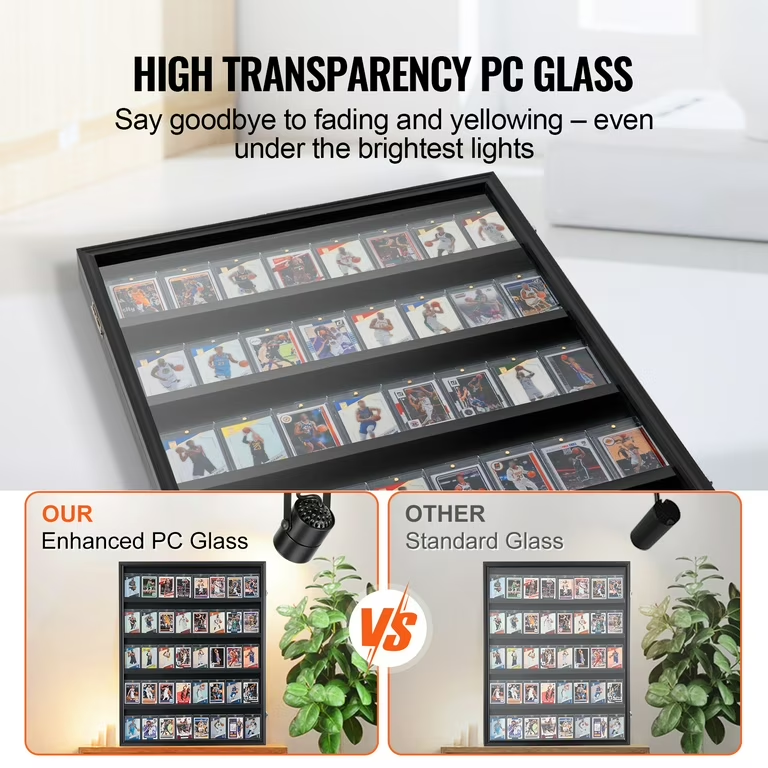
Full collector room wall display featuring multiple rows of graded card frames and shelves — maximum visual impact for large collections
These cabinets typically feature:
-
Solid wood or metal construction
-
UV-filtering acrylic or glass front
-
Individual slots sized for standard PSA/BGS slabs
-
Optional locks for security
The 35-slot version shown above is a popular choice for collectors building their first serious wall display. It offers enough capacity to showcase a meaningful portion of your collection while maintaining a clean, organized appearance.
Wood-Framed Display Cases: Classic Elegance
For collectors who want their display to feel like a museum piece, wood-framed cases with velvet backing offer unmatched elegance. The contrast between the dark backing and the colorful card art creates a striking visual effect.
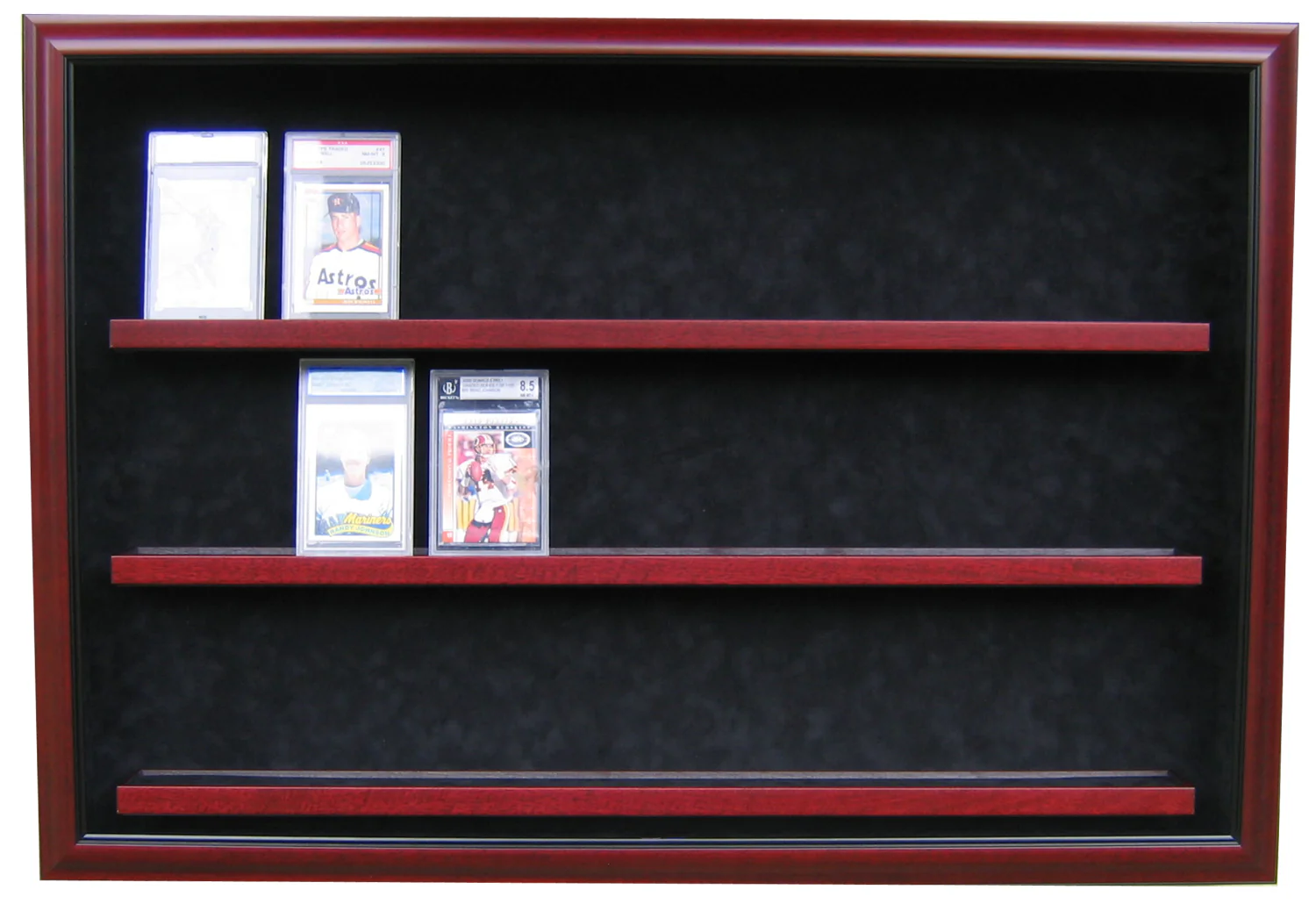
Wood-framed multi-slot display case with dark velvet backing — museum-quality presentation for serious collectors
These cases work beautifully in:
-
Traditional home offices
-
Man caves and collector dens
-
Spaces with warm wood tones and classic decor
Part 3: Collector Room Setup Ideas — Designing Your Space
The Feature Wall: Your Collection as Art
The most impactful collector room designs treat the card wall as the room's primary art installation. This means:
-
Dedicated lighting: LED strip lights above or below shelves eliminate shadows and make card colors pop
-
Consistent framing: Use the same style of display case throughout for a cohesive look
-
Negative space: Don't fill every inch. Let your best cards breathe.
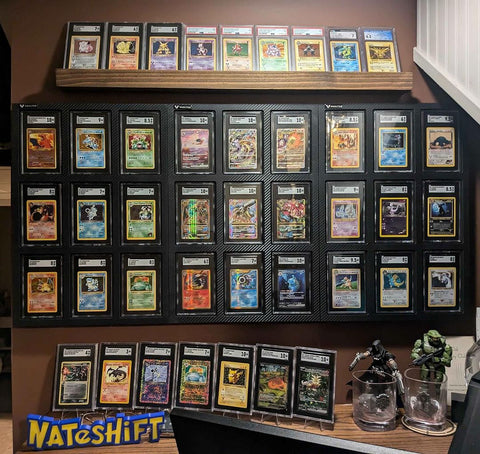
Collector room feature wall with multiple rows of graded card displays, wooden shelves, and themed decor — treating cards as legitimate art installations.
Notice how this setup uses multiple display types — wall frames, floating shelves, and desktop pieces — to create layers of visual interest. The result feels like a curated gallery, not a storage solution.
The Desk Setup: Productivity Meets Passion
Your desk is where you spend hours every day. Why not surround yourself with cards that inspire you?
A well-designed desk display includes:
-
One premium single-slab case as the focal point
-
A small multi-slab frame (3-5 cards) for variety
-
A tiered stand for cards you're currently researching or trading
Keep the display compact — you still need workspace. The goal is inspiration, not clutter.
The Corner Nook: Maximum Collection in Minimum Space
Not everyone has a dedicated collector room. A corner nook with a small bookshelf, a few floating shelves, and a desk display can house 30-50 graded cards in a space no larger than a reading chair's footprint.
Key elements:
-
Vertical storage: Use height to maximize capacity
-
Rotating display: Swap featured cards monthly to keep the space fresh
-
Ambient lighting: A small LED lamp adds warmth without UV damage
Part 4: Protection Essentials — What Every Display Needs
UV Protection: Non-Negotiable
UV light is the silent killer of card collections. Even indirect natural light causes ink fading and card stock yellowing over years. Every display case you use should specify its UV filtration percentage.
| UV Filtration | Protection Level | Best For |
|---|---|---|
| 99%+ | Excellent | Long-term display, high-value cards |
| 95-98% | Good | Medium-term display, rotating collections |
| <90% | Minimal | Short-term only, low-value cards |
"UV safe" without a percentage is marketing speak. Demand specifics.
Slab Fit: Snug, Not Tight
A display case that holds your slab too loosely allows movement, which causes corner wear over time. Too tight, and you're fighting to insert and remove cards. The ideal fit holds the slab firmly with zero wobble but releases with gentle pressure.
Material Quality: Cast vs. Extruded Acrylic
-
Cast acrylic: Higher clarity, better UV resistance, resists internal yellowing. Best for long-term display.
-
Extruded acrylic: Lower cost, adequate for short-term use. May cloud or yellow over 3-5 years.
For cards you plan to display for years, cast acrylic is worth the premium.
Part 5: Kaapai Display Solutions for Every Collector
Kaapai Magneto Single-Slab Display Case ($55-$60)
Best for: Your #1 card, the centerpiece of any desk or shelf
-
99.6% UV-resistant cast acrylic
-
Neodymium magnetic closure for effortless access
-
Precision fit for PSA, CGC, and SGC standard slabs
-
Clean, screw-free design
Kaapai Magneto Thick — Wide Slot Edition ($60-$65)
Best for: BGS sub-grade slabs and thick vintage holders
BGS sub-grade slabs run thicker than PSA standard. The Magneto Thick features an expanded slot depth that grips thick slabs securely without the rattling that damages corners over time.
Kaapai Magneto Base Stand ($85)
Best for: Desktop focal points that demand attention
Same premium protection as the standard Magneto, mounted on a sculptural weighted base. The vertical orientation puts your card at eye level from a seated position. This is the display that makes visitors ask about the case before they ask about the card.
Kaapai Multi-Slab Wall Cabinet ($80-$120)
Best for: Building your first collector room gallery wall
Solid wood construction, UV-filtering acrylic window, and included mounting hardware. Available in 24-slot and 50-slot configurations. The 50-slot version offers the lowest cost-per-card for serious collection walls.
Kaapai Nano Protective Case ($15-$21)
Best for: Bulk protection on a budget
Entry-level pricing with real UV specifications — not the "unspecified percentage" clear acrylic common in generic cases. Perfect for duplicate cards, backup PC pieces, or any slab that needs genuine protection without the premium price.
Part 6: Frequently Asked Questions (FAQ)
Q1: How do I protect my graded cards from UV damage when displaying them?
Use display cases with 99%+ UV filtration. Avoid direct sunlight entirely. Even the best UV protection can't fully compensate for hours of direct sun exposure. Position displays on interior walls away from windows, and consider LED lighting instead of natural light for illumination.
Q2: What's the best way to display a large graded card collection (100+ cards)?
Combine multi-slot wall cabinets (for your core display wall) with floating shelves (for flexible arrangements) and single-slab desktop cases (for rotating featured pieces). This layered approach gives you maximum capacity without making the room feel like a storage unit.
Q3: Can I mix PSA and BGS slabs in the same display case?
Only if the case is designed for both. BGS sub-grade slabs are thicker than PSA standard slabs. A case fitted for PSA will hold BGS too loosely, causing movement and corner wear. Look for cases with adjustable or wide slots, or use separate cases for each grading company.
Q4: Are magnetic closure display cases secure enough for valuable cards?
Yes, when built with quality neodymium magnets. Premium magnetic cases (like the Kaapai Magneto series) require intentional force to open — casual contact won't trigger them. The benefit is effortless access for rotation, which means you'll actually use the display instead of treating it as permanent storage.
Q5: How often should I rotate the cards in my display?
For long-term preservation, rotate every 3-6 months. This prevents uneven light exposure and gives you a chance to inspect each slab for any developing issues. It also keeps your display fresh — you'll rediscover cards you forgot you owned.
Q6: What's the ideal room environment for displaying graded cards?
Temperature: 18-22°C (65-72°F). Relative humidity: 45-55%. Avoid kitchens (grease and humidity fluctuations), bathrooms, and areas near heating vents. For high-value collections, a small dehumidifier maintains stable conditions year-round.
Q7: Should I display all my graded cards, or keep some in storage?
Display your top 10-20% — the cards that bring you joy, hold the highest value, or tell the best stories. Store the rest in archival boxes with silica gel packets. A curated display is more impactful than a crowded one, and stored cards face zero light or environmental risk.
Conclusion: Your Collection Deserves to Be Seen
Graded cards aren't meant to live in drawers. The grading process — the authentication, the encapsulation, the numeric grade — is all about preserving and validating value. Displaying them properly is the final step in honoring that investment.
Whether you're starting with a single desktop case or designing an entire collector room, the right display transforms your cards from hidden assets into daily sources of inspiration. It turns your space into something uniquely yours — a gallery of moments, players, and memories that matter.
The best display isn't the most expensive one. It's the one that makes you want to look at your collection every single day.
Ready to build your perfect display? Explore Kaapai's complete range of graded card display solutions — from single-slab magnetic cases to full wall cabinets, all engineered with 99.6% UV-resistant cast acrylic for the protection your collection deserves.