📦 Dark shoeboxes
65%
Inside a dark shoebox—out of sight, out of reach, and out of mind.


Not sure whether to choose the LED model or the standard model? This chart makes the choice clear—From lighting effects to suitable settings, you’ll know exactly which one fits your home best.
Shop Now
 |
Other Brands | |
|---|---|---|
| UNIVERSAL SLAB FIT | ✅ Universal (PSA, BGS, SGC, One-Touch) | ❌ Limited Sizing |
| FRAME REINFORCEMENT | ✅ 16-Screw Heavy-Duty Armor (8/Side) | ❌ Standard 8-Screw Frame |
| CORNER PROTECTION | ✅ Full-Coverage Aluminum Corner Armor | ❌ Basic Metal Bumpers |
| ACRYLIC PANEL | ✅ 6H Ultra-Thick (99%+ UV Block) | ❌ Basic Metal Bumpers |
| INTERIOR PROTECTION | ✅ Plush Flannel Velvet + Foam Risers | ❌ Standard Interior Foam |
| FREE-FORM STORAGE | ✅ Yes | ❌ RESTRICTED |
| TRANSIT PACKAGING | ✅ 5-Ply K=C Rigid Armor Box + Pearl Foam | ❌ Thin Single Carton |
Based on the hard-earned experience of seasoned collectors, here are the six most common mistakes that ruin precious cards—and how KAAPAI solves them from packaging, materials, to craftsmanship.
KAAPAI Product Highlights (Materials & Key Features):
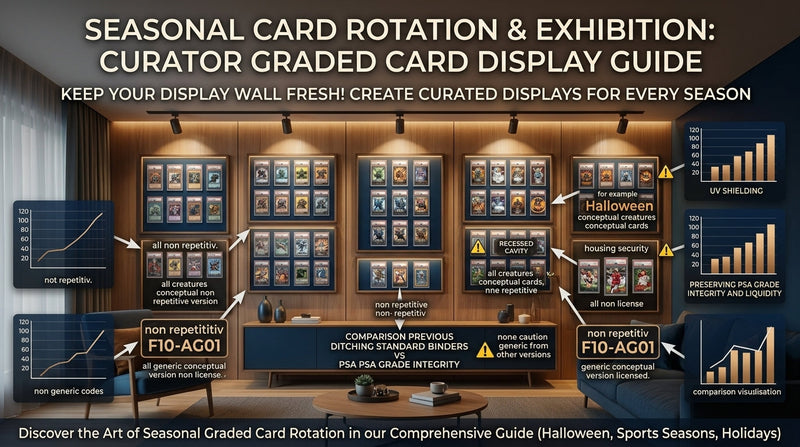
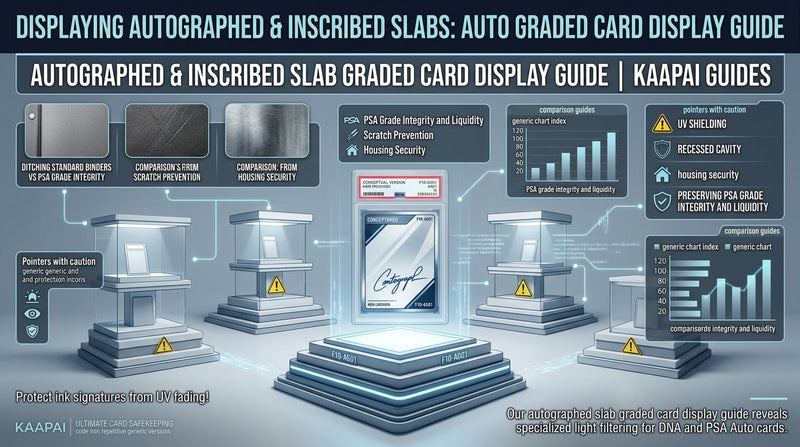
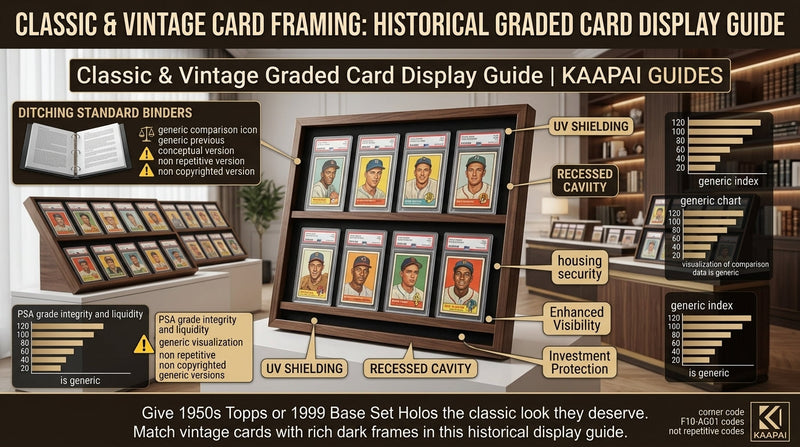
Indoor fluorescent lighting and sunlight streaming through windows emit strong UV radiation, which can cause grading labels and card foils to fade. KAAPAI display and storage cases are crafted from premium optical-grade acrylic with a 99% UV-blocking rate, protecting your graded cards (PSA/BGS/CGC) from photo-oxidation and fading caused by indoor light.
KAAPAI Optimized Solution (Design & Conversion):
Many flashy card holders sacrifice structural stability and card security for the sake of aesthetics. KAAPAI strikes a balance between an industrial-luxe aesthetic—featuring matte dark backgrounds and metallic accents—and absolute security. Each card enjoys its own "spotlight moment" without compromising structural integrity or increasing the risk of slipping.
KAAPAI Optimization Insights (Core Material):
Low-cost recycled acrylic tends to yellow and scratch easily, compromising visual quality. KAAPAI insists on using premium, virgin cast optical-grade acrylic with diamond-polished edges, ensuring over 93% light transmission, crystal-clear transparency, and zero optical distortion—even after years of display.
KAAPAI Optimization Insights (Product Details):
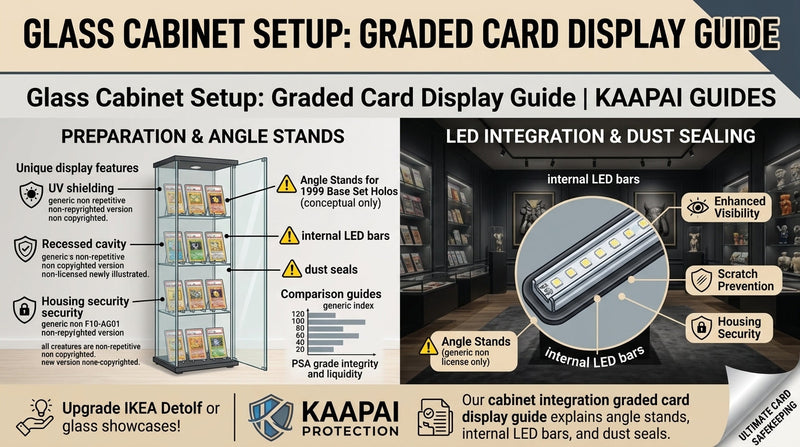
An overly tight slot exerts immense pressure on the card edges and the grading slab, potentially causing cracking or stress damage to the corners. KAAPAI utilizes a precision-molded, micro-tolerance internal slot design to ensure a snug fit that secures the slab without stress, while simultaneously protecting its fragile edges.
KAAPAI Optimized Solution (Packaging & Protection):
Standard storage methods often leave cards vulnerable to damage from moisture, dust, and minor vibrations during transit or storage. KAAPAI utilizes multi-layer, industrial-grade packaging and shock-absorbing internal structures to ensure your cards remain in pristine condition, whether in transit or in long-term storage.
KAAPAI Optimization Insights (Environmental Control & Conversion Rates):
Extreme dryness causes cardstock to warp, curl, and crack. KAAPAI advocates for optimal preservation conditions (temperature: 18–22°C; relative humidity: 45–55%). By educating collectors and providing precise environmental monitoring, KAAPAI has built exceptional brand trust, thereby achieving high conversion rates and customer loyalty on kaapai.com.


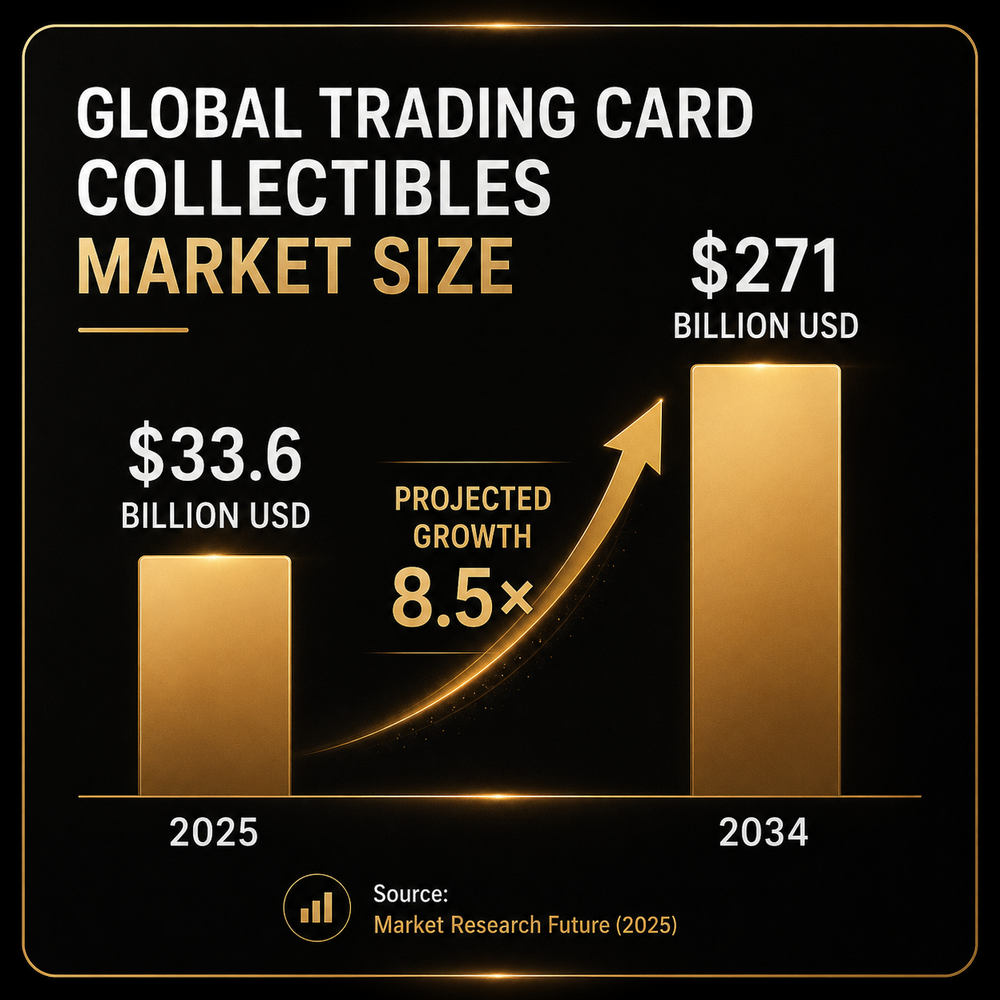
According to 2025 market data, the global trading card market has reached a valuation of $33.6 billion and is projected to grow to $271 billion by 2034. This means your collection is not merely a hobby—it is an asset. Yet, many collectors still keep their prized cards in:
A museum-grade showcase doesn't just display history—it freezes it in time, giving every graded card its defining moment in the spotlight.
🌡️ Temperature 18–22°C
Optimal environment for preserving collectibles.
💧 Relative Humidity 45–55%
Target range to prevent card warping, paper degradation, and mold growth in high-end graded cards.
🛡️ Humidity > 60%
High-risk zone: Prone to moisture damage, mildew on vintage cardboard, and slab fogging. KAAPAI's active sealing combats this.
📋 Humidity < 30%
Low-risk zone: Prone to extreme dryness, causing paper brittleness and cracking of older card stocks.

A 5-step guide to turning your cards from storage clutter into a gallery-worthy display.
Key question: Which cards deserve to be displayed, and which should be stored away?
Classification criteria:
Display-grade: PSA/BGS 9+ grades, limited editions, autographed cards, holographic cards → Must be displayed
Not sure which model to choose? Click here to take a quick 3-step quiz and find the perfect solution for you.


It is highly unlikely. Thanks to our proprietary four-layer protective system—featuring an outer K=C double-wall corrugated carton, EPE foam panel padding, full bubble-wrap encapsulation, and an internal shock-resistant aluminum alloy case—the unit can absorb heavy pressure and impact from drops coming from any direction. Even in extremely rough shipping conditions, it provides bank-vault-level security for your card case.
Because graded card cases—featuring acrylic panels and precision aluminum alloy structures—are highly vulnerable to rough handling during international cross-border shipping. We spare no expense by using military-grade, extra-thick 5-ply K=C double-corrugated cartons (an inner box plus an outer shipping box) paired with EPE foam and bubble wrap. This ensures that these cases and their internal components—valued at anywhere from thousands to over ten thousand yuan—arrive in the same flawless, factory-perfect condition, completely eliminating the risk of deformation, dents, or shattered panels during transit.
Rest assured. The KAAPAI TradeVault Pro features industrial-grade, thickened, shock-resistant outer packaging combined with high-density EPE internal cushioning, ensuring the case remains intact even during long-distance shipping and rough handling. The unit itself is equipped with impact-resistant corner guards and an aerospace-grade aluminum alloy body, providing dual-layer protection against deformation or scratches.
Absolutely not. 1. Outer Frame and Structure: It features an aluminum alloy body with an anodized finish and is reinforced with 16 heavy-duty screws (8 on each side). The structure is exceptionally robust, offering superior resistance to compression and deformation compared to standard card cases on the market. 2. Interior Lining: We have moved away from cheap, crumbly foam in favor of a premium plush velvet/flannel lining that feels incredibly soft to the touch. Combined with precision-engineered stepped foam risers, the interior fits the cards perfectly, providing scratch-free protection with zero friction.
The viewing window features an ultra-thick 4mm optical-grade acrylic panel with a 6H scratch-resistant coating. It blocks over 99% of UV rays, effectively preventing valuable cards from fading, yellowing, or losing value due to prolonged light exposure; at the same time, it offers excellent light transmission and visual clarity, delivering a museum-quality display.
Each KAAPAI TradeVault Pro set is packaged to industrial-grade protective standards. The complete package includes: 1. 1x Professional Trading Card Display Case: Features 4 removable EVA foam strips and 4 dedicated keys; holds up to 72 graded card slabs. 2. 1x High-density shock-absorbing bubble wrap roll: Used to wrap the case, providing superior shock absorption and cushioning. 3. 2x Pearl Cotton Foam Sheets: Precision-cut top and bottom cushioning pads to fully protect the case panels from scratches during transit. 4. 1x 5-ply K=C ultra-rigid double-walled corrugated shipping carton (inner box + outer box combination): Utilizes a "double-nested" compression-resistant structure designed for long-distance global cross-border shipping, capable of withstanding extreme drops and heavy pressure.
We have absolute confidence in our product's durability and packaging. If you notice severe damage to the outer packaging or any dents or damage to the product itself upon delivery, please take photos or a video immediately and contact our customer service team. We will promptly initiate a hassle-free claim process or provide a free replacement, ensuring you can own this premium card case with zero risk.
This case features universal compatibility for slabs. It perfectly fits slabs and protective cases from major grading companies—including PSA, BGS, and SGC—as well as magnetic holders (One-Touch). (For example, the high-capacity design can hold up to 72 graded slabs, depending on the specific model.)
It is ideal for trade shows. 1. Pro Vault Upgraded Security Lock: Features a heavy-duty, three-stage metal latch (avoiding flimsy plastic alternatives). It ensures a tight seal—preventing the lid from popping open if dropped—and effectively deters opportunistic theft at trade show venues. 2. Thoughtful Design Details: Equipped with a dampened hinge system (built-in lid stays) that allows the lid to remain securely open at a fixed angle. It functions as both a rugged "mobile vault" and a perfect "desktop display stand."
Its core advantage lies in materials and craftsmanship that offer a level of quality far superior to the competition. Standard card cases suffer from critical flaws—such as screws that easily come loose, thin acrylic prone to scratching, crumbling foam inserts, and fragile corner protectors. KAAPAI redefines the industry's highest protection standards by utilizing 16 heavy-duty screws, 4mm acrylic with a 6H hardness rating, full-coverage corner protectors, and a premium flannel lining.