Why Displaying Your One Piece Graded Cards Matters
The One Piece Trading Card Game (TCG) has exploded in popularity since its debut, with chase cards like the Monkey D. Luffy Manga Alternate Art and Shanks Alternate Art commanding significant premiums in PSA 10 and BGS 9.5+ grades. Once you've invested time and money into grading your cards, the next logical step is presenting them in a way that honors both the artwork and the grade.
A well-displayed collection does more than decorate a room. It protects your investment from UV damage, dust, and accidental impact while turning your slabs into conversation pieces. Whether you're showcasing a single grail card or building a full Straw Hat crew wall gallery, the right display strategy preserves condition and maximizes visual impact.
Choosing the Right Display Environment
Before selecting a case, evaluate your display environment. Light is the single biggest threat to graded cards over time. Ultraviolet (UV) rays fade holofoil surfaces, yellow card stock, and dull ink vibrancy—even through the slab's outer shell. Standard clear acrylic without UV treatment blocks almost no meaningful radiation, which means cards left near windows will degrade faster than those in protected storage.
Position your display away from direct sunlight. If natural light is unavoidable, invest in cases or cabinets with documented UV filtration ratings. Cases rated at 99% or higher UV resistance provide meaningful long-term protection, while lower-grade options may only delay fading rather than prevent it.
Temperature and humidity also matter. Avoid placing slabs near heating vents, radiators, or kitchens where steam and heat fluctuations can cause acrylic to warp or develop micro-cracks. A stable room temperature between 65°F and 75°F (18°C–24°C) with moderate humidity is ideal for preserving both the card and the display case itself.
Single-Slab Display: Spotlight Your Grails
For your highest-value One Piece cards—think PSA 10 Manga Rares or BGS Black Label 10s—a single-slab display case is the gold standard. These cases are engineered to fit PSA, BGS, CGC, and SGC slabs precisely, eliminating the wobble that causes corner wear over time.
Premium single-slab displays use cast acrylic with up to 99.6% UV resistance, neodymium magnetic closures, and optical-clear faces that won't yellow or cloud. The magnetic seal allows quick card rotation without tools, making it easy to swap your displayed piece when new acquisitions arrive. Some designs feature embedded iron cores that enable magnetic wall mounting, creating a floating gallery effect without visible brackets or drill holes.
When choosing a single-slab case, match the slot depth to your slab type. Standard PSA and CGC slabs require a different slot width than thicker BGS subgrade holders. A loose fit leads to rattling and gradual edge damage, so verify compatibility before purchasing.
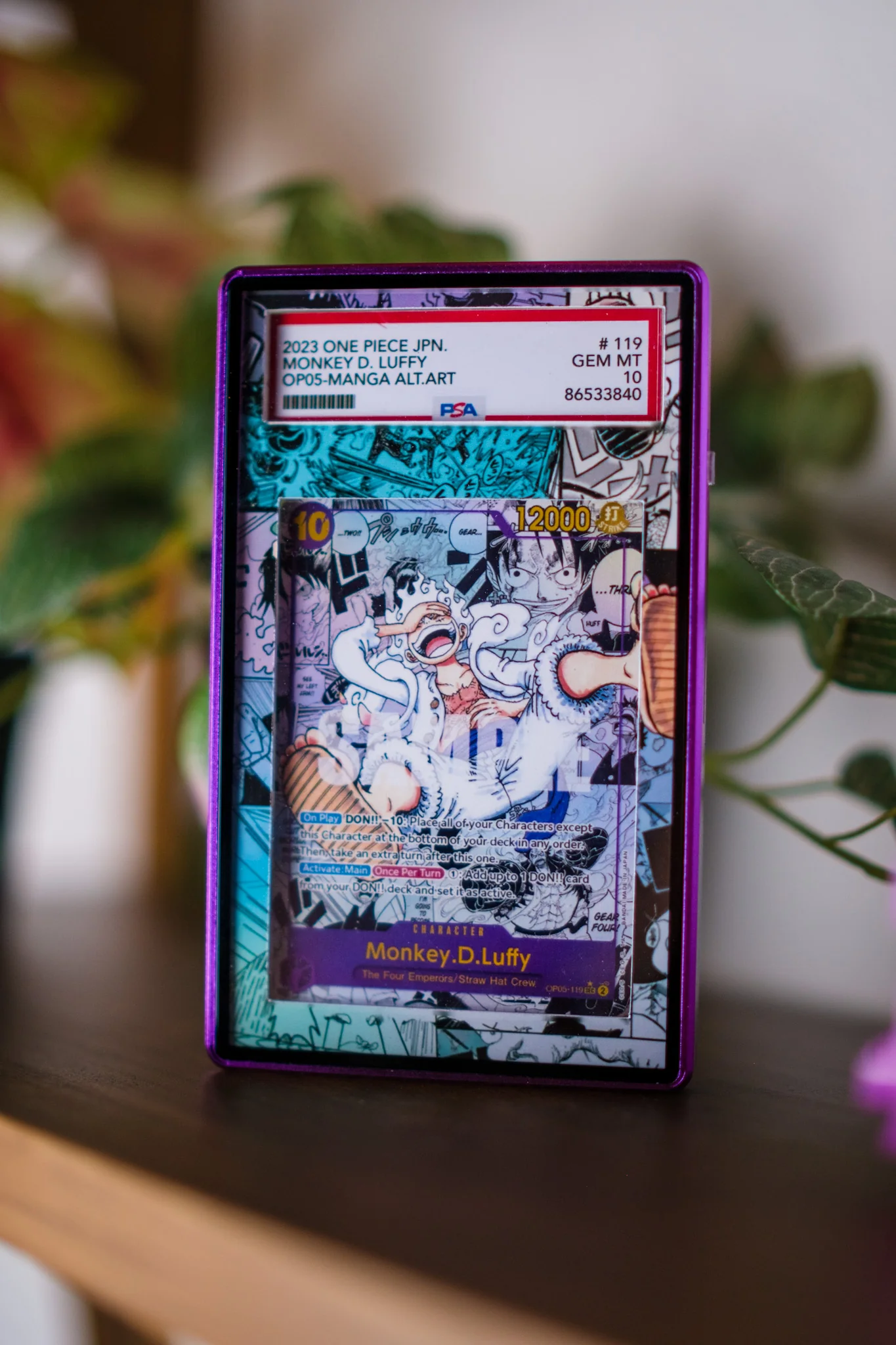
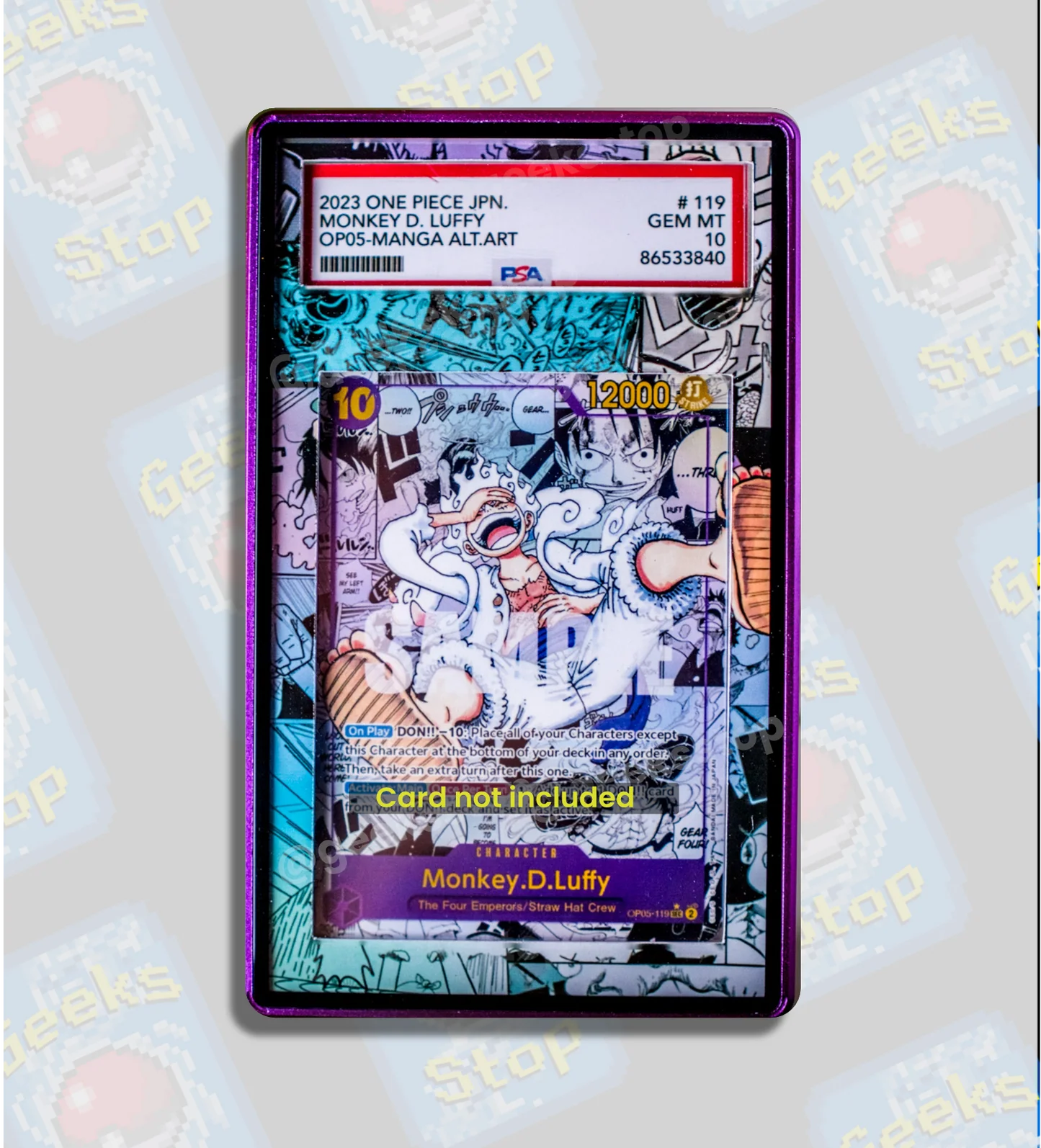
Scene examples: Premium single-slab acrylic displays featuring One Piece graded cards on a desk setup with soft ambient lighting and background greenery.
Multi-Slab Wall Displays: Building a Collection Gallery
As your One Piece graded collection grows, a wall-mounted gallery transforms individual slabs into a cohesive visual statement. Multi-slab hardwood cases with UV-filtering acrylic windows offer excellent value per card displayed, holding anywhere from 20 to 50 slabs in a single framed unit.
For a more dynamic, gallery-style arrangement, individual magnetic wall mounts allow you to position cards at varying heights and spacing. This approach works particularly well for themed groupings—such as displaying all Straw Hat crew members in chronological release order or creating a "villains wall" featuring Doflamingo, Kaido, and Blackbeard slabs.
When planning a wall display, consider sight lines. Cards should sit at eye level when standing or seated, typically 57–60 inches from the floor to the center of the display. Use consistent spacing between slabs (2–3 inches works well) to create rhythm without clutter. If your wall receives any natural light, ensure the display cases or cabinet windows carry a verified UV protection rating.
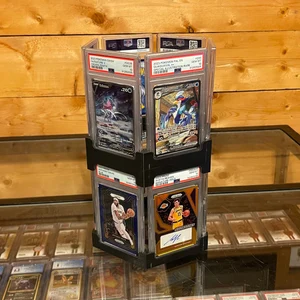
Scene example: A rotating multi-slab tower display on a wooden surface, ideal for showcasing several graded cards in a compact footprint.
Desk and Shelf Displays: Daily Enjoyment
Not every graded card needs a wall mount. For cards you want to interact with daily—perhaps your first PSA 10 pull or a favorite character like Nico Robin—a desk or shelf display brings the collection into your workspace.
Free-standing cases with built-in angled stands prop cards at a slight tilt, catching light and drawing your eye from across the room. Look for weighted bases that prevent tipping when you swap cards in and out. Some premium desk stands offer 360-degree rotation, letting you adjust the viewing angle based on your seating position.
For collectors who prefer minimalism, low-profile architectural cases recede visually so the card itself becomes the entire focus. These designs work beautifully on floating shelves or inside glass-front cabinets, where the case virtually disappears and the artwork takes center stage.
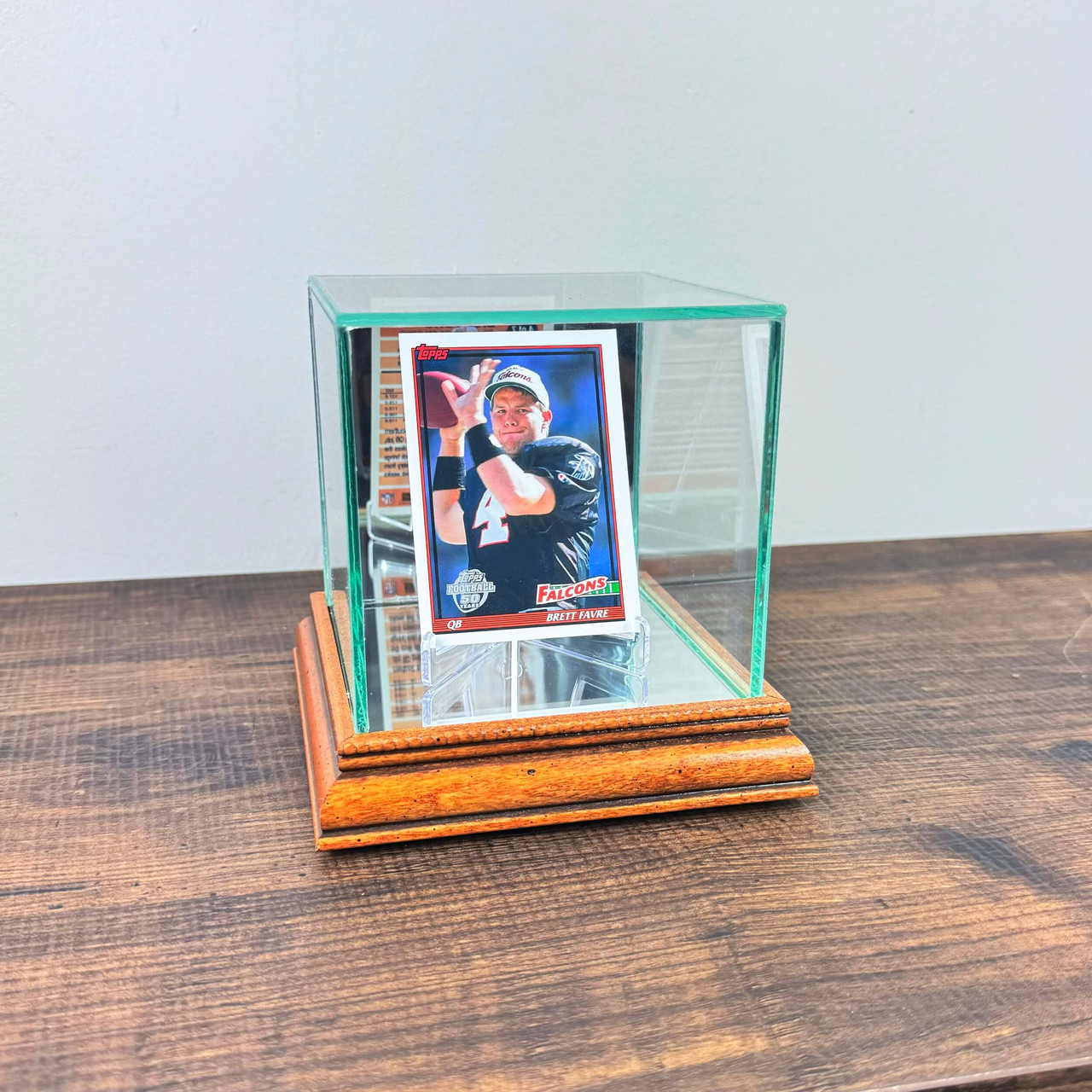
Scene example: A glass display case with a wooden base, suitable for desk or shelf presentation of a single graded card.
Protecting Slabs During Display
Even inside a display case, your slabs need basic maintenance. Dust the exterior with a microfiber cloth weekly. Never spray liquid cleaner directly on acrylic surfaces—moisture can seep into magnetic closures or between case layers. If dust accumulates inside the case, use compressed air rather than opening the case repeatedly, which introduces handling risk.
For cards displayed in high-traffic areas, consider adding a slab protector or sleeve over the graded holder before inserting it into the display case. This adds a secondary barrier against scratches and fingerprints without obscuring the label or artwork.
Rotate your displayed cards every few months. Prolonged exposure to the same light angle can cause uneven fading, even with UV protection. Rotation also gives you the opportunity to inspect each slab for new surface defects or case wear.
Lighting Your One Piece Display
Proper lighting elevates a display from "cards on a shelf" to a museum-quality presentation. LED strip lights with a color temperature between 4000K and 5000K (neutral white) reveal card details without adding heat or UV emissions. Avoid halogen or incandescent bulbs, which emit both heat and low-level UV radiation.
For single-slab spotlighting, small adjustable LED desk lamps with dimmer controls let you control intensity. When lighting a multi-slab wall, install LED strips along the top frame of the display case, angling them downward at 30 degrees to minimize glare on the acrylic surface. Always test lighting placement before final mounting—holofoil cards reflect light aggressively, and poor positioning creates hot spots that obscure artwork.
Curating Your Display: Themes and Storytelling
The best One Piece displays tell a story. Rather than arranging slabs randomly, group them by narrative theme:
-
Straw Hat Crew Chronology: Display crew members in the order they joined the ship, from Luffy to Jinbe.
-
Arc Progression: Group cards by story arc—East Blue, Alabasta, Dressrosa, Wano—showing character evolution.
-
Rarity Tiers: Dedicate a wall to Manga Alternate Arts, another to Secret Rares, and a shelf to Leader cards.
-
Character Focus: Create a shrine to a single character, showing every variant and grade of your favorite pirate.
Themed displays make your collection more engaging for visitors and help you identify gaps in your collecting goals.
Frequently Asked Questions (FAQ)
Q: What is the best display case for PSA graded One Piece cards?
A: Standard PSA slabs fit best in single-slab acrylic cases with 99%+ UV protection and magnetic closures. Ensure the slot depth matches the thin PSA holder profile (approximately 0.27") to prevent wobble and corner wear.
Q: Can I display BGS graded One Piece cards in the same case as PSA slabs?
A: BGS subgrade slabs are thicker than standard PSA holders. Use a display case specifically designed for thick cards, with a wider slot depth (approximately 0.35"), to ensure a secure fit without rattling.
Q: Do acrylic display cases actually protect against UV damage?
A: Only if the acrylic carries a documented UV filtration rating. Standard clear acrylic blocks minimal UV radiation. Look for cases rated at 99% or higher UV resistance for meaningful long-term protection. Even with UV cases, keep displays out of direct sunlight.
Q: How should I clean my graded card display cases?
A: Use a dry microfiber cloth for exterior dusting. Never spray liquid cleaner directly onto acrylic. For interior dust, use compressed air. Avoid opening cases frequently to minimize handling risk and dust exposure.
Q: Is it safe to wall-mount heavy multi-slab display cases?
A: Yes, provided you use appropriate wall anchors for the case weight. Hardwood multi-slab cases typically include mounting hardware. For individual magnetic mounts, verify that the wall surface and adhesive or screw system can support the combined weight of the case and slab.
Q: How often should I rotate the cards in my display?
A: Rotate displayed cards every 2–3 months. This prevents uneven light exposure and gives you regular opportunities to inspect slab condition. It also keeps your display fresh and engaging.
Q: What lighting is safest for displaying graded cards?
A: LED lighting with a 4000K–5000K color temperature is ideal. LEDs emit minimal heat and no UV radiation. Avoid halogen or incandescent bulbs, and position lights to minimize glare on holofoil surfaces.
Q: Can I display raw One Piece cards alongside graded slabs?
A: Yes, but use different protection strategies. Raw cards should remain in penny sleeves and toploaders or binders. Display them in separate sections from graded slabs to avoid accidental contact that could damage unprotected edges.
By investing in proper display infrastructure, you're not just showing off your One Piece graded cards—you're preserving their condition, protecting their value, and creating a personal gallery that celebrates one of the most iconic franchises in manga history. Whether you start with a single premium case or build an entire wall gallery, the key is matching your display strategy to your collection's value and your space's unique characteristics.