

Special Illustration Rares changed the question display hardware has to answer. For thirty years, a trading card's display problem was simple: show the whole card, protect the whole card, verify the whole card — a rectangular object in a rectangular frame, game text and all. The SIR era broke the rectangle's logic. These cards carry illustrations that run edge to edge, scenes that break past the card frame into compositions closer to poster art than to game pieces — and collectors started treating them accordingly: as artworks first, assets second, game pieces a distant third. The display industry, three generations deep into that realization, has produced its definitive answer: hardware that lets the art escape the card. This guide covers the evolution, the formats, and the market behind the art-first display revolution.
The Art Shift: From Game Piece to Gallery Piece
The rarity tier's own documentation states the transformation plainly. Illustration Rares made the Pokémon TCG genuinely artistic — edge-to-edge scenes that tell stories, marked with a single gold star, the cards that make collectors gasp. Special Illustration Rares took the same concept to its premium extreme: two gold stars, immersive artwork that extends beyond the card frame, premium holofoil texturing, and pull rates so punishing that a specific SIR arrives in roughly one of every forty-five to a hundred booster packs.
The market responded the way art markets do: the prices stopped pricing the game and started pricing the picture. The defining nickname pair of the era — Moonbreon, the Umbreon VMAX alternative art, and Sunbreon, the Umbreon ex SIR — command prices that owe nothing to playability and everything to the illustration. A BGS PRISTINE Black Label 10 of the Mew ex Special Illustration Rare from Paldean Fates — a playful full-card scene rather than a conventional art window — documented at $236,543 through Goldin in May 2026.

The value ladder shows the structure: raw Illustration Rares at ten to forty dollars, raw SIRs at thirty to five hundred-plus, PSA 10 SIRs of iconic subjects at five hundred to a thousand-plus, and gem-scarce SIRs at auction-house prices. The collector guidance now uses display language as a matter of course — the Roaring Moon ex SIR is described in buying guides as the version collectors actually frame, its mid-flight full-bleed artwork making it the shelf piece over its standard printings.
The Display Redefinition: Art That Escapes the Card
The old display formats answered the old question beautifully and the new question not at all. A one-touch holder shows the card; a UV frame protects the card; neither treats the illustration as an artwork larger than the card's borders. Three formats now do.
The first is the extended-art display case — the format that has quietly become the SIR owner's default. The case mounts the graded slab over a printed backing that continues the card's illustration beyond its edges: the flames keep burning past the card's corners, the background keeps breathing past the borders, and the composition reads as the artist drew it rather than as a rectangle inside a rectangle. The category now spans both major art-TCG ecosystems: Pokémon SIR extended-art cases and One Piece manga alternate-art cases, the latter carrying the same borderless manga-panel logic into hardware.
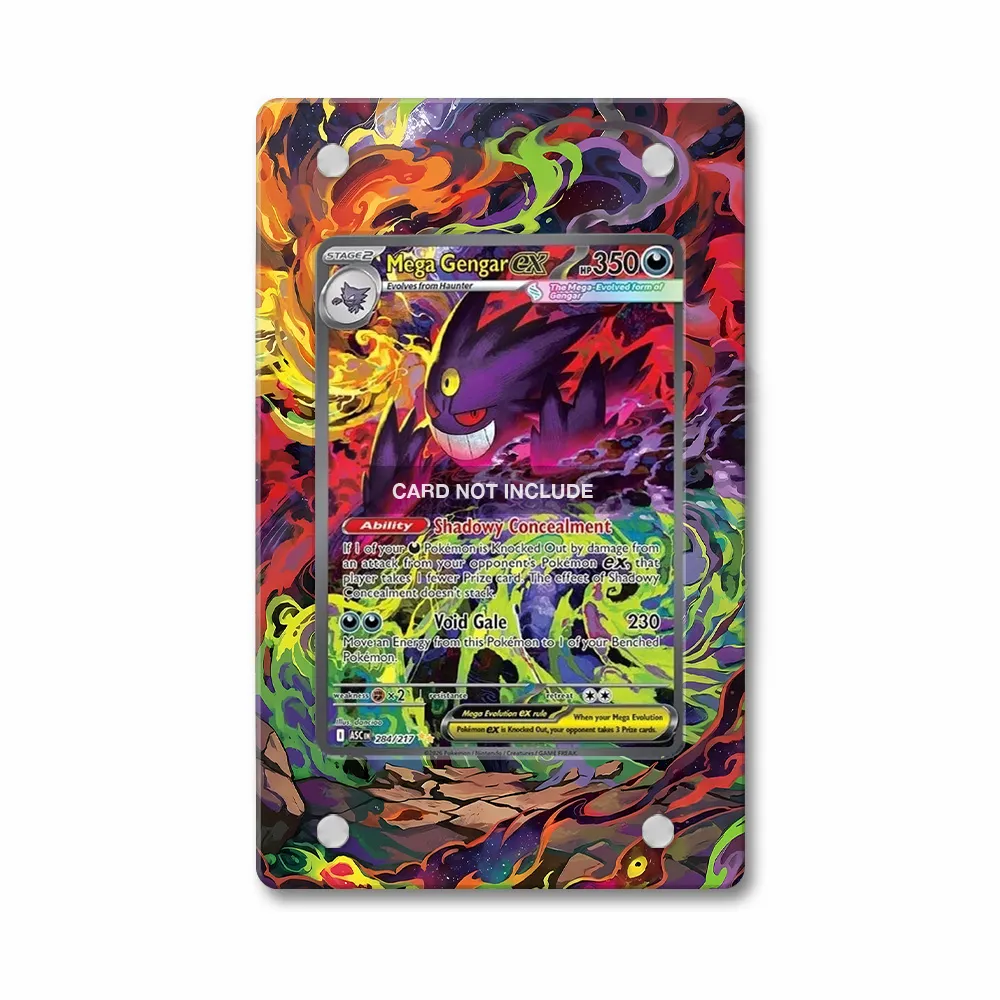
The case above is the format's archetype: a Mega Gengar ex SIR mounted on a mount board printed with the same swirling purple-and-flame composition, the card's artwork flowing seamlessly into the case's full face. The object on the wall reads as a single artwork with a card at its center — which is, increasingly, what collectors think they bought.
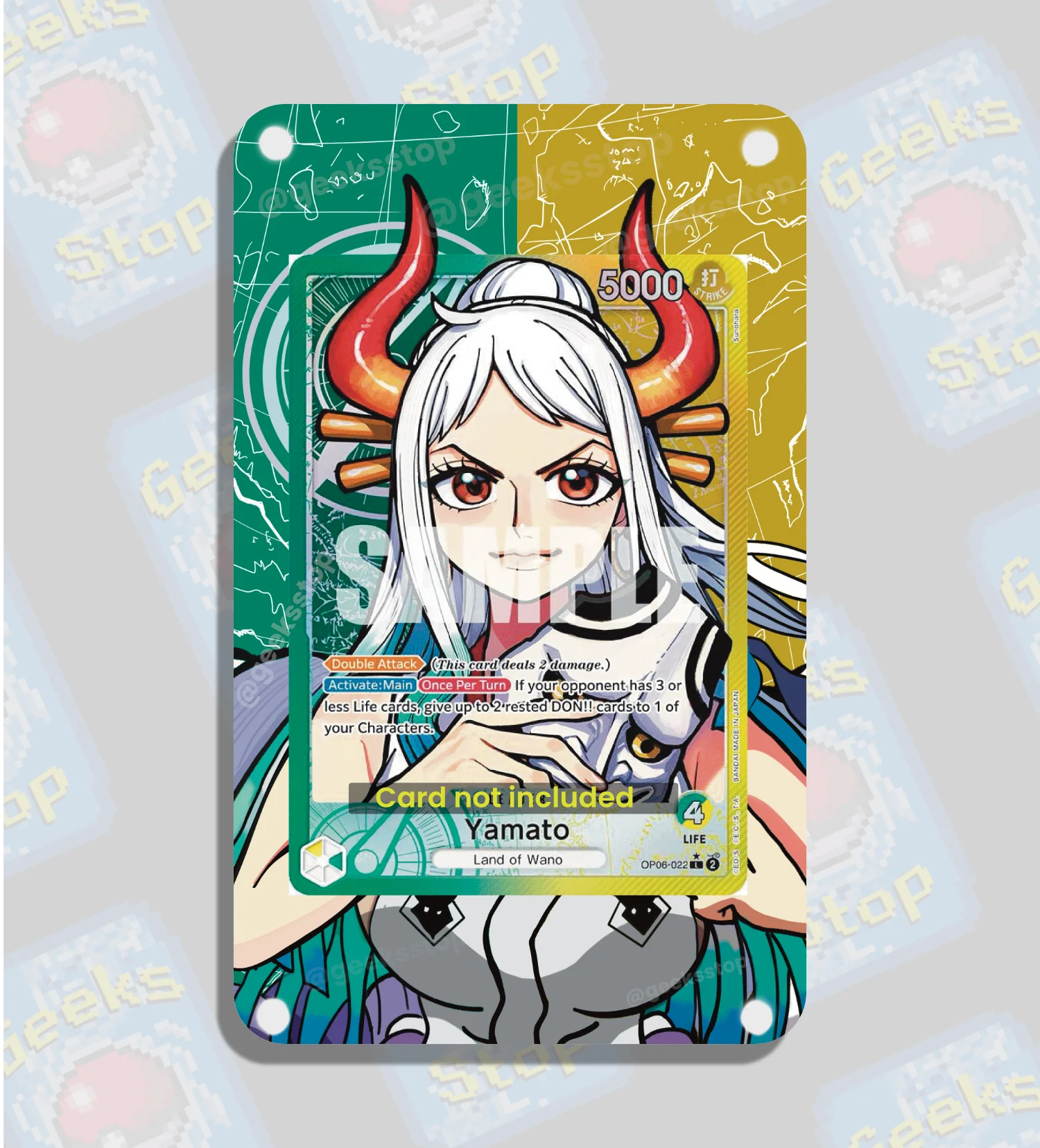
The Yamato case above shows the One Piece execution of the same idea: the leader card's illustration extended across the mount, the horned portrait breaking its frame into the surround. The parallel with the Pokémon format is exact, and the cross-franchise convergence tells you this is a structural trend, not a fad: whenever a TCG's chase cards become artworks, the display hardware follows into extended-art territory.
The second format is the jumbo wall piece. At roughly two to three times standard card dimensions, jumbo cards — including SIRs scaled up for display — deliver what the guides describe as real visual payoff: Ken Sugimori-era illustrations that look muddy at standard size become genuinely impressive at jumbo scale, and modern full-art SIRs are exactly where the format earns its keep. The display guidance is viewing-distance logic: full-art formats fill the card edge to edge and reward closer viewing — better suited for desk display at one to two feet than wall mounting at four to six.
The third format is the themed gallery wall: SIRs arranged by artist or palette across floating ledges and frames, the wall curated like a small exhibition rather than a collection. The artist-driven version of this — collectors who chase specific illustrators, whose collections are organized by signature rather than by set — has become a mainstream collecting persona in its own right, and the Scarlet & Violet era's output is the primary reason: some of the best Pokémon card art ever printed, by a stable of named artists whose credits now move prices.
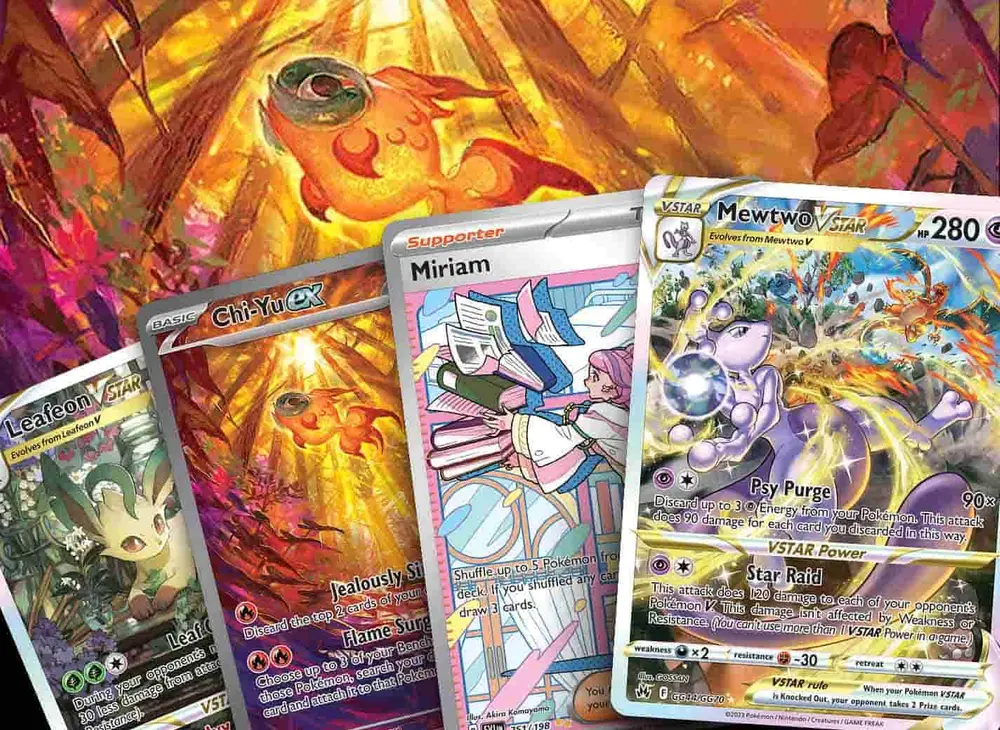
The spread above — the ten most expensive SIRs, scene-driven compositions that would look at home in any illustration annual — is what the display revolution is displaying. These aren't game components with nice pictures. They're miniature artworks that happen to carry game text, and the entire display category has reorganized around that fact.

Market Analysis: The Art-Display Economy
The market data confirms the shift is structural. Extended-art display cases — the segment barely registering in 2022 — have grown at roughly 65 percent annually through 2026, making them the fastest-growing display format in the hobby. Jumbo and wall-art formats compound near 43 percent. Standard UV frames, still growing, trail at roughly 14 percent — the legacy category being outpaced by the art-first formats redefining it.
The crossover data completes the picture: the One Piece manga-alternate-art segment carries the same dynamics — the same SEC-versus-manga-alt identification problem, the same borderless-art price premiums (a Manga Alternate Art printing of a card can run a hundred-twenty times the price of its standard framed version), the same collector behavior of framing the art rather than the card. And the graded market underneath it all — $15.2 billion, with 26.8 million slabs authenticated in 2025 — supplies the objects the art-display economy presents.
User Analysis: Four Art-First Collector Personas
The art-display buyer divides into four profiles. The art collector — the persona the 2026 guides now define explicitly — chases illustrations and artists rather than sets or playability, building walls organized by creator or composition; for this collector, extended-art cases are the native format, because they present the artwork the way it was composed. The character collector uses art-first display selectively: one framed SIR per favorite character, the wall as a portrait gallery, the extended case reserved for the single best artwork per character. The investor-art hybrid buys the artworks that hold value — the Moonbreons and Mew ex SIRs — and displays them in the formats that protect while presenting: extended cases behind UV glazing, rotation seasons, the custody stack behind the gallery face. And the crossover anime collector — the One Piece manga-alt owner — runs the identical playbook in the parallel format, which is why the display hardware market now serves both ecosystems with the same product families.
Operational Structure Analysis: Why the Format Converged
The supply side explains the convergence. The printing layer — dye-sublimation and large-format UV printing at consumer prices — made custom mount boards cheap enough to produce per-artwork, which is what extended-art cases require: a unique printed surround matched to each card's illustration. The framing layer — mat-cutting and shadow-box craft from the picture-framing industry — contributed the mounting techniques: the archival corners, the spacing that floats the slab above the printed surround, the UV-rated glazing that protects both card and print. The case layer contributed the protection stack: magnetic closures, gasket seals, the substrate-UV acrylic the specification era standardized. And the licensing-adjacent layer — the custom shops operating in the artwork's shadow, producing display hardware rather than reproductions — filled the gap the official manufacturers left, which is why the extended-art category emerged from small shops and marketplace sellers rather than from the grading companies or the publishers. The operational rules for the buyer: verify the mount's archival quality (acid-free, lignin-free — the same standards as the conservation framing world), confirm the UV rating covers both the card zone and the printed surround (the print fades too), and treat the extended case as display hardware with the same rotation discipline as any other — the artwork-first presentation doesn't exempt the card from the light budget.

Upgrade Iteration Data: Five Generations of Art Display
The presentation index tells the story. Generation one was the binder page — card as game piece, text-first, art incidental. Generation two was the one-touch stand — card as object, the whole slab presented but the frame still defining the artwork's boundary. Generation three was the UV frame — card as asset, protection-first, the specification era's answer. Generation four is the extended-art case — art-first, the mount continuing the composition, the card as the center of a larger artwork. Generation five is jumbo wall art — the artwork at architectural scale, the gallery logic completed. Each generation arrived as the art got better; the 2026 collector displaying a SIR in an extended-art case is running the format the artwork itself demanded, and the collectors who adopted early report the same discovery: guests stop asking about the card's price and start asking about the picture. That's the redefinition, measured.
Common Mistakes
Framing the card, not the art. A beautiful SIR in a plain frame presents a rectangle; the extended case presents the composition. The difference is the entire point of the tier.
Ignoring viewing distance. Full-bleed SIRs reward close viewing; wall-mounting them at poster distance wastes the detail. Desk and shelf cases for close formats, jumbos for walls.
Skipping the UV spec on the case. The printed surround fades exactly like the card does; the case's UV rating protects both, and an unrated extended case is a fading machine with better aesthetics.
Cheap mount materials. Acidic mount boards yellow and stain; the archival standards from conservation framing apply verbatim to extended-art hardware.
Treating the art trend as exempt from the light budget. Display seasons, LED lighting on timers, quarterly rotation — the custody stack applies to art-first displays exactly as to asset-first ones, because the asset is inside the artwork.
Conclusion
Special Illustration Rares did something no rarity tier had done before: they made the illustration the point of the card — and the display hardware followed the art out of the card's borders. Extended-art cases present the composition as drawn; jumbo formats take it to wall scale; gallery walls curate by artist and palette; the entire category has reorganized around a simple recognition that collectors now take for granted and the market has priced accordingly — that the chase cards of the modern era are artworks first. The framing industry contributed its craft, the printing industry contributed its economics, and the specification era contributed its discipline, producing a display ecosystem where a $236,543 Mew ex SIR and a thirty-dollar Roaring Moon SIR get the same treatment: mounted, protected, and presented as what they are. The binder page still has its job. But the wall belongs to the art.





