The Display Dilemma Every Collector Faces
You have spent months—or years—building a collection you are proud of. Graded slabs sit in protective boxes, raw cards fill binders, and every so often you pull out a favorite piece just to admire it. But deep down, you know these cards deserve better than storage. They deserve to be seen.
The question is how. Should you mount them on the wall like gallery art, or arrange them on your desk like curated trophies? The answer depends on your room layout, collection size, lifestyle, and what you want your display to say about you. In 2026. premium card displays have evolved from hobby accessories into interior design elements that complement modern home aesthetics.
This guide breaks down the wall-mounted versus desktop debate across every dimension that matters: space efficiency, visual impact, accessibility, security, cost, and how each option integrates into your daily life.
Wall-Mounted Displays: Turning Your Collection Into a Gallery
Wall-mounted display cases transform your trading cards into permanent room features. They command attention, fill vertical space, and create a museum-quality presentation that desktop setups simply cannot replicate.
Space Efficiency and Room Integration
The most immediate advantage of wall mounting is floor space preservation. In apartments, home offices, or bedrooms where every square foot matters, a wall case adds zero footprint. A single 31-inch by 24-inch display frame can hold 30 to 35 graded slabs, replacing an entire bookshelf of storage boxes with a sleek vertical installation.
Wall displays also integrate naturally with 2026 interior design trends. Rich jewel tones, natural wood textures, and matte-black composites are dominating home decor, and premium display manufacturers now offer finishes in stained oak, mahogany, carbon-fiber textures, and matte-black frames that complement these palettes. A dark-cherry hardwood case with brass hardware against a burgundy accent wall creates a cohesive, intentional look rather than a cluttered hobby corner.
Visual Impact and Storytelling
Wall-mounted cases excel at narrative presentation. A multi-row frame allows you to arrange cards chronologically, by team, by rarity tier, or by personal significance. Visitors see the full scope of your collection at a glance. This is especially powerful for themed collections—a full set of Hall of Famers, a rookie card progression, or a "greatest hits" wall of your highest grades.
The gallery effect also changes how you interact with your own collection. Cards you might otherwise forget in storage become daily visual anchors. That PSA 10 rookie card stops being an investment number and becomes part of your room's identity.
Security and Protection
Quality wall cases include lockable doors, UV-filtering acrylic, and dust-sealed frames. The lockable design deters casual handling by children or guests, while the enclosed case protects against environmental threats like dust accumulation and pet hair.
However, wall mounting requires proper installation. A 35-card hardwood case can weigh over ten kilograms empty, demanding secure anchoring into wall studs or masonry. French cleat mounting systems—concealed rails that distribute weight evenly—are the professional standard for heavy displays. Improper installation risks both property damage and card loss if the case detaches.
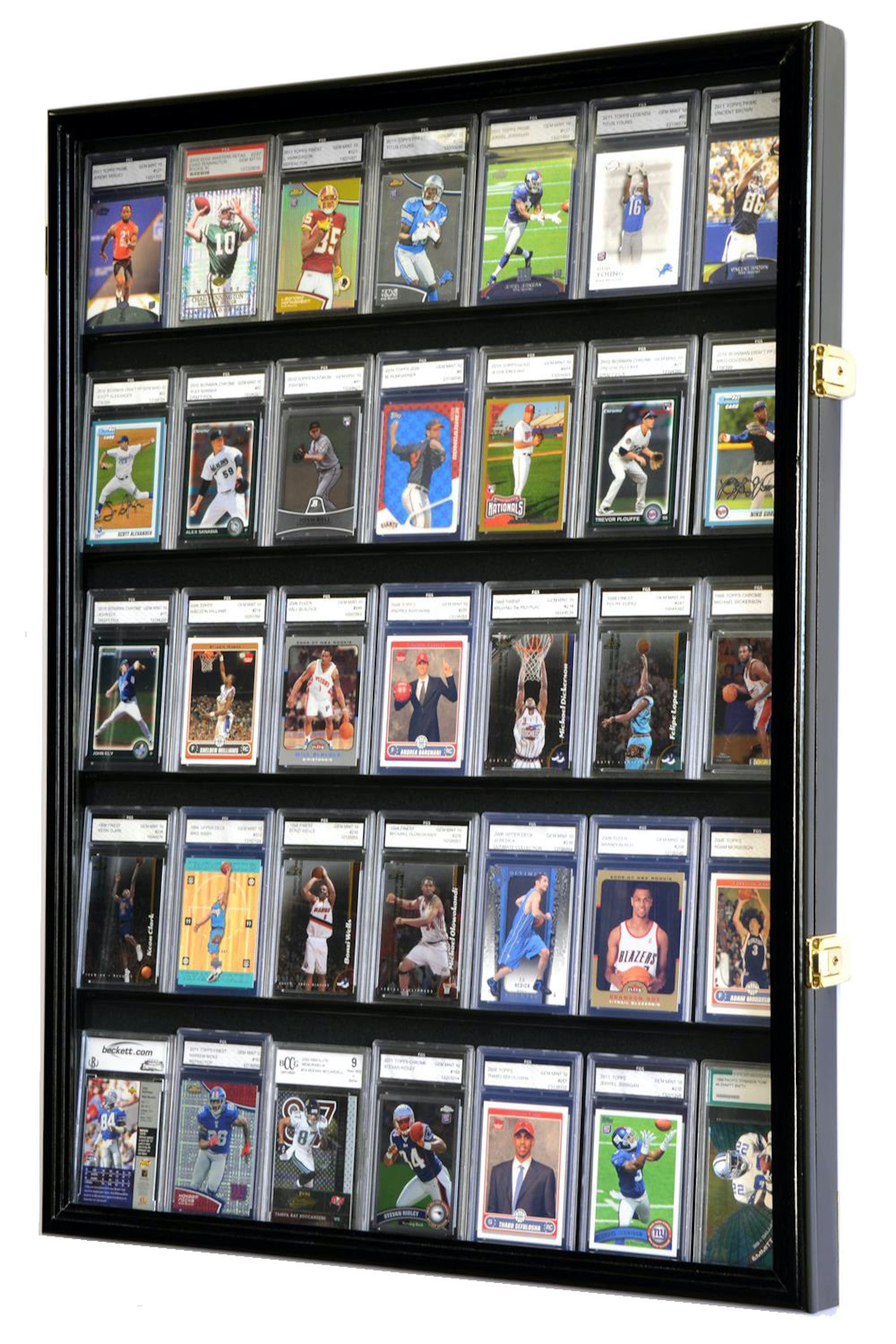
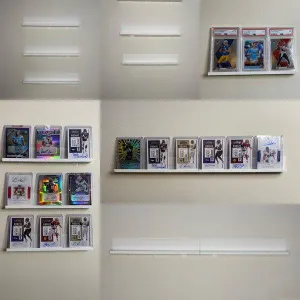
Scene examples: Wall-mounted display cases with black frames and clear acrylic fronts, showcasing graded trading cards in organized rows against clean wall backgrounds.
The Downsides of Wall Mounting
Wall displays are less flexible than desktop setups. Rearranging cards requires unscrewing or unlocking the case, and adding new acquisitions means planning spacing in advance. If your collection grows rapidly, you may outgrow your wall space faster than your budget allows for additional frames.
Wall mounting also commits you to a location. Unlike a desk stand that moves in minutes, a properly installed wall case is semi-permanent. Renters may face restrictions on drilling, and rearranging furniture requires working around the display rather than with it.
Desktop Displays: Intimacy, Flexibility, and Daily Interaction
Desktop display cases and stands bring your cards into your immediate environment. They sit on your desk, bookshelf, or mantel, within arm's reach and constant view. This proximity creates a fundamentally different relationship with your collection.
Accessibility and Rotation
The defining feature of desktop displays is immediacy. Magnetic one-touch holders, acrylic stands, and small easels let you swap cards in seconds. Many collectors maintain a "card of the week" rotation, showcasing different pieces from their collection based on mood, season, or recent acquisitions.
This flexibility makes desktop setups ideal for collectors who enjoy active curation. A single premium stand on your desk can highlight a new pull, a recent grade return, or a card tied to a current sports season. When the playoffs start, you rotate in your MVP rookies. When a player breaks a record, you spotlight their card for the week.
Personal Space Integration
Desktop displays work best in spaces you occupy daily—your home office desk, a bedside table, or a bookshelf in your living room. They become part of your personal environment rather than room decor. A PSA 10 on your desk is something you glance at during Zoom calls, handle during breaks, and show friends when they visit your workspace.
The scale is also more intimate. While a wall display shouts "collection," a desktop setup whispers "passion." It signals sophistication without demanding the room's full attention. For collectors who share living spaces or prefer understated presentation, desktop displays strike the right balance.
Cost and Entry Barriers
Desktop displays are significantly more affordable. A single acrylic stand or magnetic holder costs less than a premium wall case, and you can build a rotating display system for a fraction of what a large wall cabinet costs. This lower barrier makes desktop setups ideal for new collectors testing display options before committing to permanent installations.
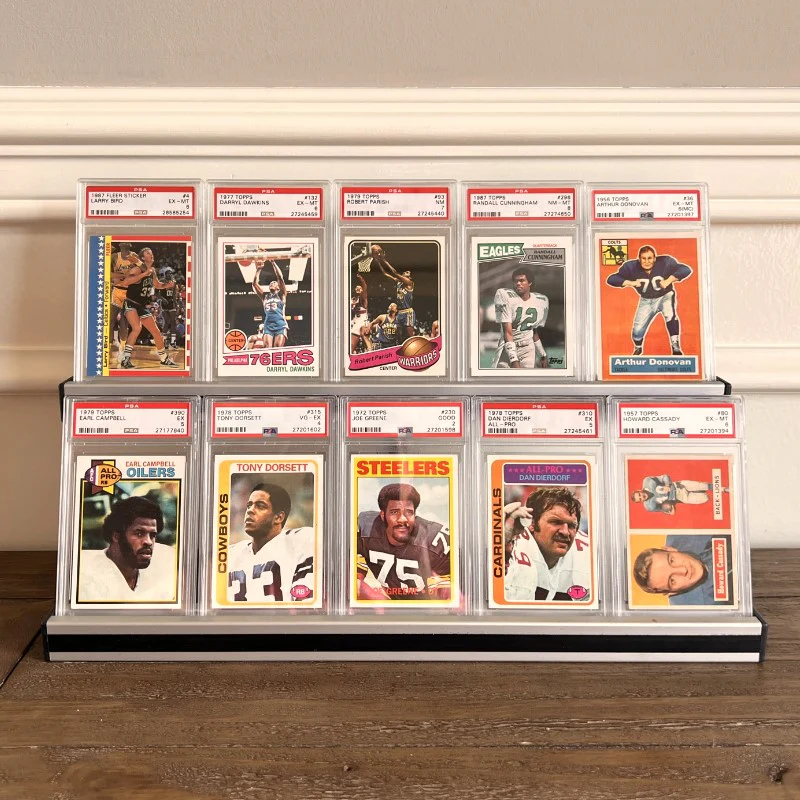

Scene examples: Desktop shelf displays holding multiple graded cards in a compact, tiered arrangement, suitable for desk or tabletop presentation.
The Limitations of Desktop Displays
The primary constraint is capacity. A desk has finite surface area, and every display stand competes with monitors, keyboards, notebooks, and coffee cups. Most desktop setups accommodate between one and ten cards comfortably. Beyond that, the display becomes clutter rather than curation.
Desktop displays also offer less protection. Open stands and easels expose cards to dust, accidental spills, and curious hands. Without an enclosed case, your cards rely on room conditions and careful handling for preservation. UV exposure is harder to control at desk level, where windows and overhead lighting create uneven illumination throughout the day.
Hybrid Approaches: The Best of Both Worlds
Many experienced collectors eventually adopt hybrid systems that combine wall and desktop elements. This approach maximizes both visual impact and daily interaction.
The Gallery Wall + Spotlight Desk
Mount a large multi-card case on the wall as your collection's permanent home, then keep a single premium stand on your desk for rotating spotlights. The wall display shows the breadth of your collection; the desk display highlights individual pieces. When you acquire a new grail, it gets desk time before graduating to the wall gallery.
Themed Zones
Dedicate wall space to stable, completed sets—rookie collections, team histories, or full graded sets—while using desktop displays for active, evolving categories. Your wall might hold ten years of Hall of Fame inductees, while your desk rotates through current-season standouts.
Modular Systems
Modular acrylic displays—stackable blocks, risers, and wall-mounted frames—are trending across all collectible categories in 2026. These systems let you start small with desktop pieces and expand upward onto walls as your collection grows. The consistent aesthetic across modules creates visual unity even as your display footprint expands.
Room-by-Room Recommendations
Different spaces favor different display strategies. Here is how to match your setup to your environment:
Home Office: A desktop stand on your desk keeps cards in your line of sight during work hours. If wall space is available, add a small 6–12 card frame above the desk for a professional backdrop during video calls.
Living Room: Wall-mounted cases work best here. They elevate the collection to art status and keep surfaces clear for daily living. Choose a case finish that matches your furniture—mahogany for traditional spaces, matte black for modern interiors.
Bedroom: Desktop displays on a dresser or nightstand offer personal enjoyment without dominating the room. For dedicated collector bedrooms, a wall case above the headboard creates a striking focal point.
Game Room or Man Cave: This is where wall displays shine. Floor-to-ceiling gallery walls, themed groupings, and integrated LED lighting turn the entire room into a showcase.
Small Apartments: Prioritize wall mounting to preserve limited floor and surface space. A single well-chosen wall case delivers more visual impact than multiple desktop stands competing for room on a cramped desk.
Key Decision Factors: A Side-by-Side Comparison
| Factor | Wall-Mounted Display | Desktop Display |
|---|---|---|
| Space Required | Vertical wall space only | Desktop or shelf surface area |
| Capacity | 20–50+ cards per case | 1–10 cards typically |
| Visual Impact | High—gallery statement piece | Moderate—personal accent |
| Accessibility | Requires opening case, less frequent rotation | Instant swap, daily rotation |
| Security | Lockable, enclosed, dust-sealed | Open, exposed to environment |
| Installation | Requires drilling, stud mounting | Plug-and-play, zero installation |
| Cost Entry Point | Higher ($80–$400+) | Lower ($10–$60) |
| Flexibility | Fixed location, semi-permanent | Fully portable, rearrangeable |
| Best For | Established collections, room decor | Active curation, daily interaction |
Lighting Considerations for Both Setups
Regardless of mounting style, lighting determines how your cards look and how long they last. LED strip lights integrated into display frames provide even, UV-free illumination that highlights card art without causing fade damage.
For wall displays, install LED strips along the top interior frame, angled downward at 30 degrees to minimize glare on acrylic surfaces. For desktop setups, small adjustable desk lamps with dimmer controls let you control intensity based on ambient room light.
Avoid placing any display in direct sunlight. Even UV-protected cases have limits, and prolonged sun exposure will eventually degrade card condition. North-facing walls receive the least direct light and are ideal for wall-mounted cases in sunlit rooms.
Making Your Decision
Choose a wall-mounted display if:
- You have a sizable, stable collection you want to showcase permanently
- You want to integrate your collection into room decor as a design element
- Floor and surface space is limited
- Security and dust protection are priorities
- You prefer a "set it and forget it" approach to display
Choose a desktop display if:
- You enjoy rotating cards frequently and active curation
- You want cards within arm's reach for daily enjoyment
- You are building your collection and want flexibility as it grows
- You share space and prefer understated, personal presentation
- You want a low-cost entry into displaying your collection
Choose a hybrid approach if:
- You have both stable core collections and evolving highlights
- You want gallery impact plus daily interaction
- Your room supports both wall and surface installations
- You are transitioning from a small collection to a serious display
Frequently Asked Questions (FAQ)
Q: Can I mount a heavy wall display case without drilling into studs?
A: No. Heavy wall cases—especially solid wood or large-capacity frames—weigh 10+ kilograms empty and require secure anchoring into wall studs or masonry. French cleat systems distribute weight evenly and are the professional standard. Mounting into drywall alone risks the case detaching and damaging both your wall and your cards.
Q: How many cards can a typical desktop display hold?
A: Most desktop stands and easels accommodate 1 to 10 cards. Tiered shelf displays can hold up to 20 graded slabs, but beyond that, the setup becomes bulky and competes with other desk items. For larger collections, wall mounting is the more practical solution.
Q: Are wall-mounted cases more secure than desktop displays?
A: Yes. Quality wall cases feature lockable doors, enclosed frames, and dust seals that protect against handling, pets, and environmental contaminants. Desktop stands are open by design, offering less physical protection. However, wall cases are visible to anyone entering the room, which may be a consideration for privacy.
Q: Can I use both wall and desktop displays in the same room?
A: Absolutely. A hybrid approach is common among serious collectors. Use wall cases for permanent, high-value collections and desktop stands for rotating spotlights. This creates visual hierarchy—the wall shows your collection's depth, while the desk highlights individual pieces.
Q: What is the best display option for a small apartment?
A: Wall mounting is ideal for small spaces because it preserves floor and surface area. A single wall case can replace multiple desktop stands, and vertical installation draws the eye upward, making the room feel larger. Choose a slim-profile case with a matte finish to avoid visual bulk.
Q: How do I prevent glare on my displayed cards?
A: Position lighting at a 30-degree downward angle relative to the card surface. For wall displays, install LED strips along the top interior frame. For desktop setups, use adjustable lamps and avoid placing cards directly under overhead bulbs. Anti-glare acrylic is available on some premium cases but slightly reduces clarity.
Q: Should raw cards be displayed differently than graded slabs?
A: Yes. Raw cards need additional protection from dust, fingerprints, and bending. Use enclosed magnetic one-touch holders or toploaders even on desktop stands. Graded slabs have built-in rigidity and can use open stands, though enclosed cases still offer superior long-term protection.
Q: How often should I rotate cards in a desktop display?
A: Every 2–4 weeks is ideal for active collectors. This prevents uneven light exposure and keeps your display fresh. Cards in wall-mounted cases can remain longer—2–3 months—since enclosed cases with UV protection provide more stable environments.
Q: What display finish matches modern home decor in 2026?
A: Matte black composites, carbon-fiber textures, and stained oak are trending. Rich jewel-tone backdrops—burgundy, plum, smoky blue—complement these finishes. Avoid glossy plastics and bright colors unless your room already features bold accent pieces.
Q: Can desktop displays work in professional office settings?
A: Yes, when curated tastefully. A single premium stand with one high-grade card adds personality without distraction. Avoid cluttered multi-card arrangements or flashy lighting in conservative workplaces. A minimalist acrylic stand with a PSA 10 rookie card signals sophistication and personal interest without overwhelming the professional environment.
The wall-mounted versus desktop decision is not about right or wrong—it is about matching your display strategy to your space, your collection, and how you want to live with your cards. Wall displays offer grandeur and permanence. Desktop displays offer intimacy and flexibility. The collectors who get the most joy from their collections are often those who combine both, building gallery walls that anchor the room while keeping a rotating spotlight within arm's reach. Start with what fits your current space, and let your display evolve as your collection grows.