If you've invested hundreds—or even thousands—of dollars into professionally graded trading cards, the last thing you want is to see your PSA or BGS slabs turn yellow, cloudy, or brittle. Slab yellowing isn't just an aesthetic issue; it's a silent value killer that can significantly impact resale prices and the long-term preservation of your collection.
In this comprehensive guide, we'll break down exactly why PSA and BGS slabs yellow, how to prevent it before it starts, and the best protective solutions available in 2026. Whether you're a seasoned collector or just starting out, this guide will help you protect your investment for decades to come.
What Is Slab Yellowing and Why Does It Matter? {#what-is-slab-yellowing}
Slab yellowing refers to the gradual discoloration of the clear acrylic or polycarbonate casing that houses your graded cards. Both PSA (Professional Sports Authenticator) and BGS (Beckett Grading Services) use high-quality archival materials, but even the best slabs are not immune to environmental degradation over time.
When a slab turns yellow or cloudy, several problems arise:
-
Reduced Visual Appeal: A yellowed slab makes even a Gem Mint 10 card look unprofessional.
-
Lower Resale Value: Buyers associate yellowed slabs with poor storage and may offer less—or avoid the card entirely.
-
Compromised Protection: Yellowing often signals material breakdown, meaning the slab may no longer provide adequate protection against dust, moisture, or impact.
Key Insight: The slab itself may yellow, but UV exposure can also cause the card inside to fade, autographs to ghost, and foil layers to separate. Prevention is always cheaper than restoration.
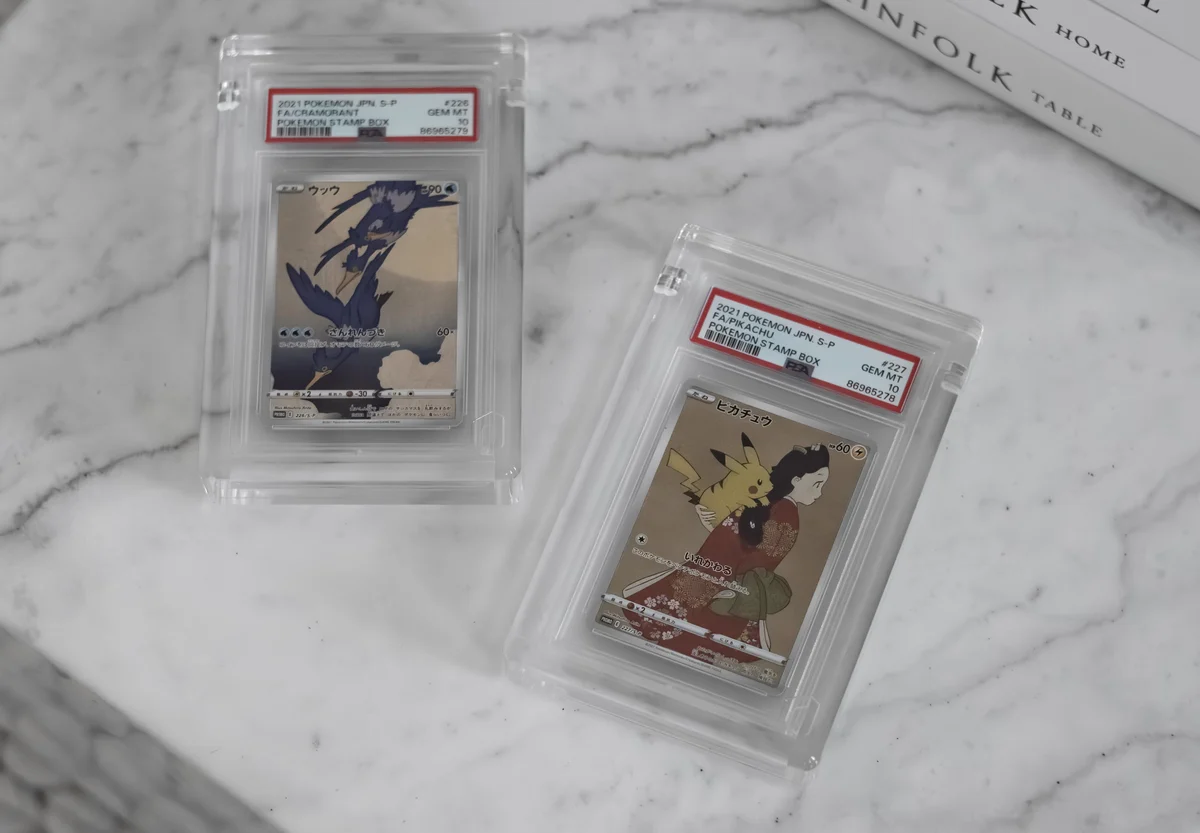
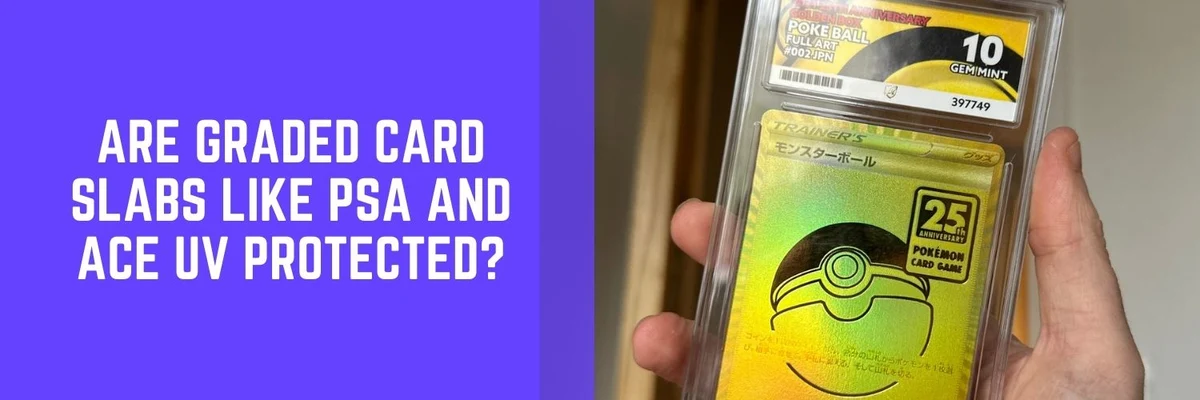
PSA graded slabs exposed to UV light can suffer from both slab yellowing and internal card fading over time.
The Science Behind PSA and BGS Slab Yellowing {#the-science}
To effectively prevent yellowing, you need to understand the chemistry at play.
Photodegradation: The UV Threat
Ultraviolet (UV) radiation triggers a chemical process called photodegradation. When UV photons strike the acrylic or polycarbonate material of a slab, they break down molecular bonds, causing:
-
Pigment Bleaching: Organic inks in cards (especially red, yellow, and magenta tones) fade rapidly.
-
Autograph Deterioration: Signature inks oxidize under UV light, turning bold autographs faint or invisible.
-
Slab Yellowing: Standard non-UV acrylic degrades when exposed to sunlight, turning brittle and developing a cloudy, yellowish tint.
-
Foil Layer Separation: Ambient heat from light exposure can dry out adhesives holding metallic foil layers, causing warping or peeling.
Material Differences: Acrylic vs. Polycarbonate
| Material | UV Resistance | Impact Resistance | Clarity | Best Use |
|---|---|---|---|---|
| Standard Acrylic | Low to Moderate | Brittle—cracks on impact | High | Budget display |
| UV-Filtered Acrylic | High (up to 99.6%) | Moderate | High | Premium display cases |
| Polycarbonate | Very High (100% UV block) | 30× stronger than acrylic | Optical-grade | Maximum protection |
Top Causes of Slab Yellowing {#top-causes}
Understanding the root causes helps you build a targeted prevention strategy.
1. Direct Sunlight Exposure
Even 30 minutes of direct sunlight daily can begin the yellowing process within months. South-facing windows are particularly dangerous.
2. Indoor Lighting (Fluorescent & LED)
Not just sunlight—fluorescent bulbs and some LEDs emit low levels of UV radiation that accumulate over years of display.
3. Heat and Temperature Fluctuations
Heat accelerates chemical degradation. Attics, garages, and rooms with poor climate control are high-risk zones.
4. Humidity and Moisture
High humidity causes condensation inside slabs and promotes mold growth. Coastal regions and tropical climates are especially vulnerable.
5. Cheap or Non-UV Protective Cases
Using low-quality display cases that lack UV inhibitors can actually accelerate yellowing by trapping heat and magnifying light exposure.
6. Chemical Off-Gassing
Storing slabs in contact with PVC materials, rubber bands, or acidic cardboard can cause chemical reactions that discolor acrylic.
How to Prevent Yellowing: 7 Proven Strategies {#prevention-strategies}
Strategy 1: Block UV Light Completely
The single most effective prevention method is 100% UV protection. This means:
-
Never display slabs in direct sunlight
-
Use UV-filtering acrylic or polycarbonate display cases with 99%+ UV block ratings
-
Apply UV-filtering window film if displaying near windows
-
Consider UV-blocking sleeves as a first line of defense
Strategy 2: Control Temperature and Humidity
Ideal storage conditions for graded cards:
| Factor | Ideal Range | Danger Zone |
|---|---|---|
| Temperature | 65–72°F (18–22°C) | Above 80°F (27°C) |
| Relative Humidity | 40–50% | Above 60% or below 30% |
| Light Exposure | Minimal/UV-filtered | Direct sunlight |
Use a hygrometer to monitor your storage area. In humid climates, add silica gel packets or use sealed storage containers with desiccants.
Strategy 3: Use Archival-Grade Storage Materials
-
Choose acid-free, archival-safe sleeves and boxes
-
Avoid PVC-containing materials (they off-gas and cause discoloration)
-
Use foam dividers in storage boxes to prevent scratching
Strategy 4: Handle Slabs with Clean Hands
Oils from your skin can accelerate degradation. Always:
-
Wash and dry hands before handling
-
Use cotton gloves for high-value cards
-
Hold slabs by the edges, never the faces
Strategy 5: Rotate Displayed Cards
If you display your collection, rotate cards between display and dark storage every 3–6 months. This reduces cumulative light exposure.
Strategy 6: Upgrade Older Slabs
PSA and BGS have improved their slab materials over the years. Older slabs (pre-2015) may be more susceptible to yellowing. Consider reholdering through official channels if you notice early signs of degradation.
Strategy 7: Add a Secondary Protective Case
Even the best PSA and BGS slabs benefit from an additional layer of protection. Premium slab cases provide:
-
Extra UV filtering
-
Impact resistance
-
Scratch protection
-
Dust and moisture sealing
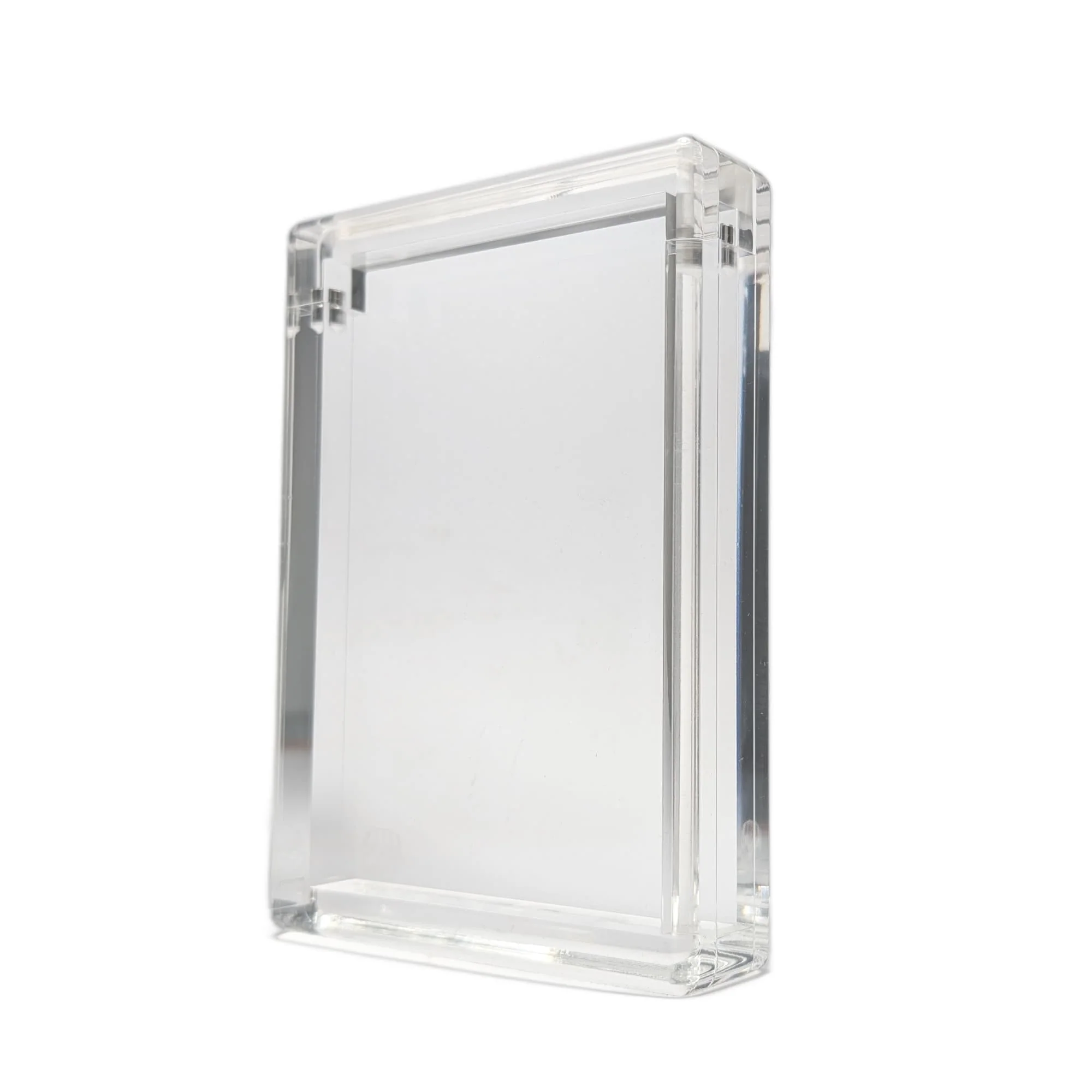
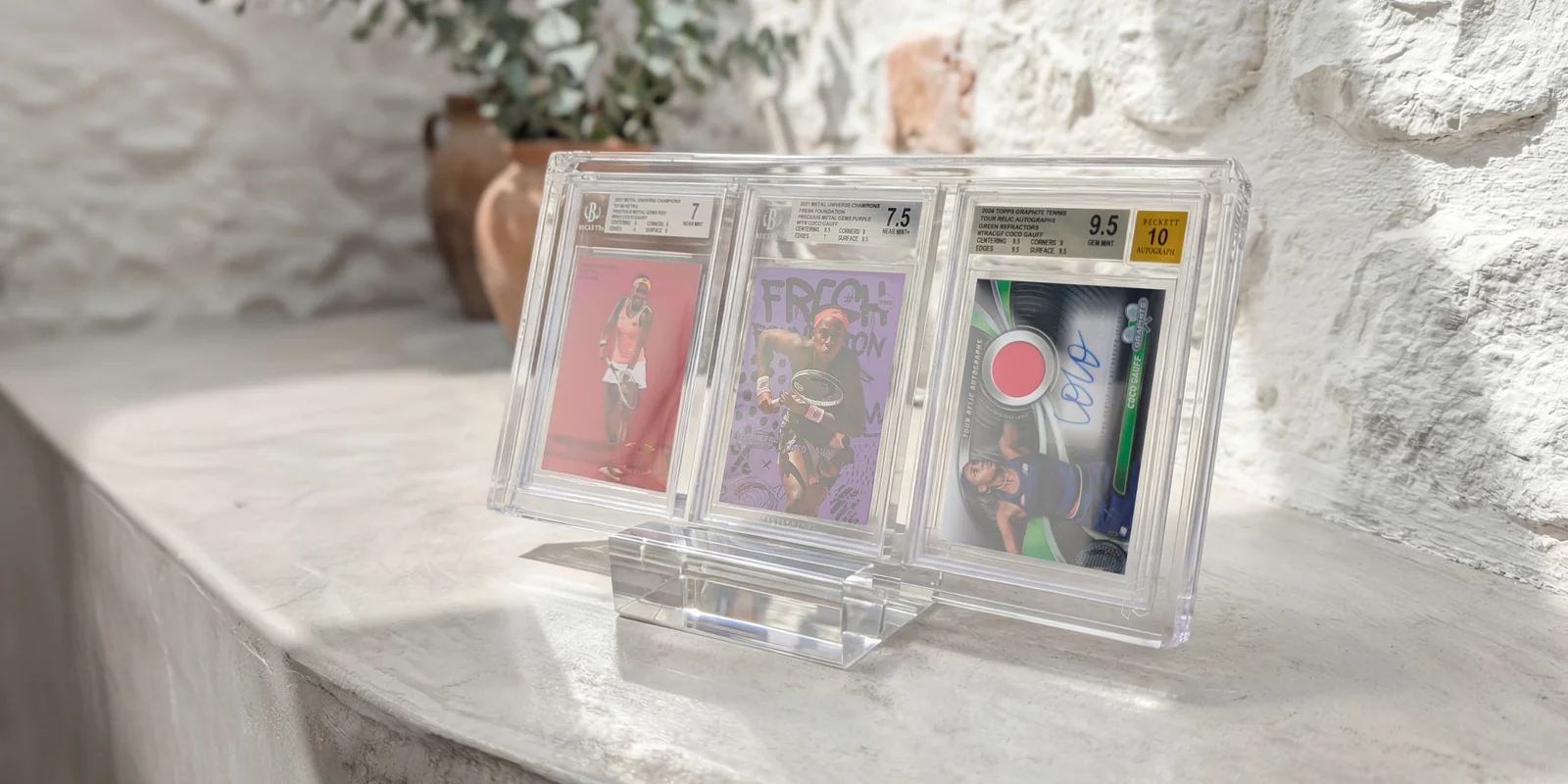
Premium acrylic and polycarbonate display cases add an essential layer of UV and physical protection.
Best UV-Resistant Display Cases and Protectors (2026) {#best-products}
Based on lab testing, collector reviews, and material specifications, here are the top-rated protective solutions:
Tier 1: Maximum Protection
| Product | UV Protection | Material | Best For | Price Range |
|---|---|---|---|---|
| Card Shellz HERO Diamond Shell | 100% | Polycarbonate (30× stronger than acrylic) | PSA slabs, shipping, high-value cards | $$$ |
| Phantom Display Ultra | 99.6% | 10mm cast acrylic | Grails, premium desk display | $$$ |
| Slabmags Aluminum Alloy Case | 99.9% | Aluminum alloy | Multi-grader collections, luxury aesthetic | $$$$ |
Tier 2: Excellent All-Around Protection
| Product | UV Protection | Material | Best For | Price Range |
|---|---|---|---|---|
| Phantom Display Magneto | 99.6% | Cast acrylic | Most collectors, wall/desk display | $$ |
| M2VAULT Acrylic Display Case | 97%+ | Crystal-clear cast acrylic | PSA/CGC/TAG slabs with stand | $$ |
| Slab Saver Single Display Stand | 99% | Optical acrylic | Simple desk display, PSA only | $ |
Tier 3: Budget-Friendly Options
| Product | UV Protection | Material | Best For | Price Range |
|---|---|---|---|---|
| BCW Graded Card Cases | UV-filtered | Acrylic | Basic storage and display | $ |
| GradedGuard Bumpers | Minimal | TPU | Scratch protection, no UV | $ |
Pro Tip: For cards valued at $500+, invest in Tier 1 protection. The cost of a premium case ($25–$60) is negligible compared to the potential value loss from a yellowed or damaged slab.
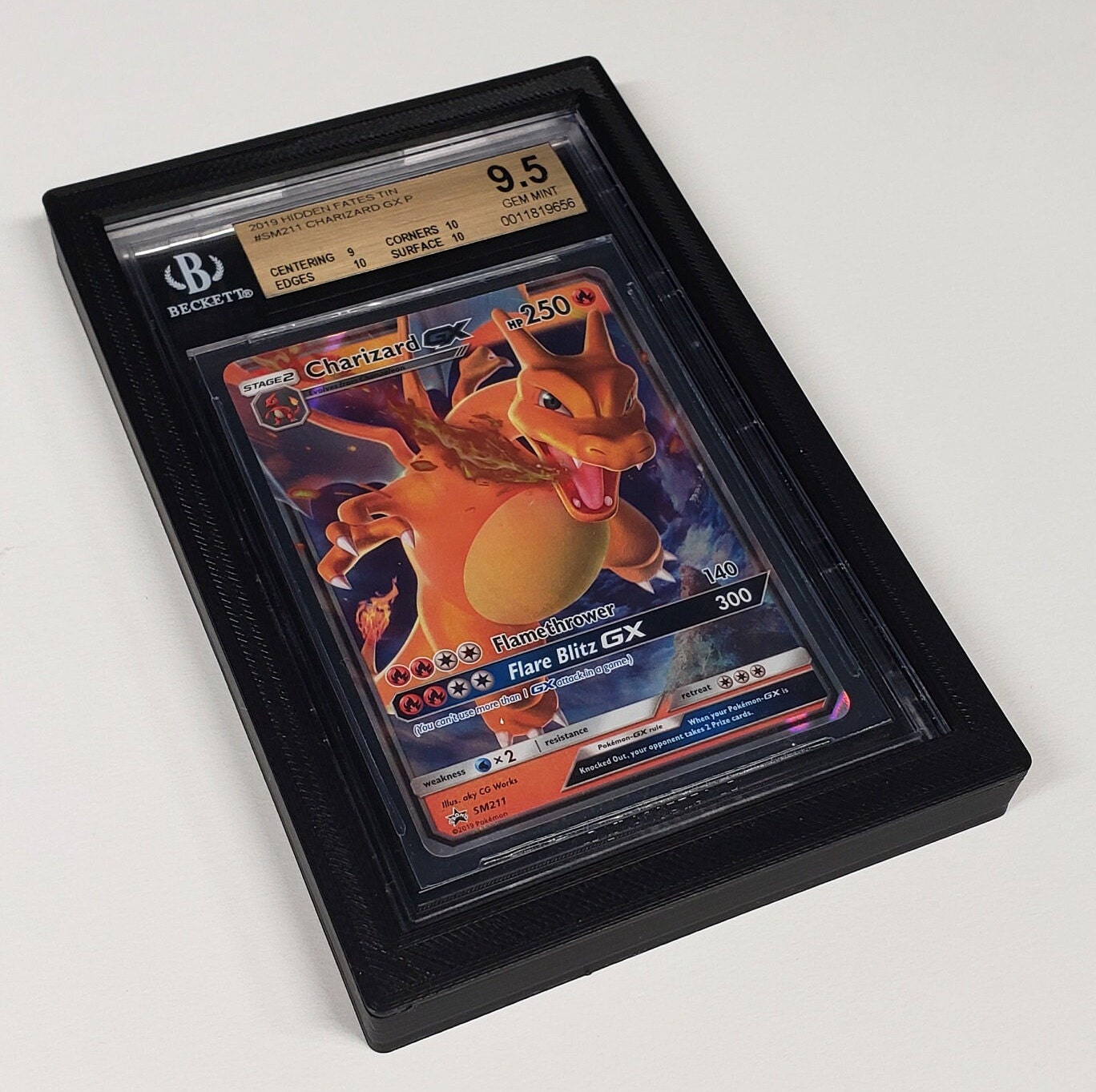
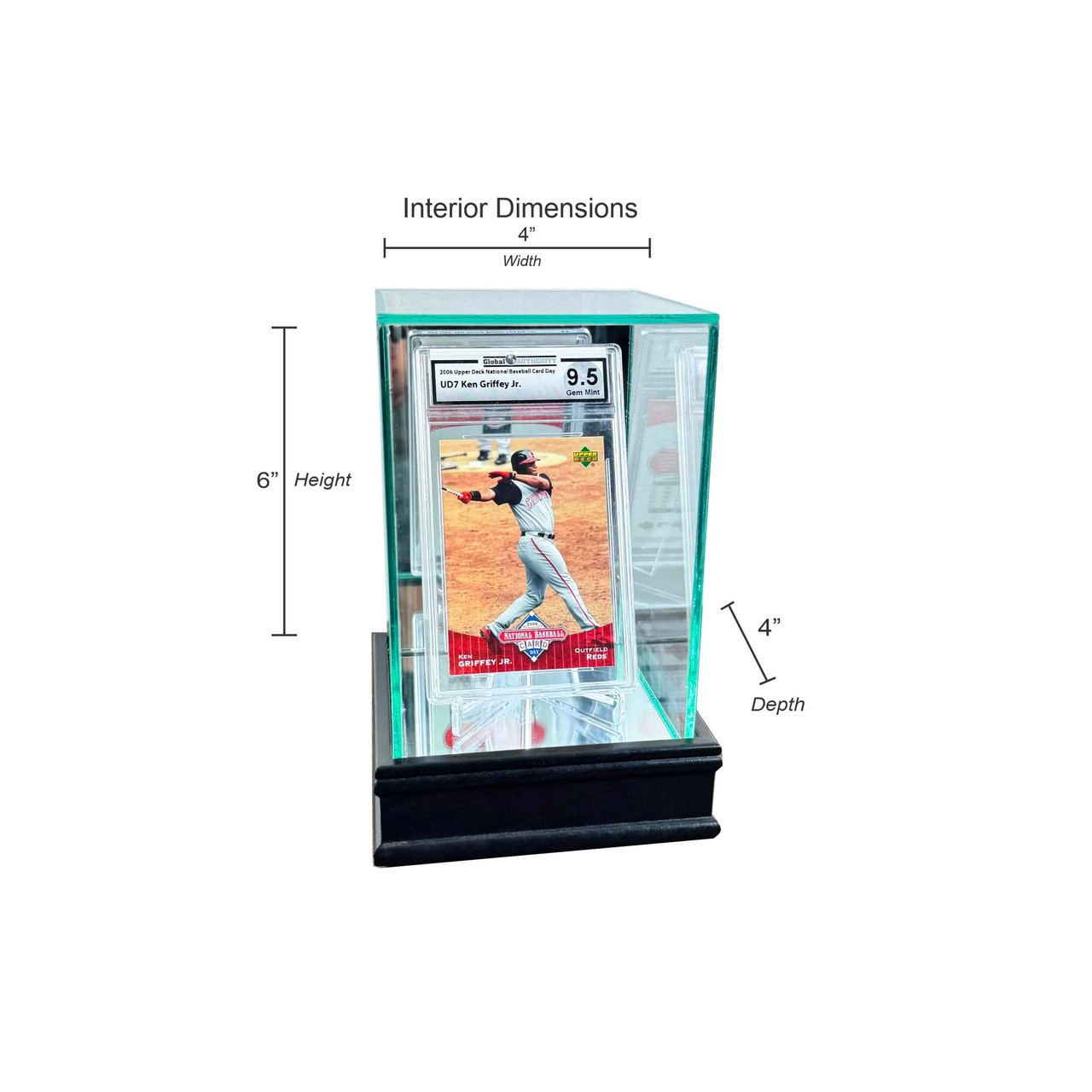
BGS slab display frames and UV-protected glass cases offer both protection and aesthetic appeal.
Proper Storage Environment Guidelines {#storage-environment}
The Ideal "Card Vault" Setup
-
Location: Interior room, away from windows and exterior walls
-
Shelving: Sturdy, stable shelves that don't vibrate
-
Containers: Sealed plastic bins with rubber gaskets for bulk storage
-
Climate Control: HVAC-maintained room or dedicated dehumidifier
-
Monitoring: Digital hygrometer/thermometer checked weekly
What to Avoid
| ❌ Don't | ✅ Do Instead |
|---|---|
| Store in attics or garages | Use climate-controlled interior closets |
| Display in direct sunlight | Use UV-filtering film or indirect lighting |
| Stack slabs without dividers | Use foam-padded storage boxes |
| Use rubber bands or PVC sleeves | Choose archival-grade, acid-free materials |
| Clean with alcohol or ammonia | Use distilled water and microfiber cloths |
Cleaning and Maintenance Best Practices {#cleaning}
Regular maintenance extends slab life and prevents surface damage that can accelerate yellowing.
Weekly Maintenance
-
Dust exterior with a clean, dry microfiber cloth
-
Inspect for scratches, cracks, or seal degradation
Monthly Maintenance
-
Wipe with distilled water-dampened microfiber cloth
-
Check magnetic closures and snap-latches for wear
-
Replace silica gel packets in storage containers
What NEVER to Use
-
❌ Alcohol-based cleaners (cloud acrylic)
-
❌ Paper towels (scratch surfaces)
-
❌ Abrasive sponges or brushes
-
❌ Glass cleaners with ammonia
FAQ: PSA & BGS Slab Yellowing {#faq}
Are PSA slabs already UV protected?
PSA slabs use archival-safe, UV-resistant acrylic, but they are not 100% UV-proof. Extended exposure to sunlight or strong indoor lighting will still cause degradation over time. An additional UV-protective case is strongly recommended for displayed cards.
Can you fix a yellowed slab?
No. Once acrylic has chemically yellowed, the process is irreversible. The only solution is to replace the slab through the grading company's reholdering service.
How long do acrylic slabs last?
With proper care and UV protection: 10–20+ years. Without protection: 2–5 years before noticeable yellowing occurs.
Does BGS use different materials than PSA?
Both companies use high-quality acrylic with UV inhibitors. However, BGS slabs tend to be slightly thicker and may have different optical properties. The prevention strategies in this guide apply equally to both.
Is it worth buying UV-protective cases for lower-grade cards?
Yes. Even PSA 7 or BGS 8.5 cards can appreciate significantly over time. A $20 protective case is cheap insurance against future value loss.
What's the difference between UV protection and UV filtering?
-
UV Protection: Blocks 100% of UV rays (usually polycarbonate)
-
UV Filtering: Blocks 95–99.6% of UV rays (high-grade acrylic) Both are effective; 100% protection is ideal for long-term display.
Conclusion: Protect Your Collection Today {#conclusion}
Slab yellowing is a preventable problem, but only if you take action before damage occurs. The key takeaways:
-
UV light is enemy #1—block it completely with premium cases
-
Control your environment—temperature, humidity, and cleanliness matter
-
Invest in protection proportional to value—a $50 case for a $2,000 card is a no-brainer
-
Inspect regularly—catch problems before they become permanent
Your graded cards represent significant financial and sentimental investment. Don't let something as preventable as UV exposure destroy their condition and value. Upgrade your protection today, and your future self—and your collection's resale value—will thank you.
About the Author: This guide was compiled using the latest research, manufacturer specifications, and collector feedback from 2026. We regularly update this article to reflect new products and preservation science.