Introduction
Your desk is where you spend hours each day—working, gaming, streaming, or browsing. It is also the perfect place to showcase your most prized graded cards. A well-designed desktop display keeps your favorite slabs within sight, turns your workspace into a personalized gallery, and makes your collection part of your daily environment rather than something buried in storage.
But desktop display comes with unique challenges. Desks are high-traffic areas. Coffee cups, keyboards, and elbow bumps are constant threats. Glare from monitors and desk lamps can wash out holographic details. And unlike wall-mounted displays, desktop setups sit at eye level where every imperfection is visible.
This guide covers everything you need to build a premium desktop showcase: choosing the right stand or case, positioning for optimal viewing, protecting against desk hazards, and arranging multiple cards for maximum visual impact. Whether you are spotlighting a single PSA 10 Charizard or building a rotating showcase of your best pulls, these ideas will help you display with confidence.
Why Desktop Display Works for Graded Cards
Constant Visibility
A card on your desk is a card you see every day. That daily reminder of why you collect is worth more than the occasional browse through a storage box. Desktop displays also make it easy to rotate your showcase—swap in a new acquisition, highlight a card that just graded, or feature a seasonal favorite without rearranging an entire wall.
Conversation Starter
For collectors who stream, create content, or work in shared spaces, a desktop display is a natural conversation starter. A well-lit PSA slab positioned behind your monitor or beside your keyboard adds personality to your setup and signals your passion to anyone who sees it.
Compact and Flexible
Desktop displays require no drilling, no studs, and no permanent installation. You can rearrange, relocate, or expand your setup in minutes. This flexibility makes desktop display ideal for renters, students, or anyone who may move their workspace frequently.
Choosing the Right Desktop Display Format
Single-Slab Desk Stands
For spotlighting one trophy card, a single-slab desk stand is the cleanest option. The best stands hold the slab at a slight angle—between 15 and 20 degrees—so the card faces you from a seated position rather than forcing you to look straight down. This angle also catches ambient light across the holographic surface, making foil details shimmer without direct glare.
Material matters. Weighted bases made from solid wood, concrete, or heavy acrylic prevent tipping when you bump the desk. Avoid lightweight plastic stands; a PSA slab weighs approximately 45 grams, and a BGS slab exceeds 70 grams. A flimsy stand will topple with a slight nudge.
Multi-Slab Desktop Frames
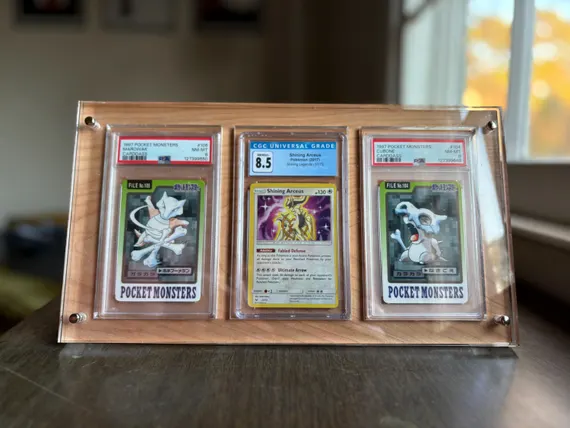
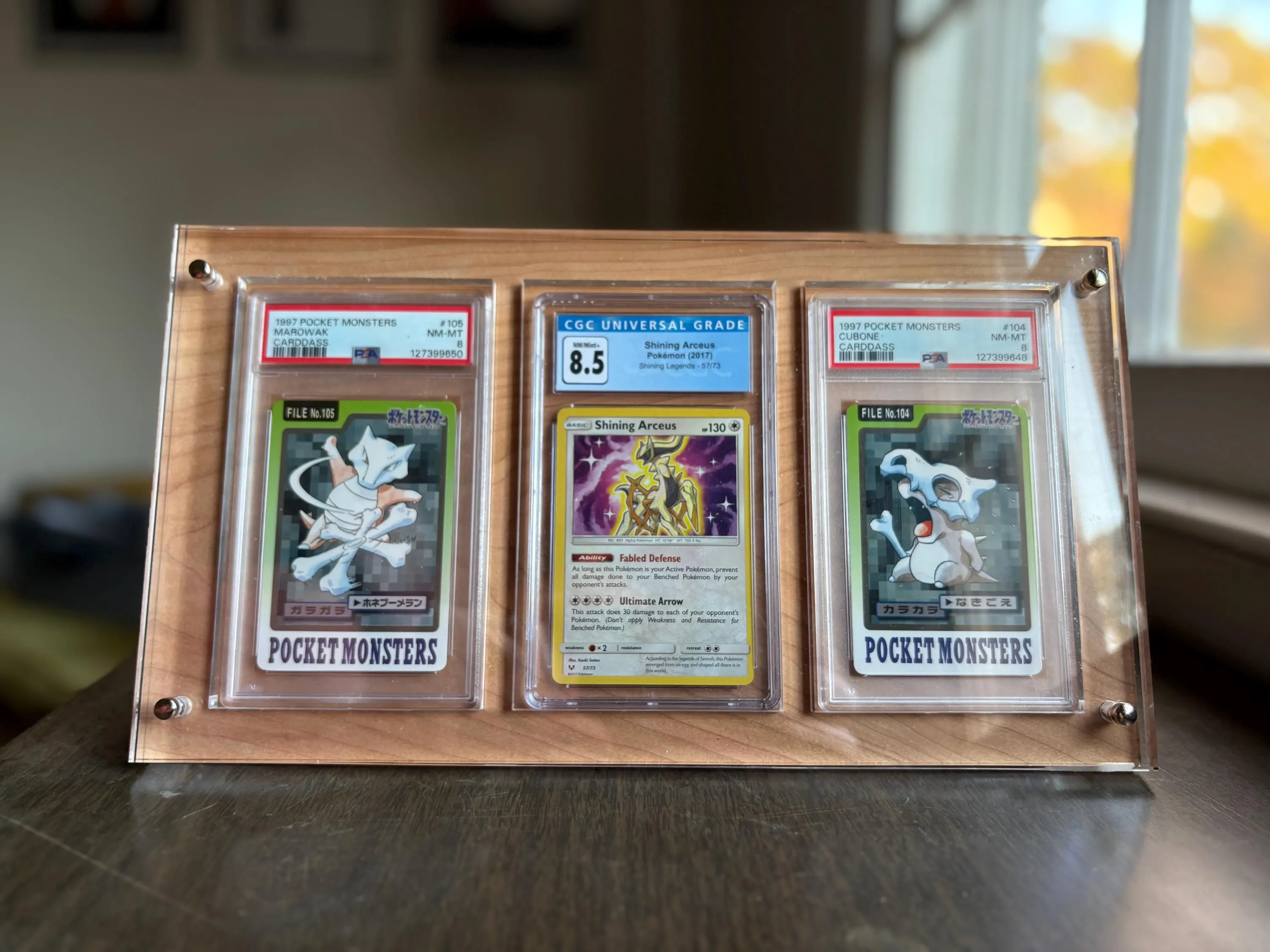
If you want to display a small set—three to six cards—on your desk, a multi-slab frame is the answer. These frames use solid wood or acrylic backplates with precision-cut slots that hold each slab securely. The best designs use magnetic closures rather than screws, allowing you to swap cards in seconds without tools.
For Pokémon collectors, a three-slab frame is ideal for showcasing evolution lines or starter trios. A six-slab frame works well for a themed set, such as a complete gym badge collection or a rainbow of parallel cards from the same set.
Tiered Desktop Racks
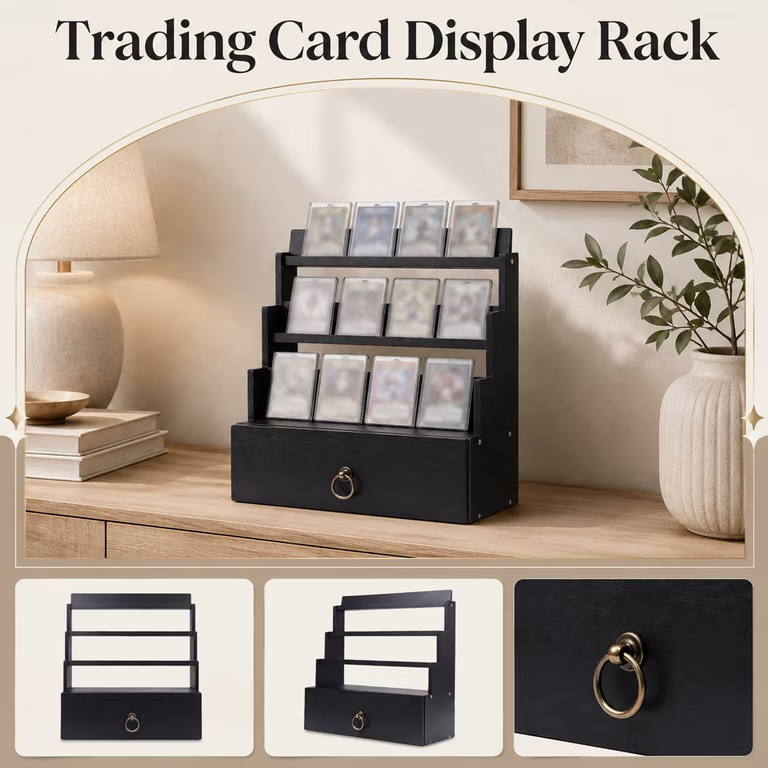
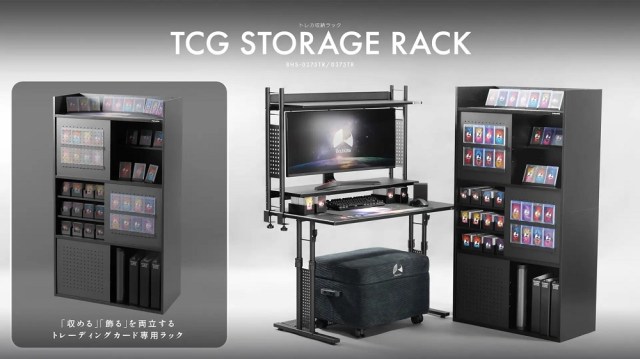
For collectors with larger rotating collections, a tiered desktop rack holds 12 to 20 graded slabs in a compact footprint. These racks angle each row slightly upward, creating a stadium-seating effect where every card remains visible. The best models include a storage drawer at the base for cards not currently on display.
Tiered racks work exceptionally well for collectors who attend trade shows or local meetups. You can transport the entire rack, display it on a table, and pack it up without removing individual slabs from their stands.
LED-Illuminated Desktop Cases
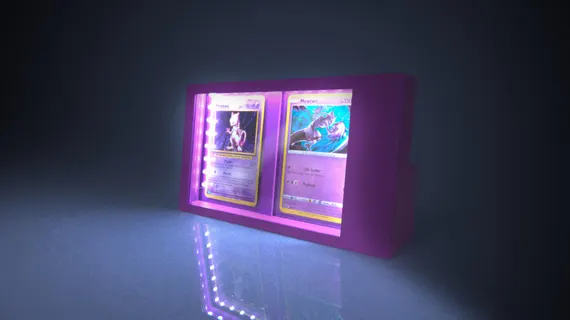
For the ultimate desk statement piece, LED-illuminated cases transform a graded card into a glowing centerpiece. These cases use LED strips along the interior edges to backlight the slab, creating a halo effect that makes holographic patterns pop. The best designs use neutral-white LEDs (4000K–5000K) for accurate color rendering.
Position LED cases away from direct monitor glare. Place them to the side of your screen rather than directly behind it, so the case lighting complements your workspace rather than competing with it.
Positioning Your Desktop Display for Optimal Viewing
Avoid Direct Monitor Glare
The biggest mistake in desktop card display is placing a slab directly behind a monitor or under a desk lamp. The reflective surface of graded slabs catches light sources and creates whiteout glare that hides card details. Position your display at a 45-degree angle to your primary light source—whether that is a window, a desk lamp, or a monitor.
Use Ambient Light, Not Direct Light
Holographic and refractor cards look best under diffused ambient light rather than direct spotlighting. If your desk sits near a window, position the display so natural light washes across the card face from the side. If you rely on artificial light, add a small diffuser panel in front of your desk lamp or use a monitor light bar with adjustable color temperature.
Height Matters
Your eyes should meet the center of the displayed card when seated in your normal working position. For most desk setups, this means the base of the stand should sit 4 to 6 inches above the desk surface. Stands that are too low force you to look down; stands that are too high create an awkward upward gaze. Adjustable stands solve this problem by letting you fine-tune the height.
Protecting Your Cards from Desk Hazards
Keep Liquids Away
This seems obvious, but desk displays sit in the danger zone for coffee spills, water bottles, and condensation from cold drinks. Position your card display at least 12 inches from the edge of your desk and away from your dominant hand side if you are right-handed. Use a coaster for every drink, and never place open containers directly beside your display.
Dust Accumulation
Desktop displays collect dust faster than wall-mounted cases because they sit in the airflow zone of HVAC vents, fans, and passing movement. Dust particles scratch acrylic surfaces when disturbed, so regular cleaning is essential. Use a soft microfiber cloth and mild soap-and-water solution. Avoid paper towels and alcohol-based cleaners, which can cloud acrylic over time.
Handle with Care
Every time you swap a card in your desktop display, you risk micro-scratches or oils from your fingers. Handle slabs by the edges only, preferably with cotton gloves for high-value cards. When removing a slab from its stand, push from the back rather than pulling from the front to avoid catching the slab lip on the stand edge.
Arranging Multiple Cards on Your Desktop
The Focal Point Rule
Even on a desk, your display needs a focal point. Choose your most visually striking card and place it at the center of your arrangement. If you are using a multi-slab frame, position the focal card in the middle slot. If you are using individual stands, place the focal card slightly forward of the others to create depth.
Group by Theme
Desktop space is limited, so every card should earn its place. Group cards by theme rather than scattering random slabs. A Pokémon trainer might display a Charizard evolution line (Charmander, Charmeleon, Charizard) in a three-slab frame. A sports collector might showcase a rookie, a parallel, and an autograph from the same player. Thematic grouping tells a story and makes the display feel intentional.
Leave Breathing Room
Do not crowd your desk with too many displays. A single well-lit stand or a three-slab frame is more impactful than a cluttered row of seven individual stands. Negative space makes each card feel special and prevents your workspace from feeling like a store shelf.
Rotate Regularly
Desktop displays expose cards to more handling and environmental fluctuation than wall-mounted cases. Rotate your displayed cards every two to three months to distribute light exposure and handling wear. This also keeps your setup fresh and gives you a reason to revisit cards you may have forgotten.
Desktop Display Ideas for Pokémon Collectors
The Trophy Card Spotlight
Place a single PSA 10 Charizard, Pikachu, or Lugia in a weighted desk stand positioned beside your monitor. Add a small LED desk lamp angled at 45 degrees to highlight the holographic foil. This setup turns your chase card into a daily source of motivation.
The Evolution Line Trio
Use a three-slab wooden frame to display a complete evolution line. Position the frame at the back of your desk, centered behind your keyboard. The horizontal arrangement creates a panoramic view that draws the eye across all three cards.
The Type-Themed Collection
Group six cards by type—Fire, Water, Grass, Electric, Psychic, and Dragon—in a tiered desktop rack. Arrange them in color order for a rainbow effect. This works especially well with full-art cards or cards with strong color-coded borders.
The Grading Progression
Display the same card in multiple grades to show the visual difference between a PSA 8, PSA 9, and PSA 10. This educational display is popular among content creators and collectors who enjoy discussing grading standards with visitors.
Common Mistakes to Avoid
-
Using a stand without a weighted base. Lightweight stands tip easily and can send your slab to the floor.
-
Placing displays in direct sunlight. Even brief morning sun through a window can fade cards over time. Position displays away from windows or use UV-filtering film.
-
Ignoring slab thickness differences. BGS slabs are thicker than PSA. A stand designed only for PSA will hold BGS loosely, creating wobble and wear.
-
Overloading tiered racks. Respect the manufacturer's capacity. Overloading stresses the frame and risks collapse.
-
Cleaning with harsh chemicals. Alcohol and ammonia cloud acrylic. Stick to mild soap and water with a microfiber cloth.
Conclusion
A desktop graded card display is more than decoration—it is a daily reminder of why you collect. The right stand or case protects your investment while turning your workspace into a personalized gallery. Start with a single weighted stand for your best card, position it away from glare and liquids, and build from there. Whether you are showcasing a PSA 10 Pokémon grail or a rotating collection of your favorite pulls, a well-designed desktop display makes every day feel like a card show.
Frequently Asked Questions (FAQ)
Q: What is the best desktop display for a single graded card?
A: A weighted single-slab stand with a solid base is ideal. Look for stands made from hardwood, concrete, or heavy acrylic that hold the slab at a 15 to 20-degree viewing angle. The weight prevents tipping, and the angle ensures the card faces you from a seated position.
Q: How do I prevent glare on my desktop card display?
A: Position your display at a 45-degree angle to your primary light source—whether that is a window, desk lamp, or monitor. Avoid placing slabs directly under overhead lights or behind monitors. Use diffused ambient light rather than direct spotlights for the best holographic effect.
Q: Can I display BGS slabs in PSA desktop stands?
A: No. BGS slabs are approximately 7mm thick, compared to PSA's 5mm. A PSA-sized stand will hold BGS slabs too loosely, causing wobble and potential corner wear. Choose stands specifically designed for BGS dimensions or adjustable stands that accommodate multiple thicknesses.
Q: How often should I rotate cards in my desktop display?
A: Rotate displayed cards every two to three months. This distributes light exposure, reduces handling wear on individual slabs, and keeps your setup visually fresh. It also gives you a reason to revisit cards from your storage collection.
Q: What type of lighting is best for desktop card displays?
A: Neutral-white LED light (4000K–5000K) positioned at a 45-degree angle to the card face provides the best illumination without UV damage or harsh glare. Avoid fluorescent and halogen bulbs, which emit more UV and create uneven lighting.
Q: How do I protect my desktop display from dust and spills?
A: Position your display at least 12 inches from the desk edge and away from your dominant hand side. Use coasters for all drinks. Clean the acrylic surface weekly with a microfiber cloth and mild soap-and-water solution. Avoid paper towels and alcohol-based cleaners.
Q: Are LED-illuminated desktop cases safe for graded cards?
A: Yes, if they use LED lighting. LEDs emit minimal UV radiation and produce little heat, making them safe for long-term display. Choose cases with neutral-white LEDs (4000K–5000K) for accurate color rendering. Avoid cases with colored LEDs, as they distort card colors.
Q: What is the best way to display multiple Pokémon cards on a desk?
A: A three-slab or six-slab wooden frame works best for themed groupings like evolution lines or type collections. For larger rotating collections, a tiered desktop rack holds 12 to 20 slabs in a compact footprint. Always group cards by theme rather than displaying random slabs.
Q: Should I use a protective sleeve on my graded slab for desktop display?
A: Yes. A slab protector sleeve adds a soft outer layer that prevents scratches from dust and handling. Choose sleeves specifically sized for your slab type—PSA, BGS, or CGC. Never force a PSA-sized sleeve onto a BGS slab.
Q: How high should my desktop card display sit?
A: The center of the displayed card should meet your eye level when seated in your normal working position. For most desks, this means the base of the stand should sit 4 to 6 inches above the desk surface. Adjustable stands allow you to fine-tune this height.