Introduction
Beckett Grading Services (BGS) slabs are among the most respected and visually striking holders in the trading card world. With their thick acrylic construction, prominent sub-grade labels, and color-coded grading system, BGS slabs command attention. But that same thickness and weight that makes them feel premium also makes them challenging to display safely.
Unlike standard PSA slabs, BGS holders are thicker, heavier, and shaped differently. A display solution built for PSA will often leave your BGS slabs loose, wobbling, or worse—at risk of corner damage. If you want to showcase your Beckett-graded collection without compromising its condition, you need a strategy built specifically around BGS dimensions and vulnerabilities.
This guide covers everything you need to know: why BGS slabs need special treatment, the best display formats for their unique size, how to protect against UV and physical damage, and the common mistakes that even experienced collectors make.
Why BGS Slabs Need Special Display Considerations
Thicker and Heavier Than Standard Slabs
BGS slabs measure approximately 7mm in thickness, compared to PSA's standard 5mm. That extra material provides excellent impact resistance, but it also means BGS slabs weigh over 70 grams each—significantly more than PSA's sub-45-gram holders. This weight difference affects everything from shelf load capacity to how securely a slab sits in a display case.
A generic display case designed for "standard" graded cards will often fit BGS slabs too loosely. That looseness creates movement, and movement creates wear. Over time, a loose-fitting case can scratch the slab surface or stress the corners. For high-value BGS 9.5 Gem Mint or Black Label cards, that risk is unacceptable.
Sub-Grade Labels Are Part of the Appeal
One of the main reasons collectors choose BGS is the detailed sub-grade breakdown: centering, corners, edges, and surface. These sub-grades are displayed prominently on the label, and part of the joy of owning a BGS slab is showing off that precision. Any display solution should present the label clearly, without glare, obstruction, or awkward angles.
Stackability vs. Display Tension
BGS slabs feature ridges that allow stable stacking—a practical design for storage. But when it comes to display, those same ridges can create uneven pressure if the slab is forced into a tight case or stacked against a flat surface without proper support. Displaying BGS slabs requires balancing their stackable nature with the need for individual protection.
Choosing the Right Display Format for BGS Slabs
BGS-Specific Protective Frames
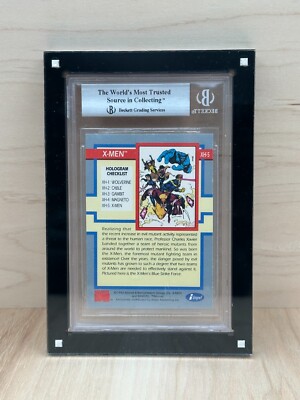
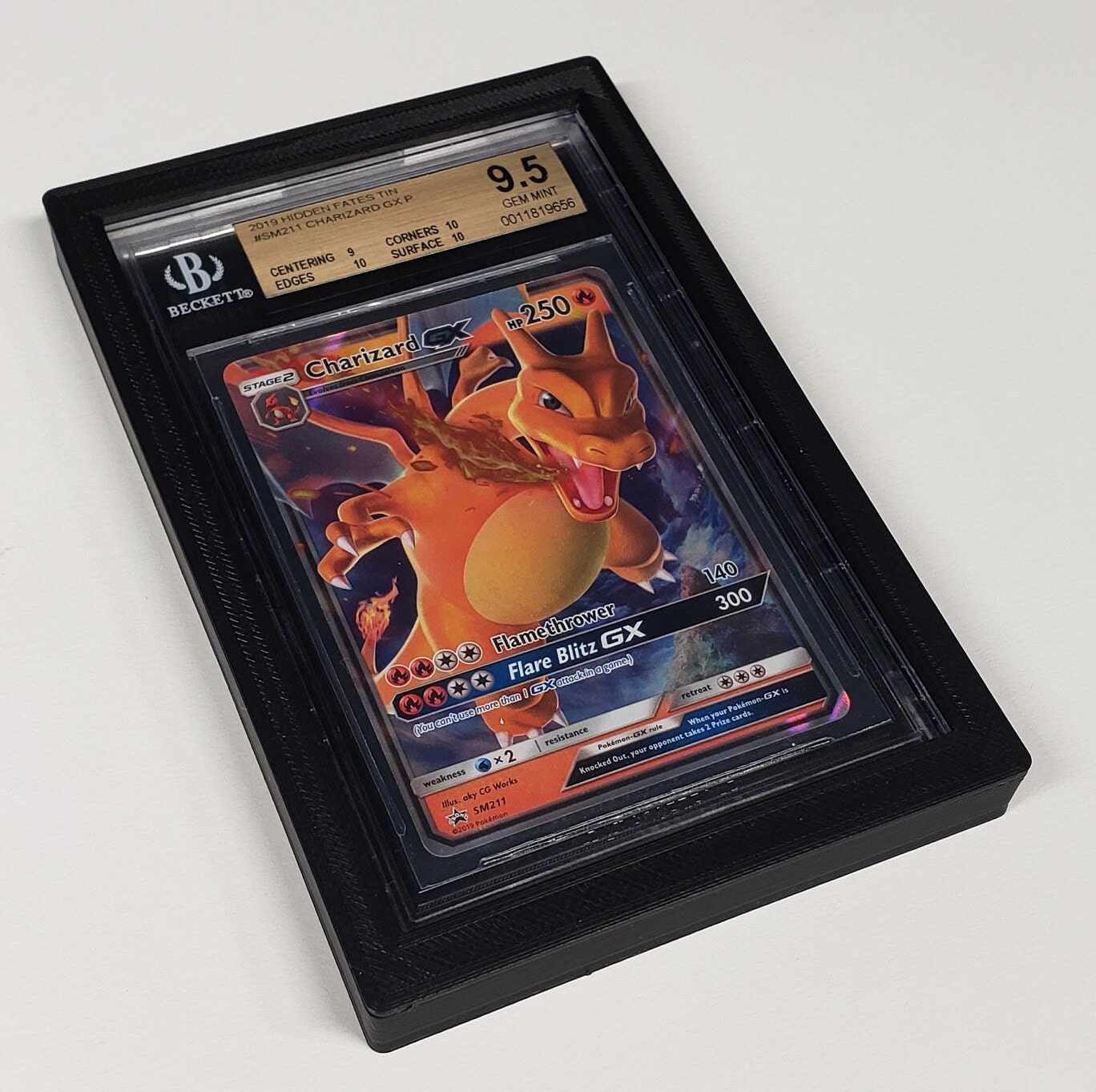
The safest way to display a single BGS slab is in a protective frame engineered specifically for Beckett dimensions. These frames hold the slab securely without pressure points, leaving the sub-grade label fully visible. Look for frames with interior dimensions that match BGS's approximate 5 1/8" × 3 1/4" footprint and 7mm thickness.
A proper BGS frame should grip the slab at the edges, not clamp it from the front and back. Front-clamping designs can create stress on the slab's sonic weld and increase the risk of corner cracks over time.
Desktop Stands with Weighted Bases
For collectors who want to rotate featured cards on a desk, shelf, or streaming setup, a weighted desktop stand is ideal. Because BGS slabs are heavy, the stand needs a low center of gravity and a wide base. Wooden stands with a solid hardwood base (walnut, cherry, or oak) provide both stability and a premium aesthetic that complements the BGS label.
Avoid lightweight plastic stands. A BGS slab's weight can topple a flimsy stand with a slight bump, sending your card to the floor. The stand should also cradle the slab at an angle between 15 and 20 degrees—steep enough to show the card face, shallow enough to prevent the slab from sliding forward.
Wall-Mounted Multi-Slab Cases
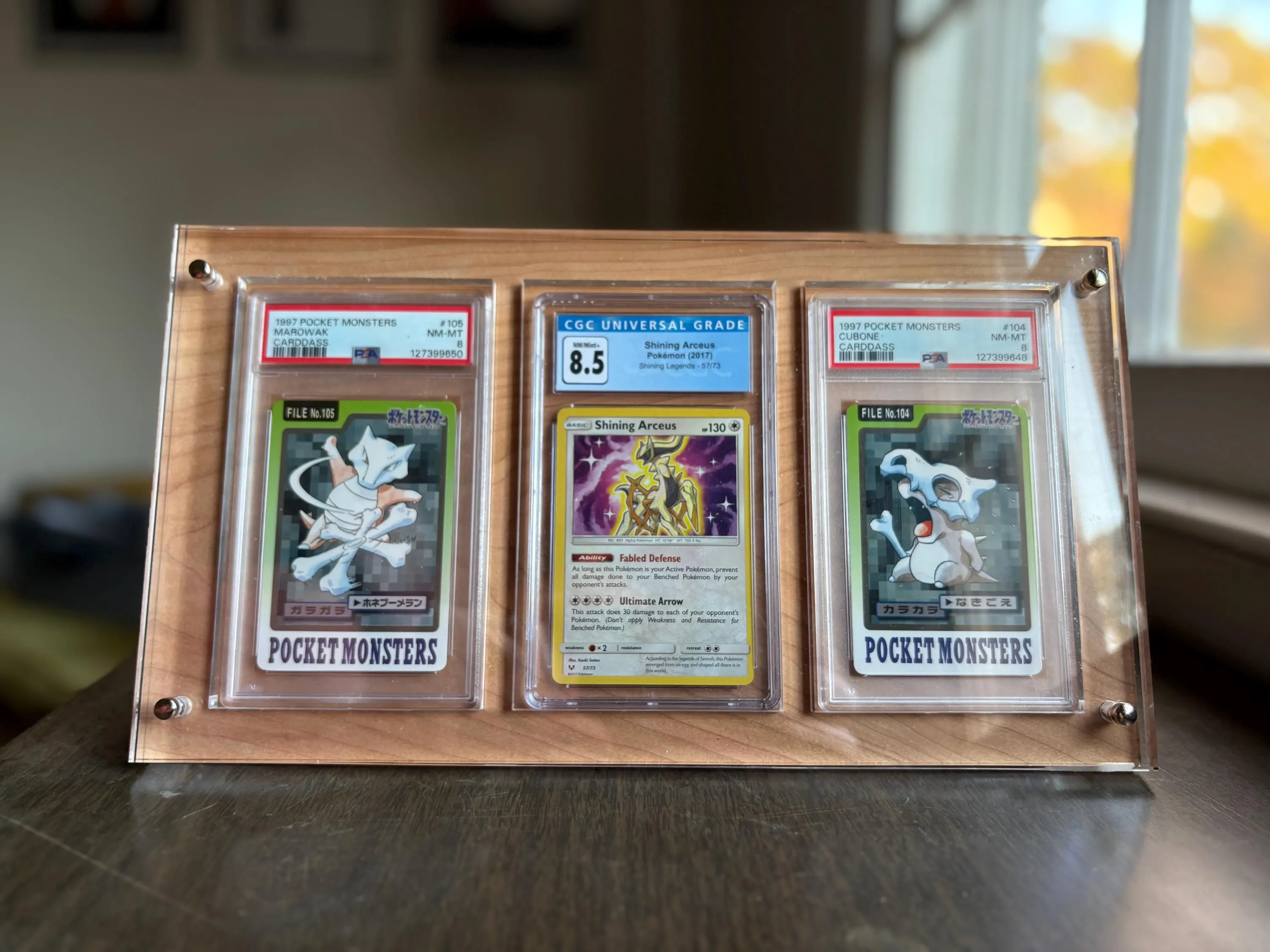
For larger collections, wall-mounted cases that hold multiple BGS slabs are the most efficient display option. However, standard multi-slab cases often use uniform slot spacing based on PSA dimensions. When BGS slabs are inserted, they either fit too tightly (causing insertion stress) or too loosely (allowing rattling and corner wear).
Choose multi-slab cases specifically advertised for BGS compatibility. These cases feature wider slot spacing and deeper grooves to accommodate the extra thickness. Some premium options include magnetic closures rather than screw-down frames, eliminating pressure points entirely.
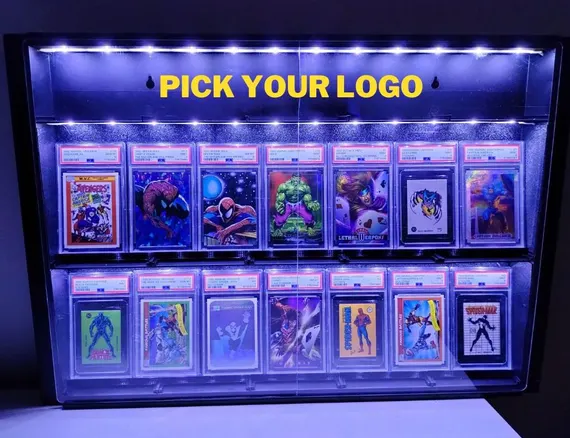
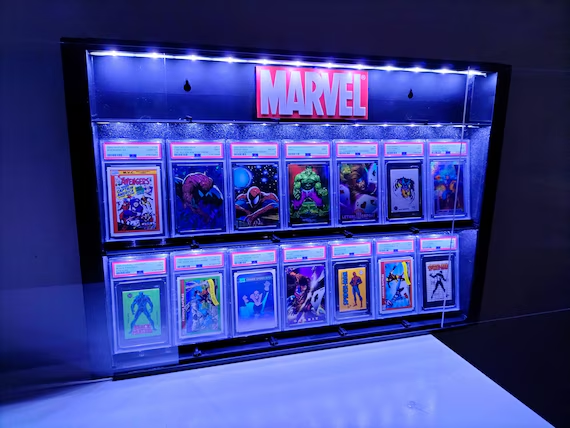
LED-Lit Display Cabinets
BGS slabs often contain high-end chrome, refractor, or holographic cards that benefit dramatically from proper lighting. LED-lit display cabinets designed for graded cards can make foil details pop. However, because BGS slabs are thicker, they cast larger shadows if the light source is positioned incorrectly.
The best LED cabinets for BGS slabs position lights along the top edge, angled downward at approximately 30 degrees. This washes light across the card face without creating the backlit shadow that hides details. Choose neutral-white LEDs (4000K–5000K) for the most accurate color rendition of both the card and the BGS label.
UV Protection: The Non-Negotiable Rule
BGS Slabs Are Not UV-Proof
A common misconception is that the thick acrylic of a BGS slab provides built-in UV protection. While BGS acrylic does include UV inhibitors, it is not rated to block all harmful wavelengths, and prolonged exposure to sunlight will still fade card colors, yellow vintage stock, and degrade holographic finishes over time.
If you are displaying BGS slabs anywhere near a window or under strong room lighting, additional UV protection is essential. This is especially true for chrome and refractor cards, which are more sensitive to light damage than standard paper stock.
How to Add UV Protection to Your Display
-
Use UV-filtering display cases. Look for acrylic or glass rated to block 99% or more of UV radiation. This is the archival standard used by museums and serious collectors.
-
Apply UV-filtering film to windows. If your display area receives natural light, window film is an inexpensive way to block up to 99.9% of UV rays without darkening the room.
-
Choose LED lighting exclusively. LEDs emit virtually no UV light, making them the safest choice for illuminated displays. Avoid fluorescent and halogen bulbs entirely.
-
Rotate your displayed cards. Even with UV protection, limit exposure by rotating which BGS slabs are on display every two to three months.
Physical Protection: Handling and Storage Tips
Use BGS-Specific Protector Sleeves
Slab protector sleeves add a soft outer layer that prevents scratches during handling and transport. However, PSA-sized sleeves are too tight for BGS slabs and can create pressure at the corners. Always use sleeves explicitly labeled for Beckett or BGS dimensions.
Sleeves also reduce the risk of micro-scratches from dust particles. When a BGS slab sits on a shelf unprotected, dust settles on the surface. Handling the slab grinds that dust into the acrylic, creating fine scratches that accumulate over time and reduce clarity.
Avoid Stacking BGS Slabs Without Padding
While BGS slabs are designed to stack, long-term stacking without protection risks surface scuffing and corner chipping. The weight of multiple slabs pressing down on the bottom holder can stress its edges. If you must stack BGS slabs for storage, place a soft foam sheet or microfiber cloth between each slab.
For display purposes, never stack BGS slabs more than three high on an open shelf. Beyond that height, the weight becomes unstable and a bump can send the entire stack falling.
Handle by the Edges Only
The natural instinct is to grip a BGS slab by the front and back faces. This transfers oils from your fingers to the acrylic and can leave permanent smudges or fingerprints. Always handle BGS slabs by the edges, preferably while wearing cotton gloves if you are moving high-value cards.
When removing a BGS slab from its display case, push from the back rather than pulling from the front. Front-pulling can catch the slab's lip on the case edge and create a leverage point that stresses the corner.
Arranging Your BGS Collection for Maximum Impact
Group by Grade or Sub-Grade
BGS's color-coded label system (Blue for standard, Black for pristine, Silver/Gold for vintage) creates natural grouping opportunities. A wall of Black Label BGS 10s arranged together creates a striking visual statement. Alternatively, group cards by their lowest sub-grade to track your collection's quality progression.
Leave Room for the Thickness
When spacing wall shelves or case slots, remember that BGS slabs protrude further from the wall than PSA slabs. Leave at least 8mm of clearance between the slab face and any glass or acrylic cover. This prevents the slab from pressing against the cover and creating pressure marks.
Mix Vertical and Horizontal Orientation
BGS slabs look excellent in both vertical and horizontal arrangements. For a dynamic gallery wall, alternate between portrait-oriented single-slab frames and landscape-oriented multi-slab cases. The variety adds visual interest while accommodating cards with different aspect ratios.
Add Context Without Clutter
Surround your BGS display with related items—team pennants, ticket stubs, or framed photos of the player. This turns a card wall into a storytelling exhibit. Keep the surrounding decor simple, though; the BGS label and card art should remain the focal point.
Common Mistakes to Avoid
-
Forcing BGS slabs into PSA-sized cases. The extra thickness will stress the slab corners and may crack the case over time. Always verify BGS compatibility before purchasing.
-
Displaying near heat sources. BGS acrylic can warp under sustained heat. Keep displays away from radiators, heating vents, and direct sunlight.
-
Using screw-down display cases. The pressure from screws can create stress points on BGS slabs. Magnetic closures are safer and easier to use.
-
Ignoring humidity. Acrylic is not breathable. In humid environments, moisture can become trapped between the slab and an outer case, creating fogging or mold risk. Use silica gel packets in enclosed display cases.
-
Cleaning with harsh chemicals. Alcohol and ammonia-based cleaners can cloud BGS acrylic over time. Use only mild soap, water, and a microfiber cloth.
Conclusion
Displaying BGS slabs without damaging them comes down to one principle: respect the thickness. Beckett's 7mm slabs are heavier, bulkier, and more visually complex than standard graded holders, and they require display solutions built specifically for their dimensions. From BGS-specific frames and weighted desktop stands to UV-filtering acrylic and proper handling habits, every layer of protection preserves both the slab's condition and the card's value inside.
Start by auditing your current display setup. If your BGS slabs wobble, rattle, or fit loosely, replace those cases with Beckett-specific alternatives. Add UV protection, handle by the edges, and rotate your displayed cards regularly. With the right approach, your BGS collection will look as impressive as the grades suggest—and stay that way for years to come.
Frequently Asked Questions (FAQ)
Q: What are the exact dimensions of a BGS slab?
A: A standard BGS slab measures approximately 5 1/8 inches in height, 3 1/4 inches in width, and 7mm in thickness. Sub-grade slabs and older holders may be slightly thicker, so always verify fit before purchasing display cases.
Q: Can I use PSA display cases for BGS slabs?
A: No. PSA display cases are designed for 5mm slabs and will fit BGS holders too loosely, causing movement, rattling, and potential corner wear. Always choose display cases specifically engineered for BGS dimensions.
Q: Do BGS slabs provide UV protection?
A: BGS slabs contain UV inhibitors in their acrylic, but they are not fully UV-proof. Prolonged sun exposure will still damage cards over time. For displayed BGS slabs, use additional UV-filtering cases or window film rated for 99%+ UV blockage.
Q: What is the best way to clean a BGS slab?
A: Use a soft microfiber cloth and a mild solution of soap and water. Avoid alcohol, ammonia, and paper towels, as these can scratch or cloud the acrylic surface. Always clean by wiping gently in one direction.
Q: How many BGS slabs can I safely stack?
A: For storage, BGS slabs can be stacked in moderate heights thanks to their ridged design, but place soft padding between each slab to prevent surface scuffing. For open display, do not stack more than three high to avoid instability.
Q: Are magnetic display cases safe for BGS slabs?
A: Yes. Magnetic closures are actually preferred over screw-down cases for BGS slabs because they eliminate pressure points that can stress the holder's edges. Look for cases with neodymium magnets and BGS-specific interior dimensions.
Q: What lighting is best for displaying BGS slabs?
A: Neutral-white LED lights (4000K–5000K) positioned above the display at a 30-degree downward angle provide the best illumination without UV damage or glare. Avoid fluorescent and halogen bulbs.
Q: Should I use outer sleeves on my BGS slabs?
A: Yes. BGS-specific protector sleeves prevent scratches during handling and reduce dust accumulation. Never use PSA-sized sleeves on BGS slabs, as the tight fit can stress the corners.
Q: Can humidity damage BGS slabs?
A: While the slab itself protects the card from direct moisture, trapped humidity between the slab and an outer display case can cause fogging or mold. Use silica gel packets in enclosed cases and store displays in climate-controlled rooms.
Q: Why do BGS slabs feel heavier than other graded holders?
A: BGS uses thicker acrylic (approximately 7mm) compared to PSA's 5mm and CGC's 5mm. This extra material provides superior impact resistance but increases weight to over 70 grams per slab, affecting shipping costs and display stability.