

Seasonal rotation is the difference between displaying a collection and rationing it — the discipline that lets every card take its turn in the light without any card taking the permanent damage that light eventually delivers. The physics is settled: a permanently displayed card at moderate room lighting burns through a year's conservation budget in months, while a quarterly rotation cycle gives every card in the pool nine months of darkness for every three months of display — the museum's rule, translated to a home wall. What hasn't always been settled is the ease part: rotation as a concept loses to rotation as a chore the moment the hardware fights back. This guide solves the ease problem — the calendar, the swap-speed hardware, and the ritual that makes seasonal rotation something you do in an afternoon rather than something you intend to do.
The Physics: Why Seasonal Rotation Exists
Start with the dose math, because it's the argument that ends every "but it looks fine" objection. Light damage accumulates in lux-hours — brightness multiplied by time — and it's cumulative and irreversible. A card displayed at 150 lux for six hours a day accumulates roughly 328,500 lux-hours per year; the conservation budget for very sensitive materials sits around 100,000 lux-hours annually, meaning a permanently displayed card burns three-plus years of budget every twelve months. Rotate that same card quarterly — three months on the wall, nine months in dark storage — and its annual dose drops to roughly 82,000 lux-hours, comfortably inside the budget that keeps colors stable for decades.

The calendar chart shows the rhythm: four display seasons per year, each card getting its quarter of light and its three quarters of rest. The conservation guidance that governs the practice is absolute — no paper or organic object should ever be on permanent display — and the graded trading card, paper stock and dyed inks inside a plastic shell, is precisely the material class the rule was written for. The slab changed the packaging, not the physics.
The Calendar: Four Seasons, Four Stories
The seasonal rotation earns its keep aesthetically as well as physically, because each quarter gets a theme, and the theme turns a storage discipline into a gallery practice. The rotation guidance published for collectors suggests exactly this structure: spring features the new release season — recent pulls and current-set chase cards making their debut; summer favors the pieces that tolerate brighter conditions, or shifts the display toward a dark-corner cabinet where the vintage section lives; autumn belongs to the grail rotation — the cards that earned their light, displayed at eye level as the year's centerpiece; and winter runs the holiday exhibition — gift pulls, the year-in-review "greatest hits" wall, the cards that tell the year's collecting story.
The tracking layer is what makes the calendar real. Museums track exposure in collection-management systems; the collector needs a spreadsheet with four columns — card, display quarter, light conditions, cumulative display time — the lux-hours calculation that conservation practice recommends as the practical baseline. Four displays a year, each with a three-month run, gives every card in the rotation pool its nine-to-three ratio, and the spreadsheet tells you which cards are due for a longer rest.
The Ease Problem: Hardware Decides Whether Rotation Happens
Here's the truth the rotation guides all arrive at eventually: the rotation habit is a hardware decision before it's a discipline decision. A frame that requires a screwdriver to open gets opened once — at installation — and never again; collectors who've lived with screw-down cases describe the pattern without exception, the wall that froze in season one and never rotated again. The ease problem, therefore, is a swap-speed problem, and the market has solved it with a tier of hardware designed specifically for the quarterly swap.

The swap-speed chart ranks the field. At the slow end, the traditional screw-down frame takes eight minutes per card — a forty-minute ordeal for a five-card wall that practically guarantees the wall never changes. The hinged-door wall case with foam slots cuts that to two minutes per card. The slide-front wood case — where the acrylic front panel slides out like a drawer — drops it under a minute. And the magnetic formats end the contest entirely.
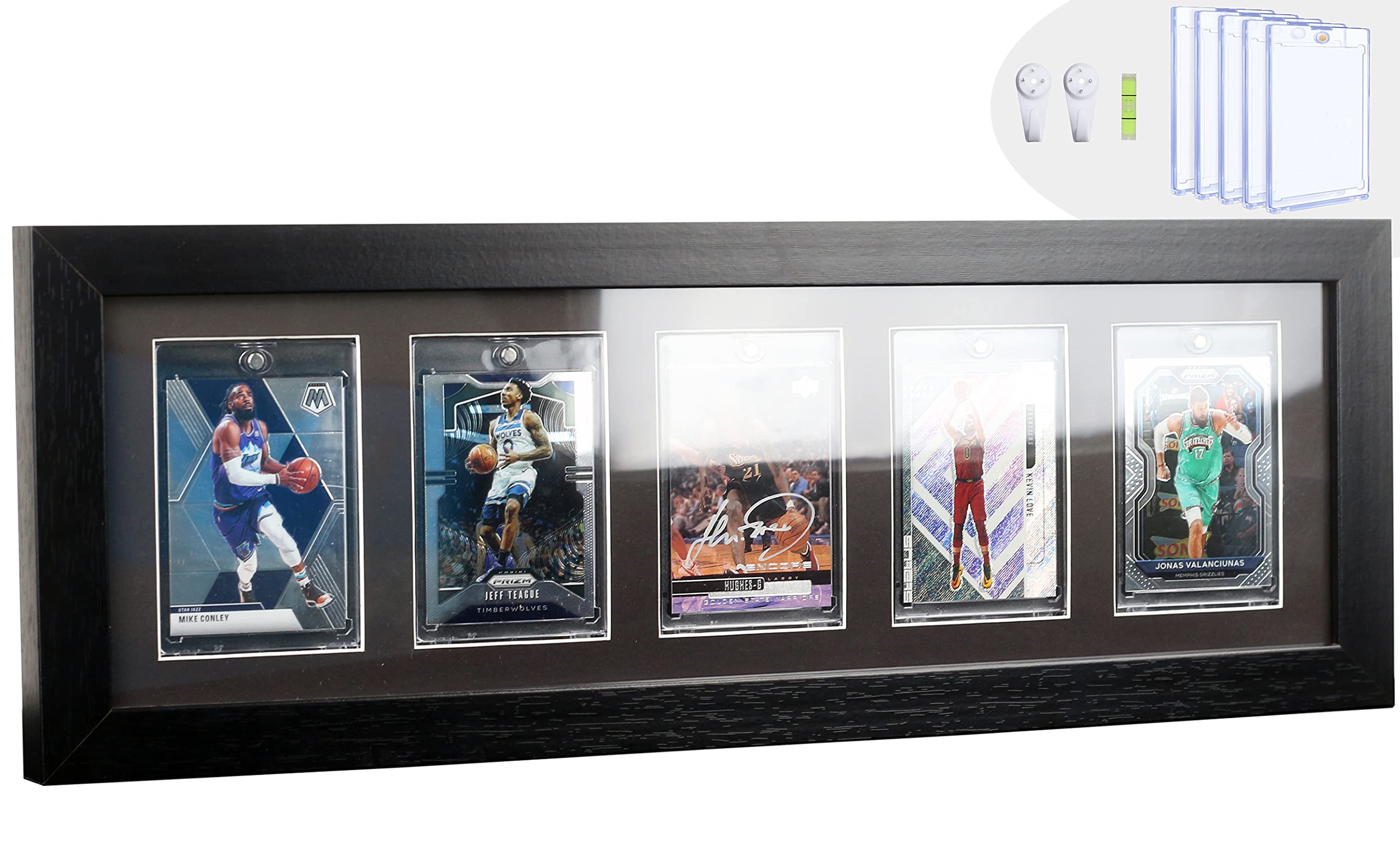
The magnetic frame above — five slots behind UV-protected acrylic, magnetic closure, the raw cards held in included magnetic one-touches — is the rotation workhorse: pop the faceplate, swap the card, snap it shut, twenty seconds start to finish, with the UV specification printed on the box.
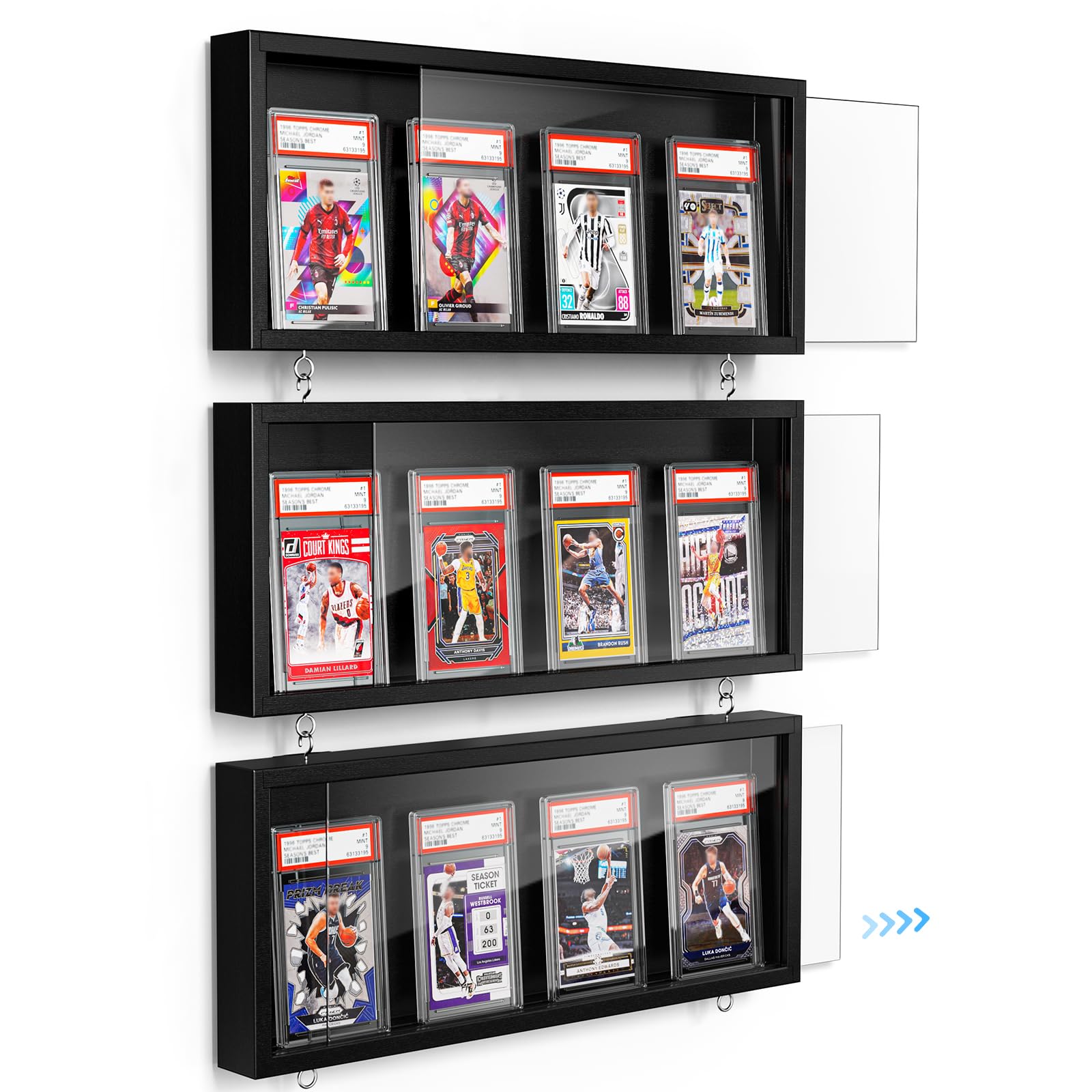
The slide-front cases above — three wood-framed wall cases with sliding acrylic fronts, hanging in a column — serve the rotation collector who wants the furniture look with the drawer convenience: slide, swap, slide, and the wall's new season takes five minutes total. The design detail that matters for rotation: the slide mechanism works with one hand while the other holds the incoming card, which is exactly the ergonomics a quarterly swap needs.
The hinged-door case above — foam-slotted interior behind a full-length door — splits the difference for the security-conscious rotator: the door locks between swaps, and the foam slots hold slabs without clips, so the swap is pull-and-place inside a case that still locks.
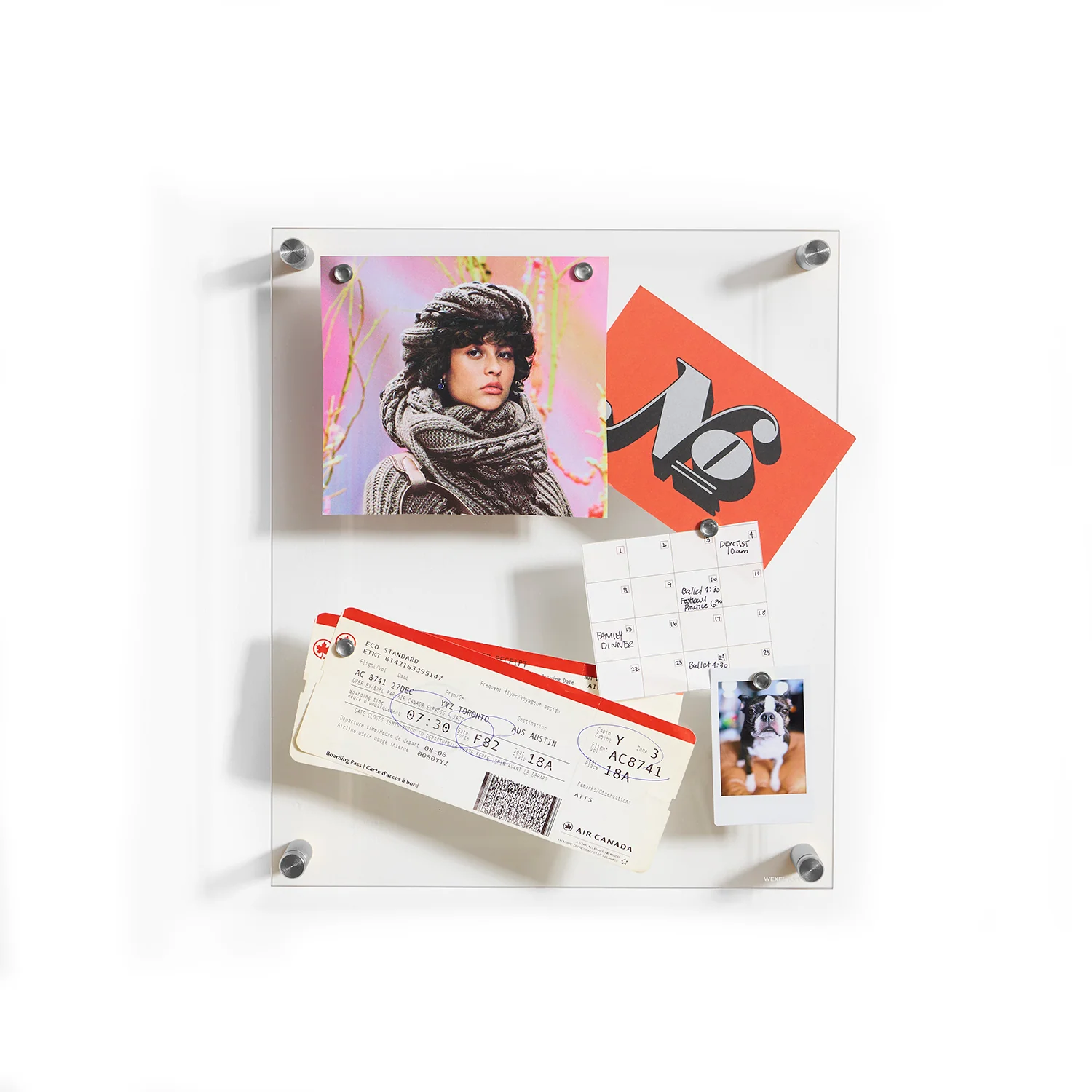
And the float frame above — borrowed from the art world's easy-change framing tradition, where corner magnets hold the acrylic face and contents between two panels — is the fastest format of all: the face lifts off, the card changes, the face drops back. Fifteen seconds per swap, at the cost of the lowest protection score — no seal, no lock — which slots it into the high-rotation, low-value tier of the wall, the season's debut slots where cards turn over monthly.
The enthusiast tier even builds rotation into the display itself: 3D-printed rotating hex displays — six cards facing out, a dozen more stored inside, a lazy-Susan bearing spinning the whole unit, hot-swap magnetic parts for the outer ring — turn the rotation into the display mechanic.
The Swap-Day Ritual
The quarterly rotation takes an afternoon if the system is set up right, and the setup is what makes the afternoon possible. Stage the incoming season before touching the wall: the spring lineup sleeved, cased, and staged on a tray — the swap is a relay, not an excavation. Work top to bottom, one frame at a time, over a soft towel — the swap day is the collection's highest-frequency handling event of the year, and it's where corner chips and case scratches actually happen. Inspect every outgoing card as it comes off the wall: the quarterly swap is the built-in condition audit, where fading, label drift, and case damage surface at the whisper stage rather than at sale time. Log the swap in the spreadsheet — card, quarter, lux-hours accumulated — because the log is what makes next season's decisions data instead of memory. And seal the outgoing cards into their dark-storage modules — sleeves on, foam case, desiccant refreshed — because the rest season is where the preservation happens. Four habits, one afternoon, four times a year.
Market Analysis: Rotation-Friendly Hardware Is the Growth Engine

The market data confirms the ease thesis: rotation-friendly hardware — magnetic quick-swap frames growing at roughly 72 percent annually, slide-front cases at 62 — is outpacing standard frames by four to one, as quarterly rotation has migrated from the conservationist fringe to the hobby's default discipline. The specification-transparency wave that reshaped the case market has reached the frame market too: the rotation-friendly products now carry the same published UV percentages as the vault cases, because the rotation wall is the exposure wall and the exposure wall is where the light discipline matters most. The pricing data keeps the habit accessible — magnetic five-card frames at thirty to sixty dollars, slide-front wood cases at twenty-five to forty each — meaning the rotation-friendly wall costs marginally more than the frozen wall and protects the collection several times better.
User Analysis: Four Rotation Collector Personas
The seasonal rotator divides into four personas. The purist runs the full museum protocol — quarterly themes, lux-hour logs, the twenty-percent-of-the-time discipline for the vintage and autographed tier — and treats the spreadsheet as part of the collection. The enthusiast rotates for freshness: the wall changes with the seasons because the collector wants the room to change, and the protection math is a welcome bonus rather than the motivation; this persona drives the magnetic-frame market. The pragmatist rotates what matters and freezes what doesn't — the grail wall rotates quarterly, the bulk binder wall stays put — and runs the two-speed system without guilt. And the procrastinator-turned-convert owns the screw-down frames from the pre-rotation era, has the rotation habit die every season to the screwdriver problem, and converts to magnetic hardware the first time they experience the twenty-second swap; the conversion rate from this persona to the magnetic tier is, per the market data, essentially the segment's entire growth curve.
Operational Structure Analysis: Why Rotation Got Easy
The supply side explains the timing. The closure layer solved the core problem: magnetic and slide mechanisms replaced screws across the frame category between 2023 and 2025, converting every swap from a tool event to a hand event. The specification layer brought the UV percentages and the dust seals to the rotation-friendly formats, ending the trade-off where easy-swap meant unprotected. The ergonomic layer added the one-handed slide, the corner-magnet float, the pull-and-place foam — the micro-design decisions that compound into the twenty-second swap. The education layer — the rotation calendars and lux-hour spreadsheets the brands now publish — taught the habit that the hardware enables. And the storage layer closed the loop: the dark-storage modules (foam cases, zip binders, drawer units) that receive the outgoing season are the same modular hardware the rest of the collection lives in, so the rotation is a within-system transfer rather than a relocation project. The operational summary: seasonal rotation became easy when every layer of the system started assuming it.
Upgrade Iteration Data: The Rotation Hardware Generations
The ease evolution has measurable generations. Generation one was the screwdriver era — screw-down everything, rotation intention, zero rotation behavior. Generation two added the hinged door — the first swap-friendly format, at two minutes per card. Generation three brought the slide-front cases — under a minute, furniture-grade looks. Generation four is the magnetic era — twenty-second swaps, the faceplate pop, the rotation habit finally sticking. Generation five is the smart-rotation frontier: frames with NFC tags logging which card hung which season, app-connected lighting adjusting per season's lineup, the spreadsheet migrating into the hardware. Each generation cut the swap time by half or better; each halving doubled the number of collectors who actually rotate. The ease problem, it turns out, was the whole problem.
Common Mistakes
Rotation-intention hardware. Buying screw-down frames and planning to rotate is planning to fail; the screwdriver tax kills the habit by the second season. Buy for the swap speed you'll actually use.
Swapping without the audit. The quarterly swap is the built-in condition check; skipping the inspection wastes the only scheduled moment when every card leaves the wall and can be examined.
No staging tray. The relay-without-a-tray collector shuffles cards on the desk mid-swap — the highest-risk handling event of the year, done improvised.
Skipping the log. The spreadsheet is what turns four seasons into a conservation system instead of four redecorations; without it, cumulative exposure is guesswork.
Resting cards improperly. The rest season only works in genuine darkness — a sleeve on a lit shelf is still display; the foam case in the closet is what resets the budget.
Rotating the autographs on the card schedule. Signed cards run a stricter budget — one to three months of display per year — and the seasonal calendar should reserve their seasons accordingly rather than treating them like the rest of the pool.
Conclusion
Seasonal rotation ends the false choice the hobby lived with for decades — display the collection or preserve it — by making the two the same practice. The calendar gives every card its season and its story; the dose math gives every season its budget and every card its rest; the hardware gives the whole system its ease, turning the quarterly swap from a screwdriver afternoon into a twenty-second habit per card. The market has finished the job the conservationists started: rotation-friendly frames at every price point, UV specs on the easy-swap formats, dark-storage modules that receive the outgoing season, and the education layer teaching the habit the hardware enables. Four afternoons a year. Every card in the pool sees the wall. No card sees it forever. That's the whole system — and the collectors running it report the same discovery the museums made first: the collection that rotates stays new, stays safe, and stays worth displaying for as long as you choose to keep it.





