Anime collecting has evolved far beyond scattered figures on dusty shelves and cards tucked in binders. In 2026, the modern otaku room is a curated gallery—a space where trading cards and anime figures coexist in a single, cohesive visual narrative. Whether you're a Pokémon trainer with a shelf full of Charizard slabs and Pikachu Nendoroids, or a Demon Slayer fan pairing signed cards with Tanjiro scale figures, the combined display cabinet is the ultimate expression of your fandom.
At Kaapai, we understand that your collection tells a story. This guide will show you how to design a combined anime figure and card display cabinet that protects your investments while creating a jaw-dropping showcase worthy of any collector's paradise.
Why Combine Cards and Figures? The 2026 Collector's Mindset
The days of segregating collections are over. Modern anime rooms in 2026 embrace intentional curation over random collecting—where every piece has a purpose and the display tells a cohesive story
. When you combine trading cards and figures in one display, you create:
-
Thematic depth — A Demon Slayer card paired with a Tanjiro figure tells a more compelling story than either piece alone
-
Visual variety — Flat cards and 3D figures create dimensional contrast that keeps the eye moving
-
Space efficiency — One premium cabinet replaces multiple scattered storage solutions
-
Investment protection — Proper combined display reduces handling and environmental damage
The key is designing a cabinet that accommodates both media types without compromising either.
1. Understanding the Two Media: Different Needs, One Cabinet
Before designing your cabinet, understand what each collection type requires:
Trading Cards: Flat, Protected, Visible
Trading cards need:
-
Horizontal or angled display — Cards are viewed face-forward, not from above
-
Minimal handling — Easy access without removing cards from protection
-
Dust sealing — Enclosed cases prevent particle accumulation on surfaces
Anime Figures: Vertical, Illuminated, Spaced
Anime figures need:
-
Adjustable shelving — Different figure heights require flexible shelf spacing
A combined cabinet must solve for all these variables simultaneously.
2. Cabinet Architecture: The Three-Zone System
The most effective combined display cabinets use a three-zone vertical layout that separates cards and figures while maintaining visual harmony:
Zone 1: The Card Gallery (Lower Third)
The lower section of your cabinet is ideal for trading cards because:
-
Eye-level viewing when seated — Perfect for desk-adjacent cabinets
-
Easier access for rotation and trades
-
Stable temperature — Heat rises, so the bottom stays cooler for card preservation
Design specs:
-
Angled card slots at 15–30° for optimal viewing without glare
-
Recessed mounts with EVA foam inserts for PSA/BGS/CGC slabs
-
99.6% UV-blocking cast acrylic panels (not extruded—see our Acrylic Buying Guide)
-
Magnetic closures for dust-free, tool-free access
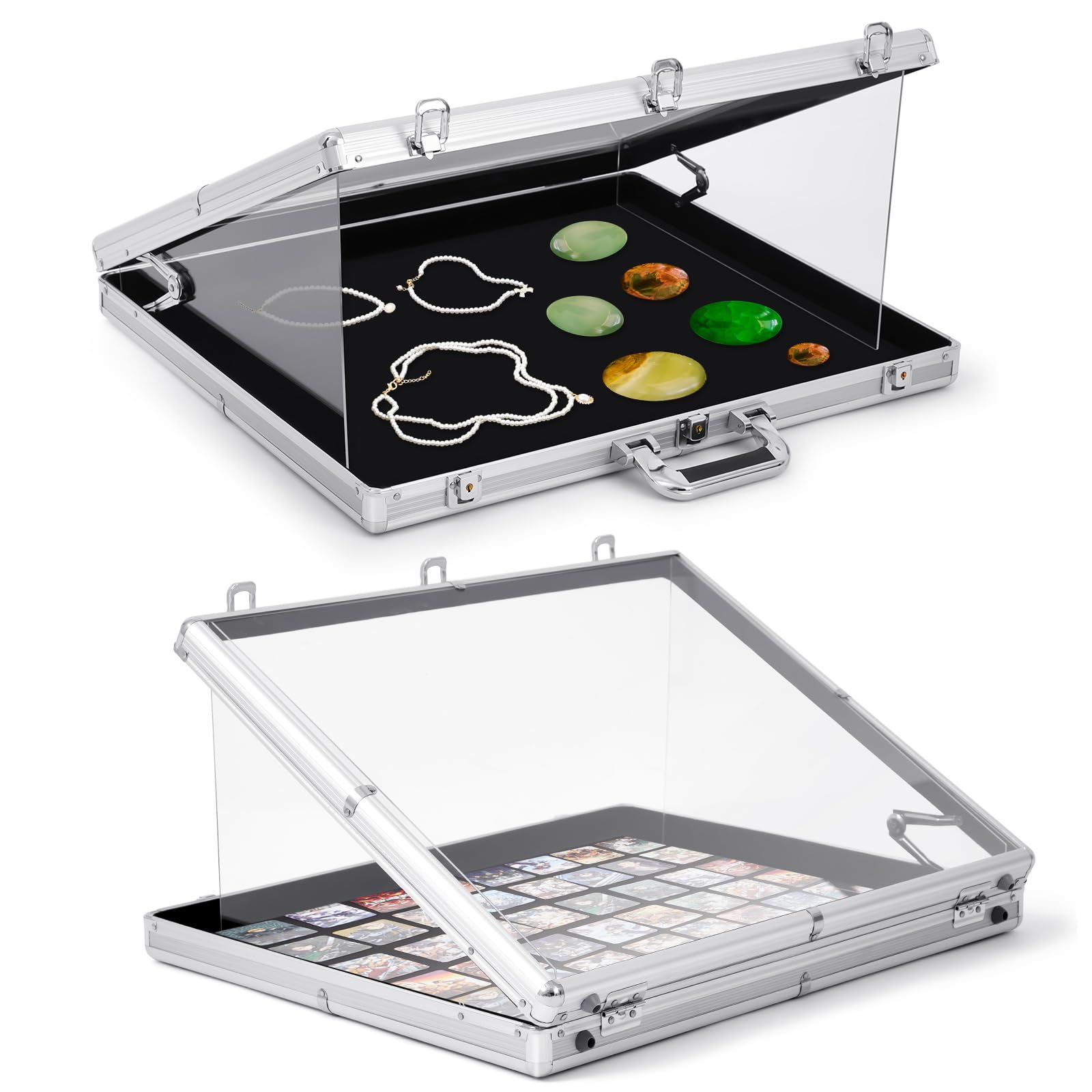
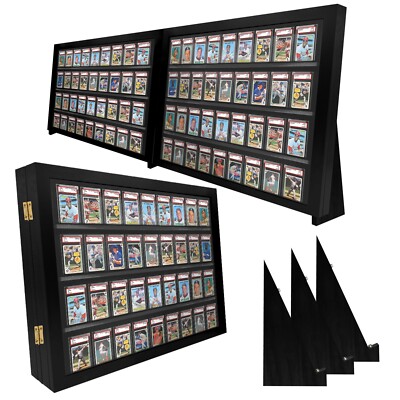
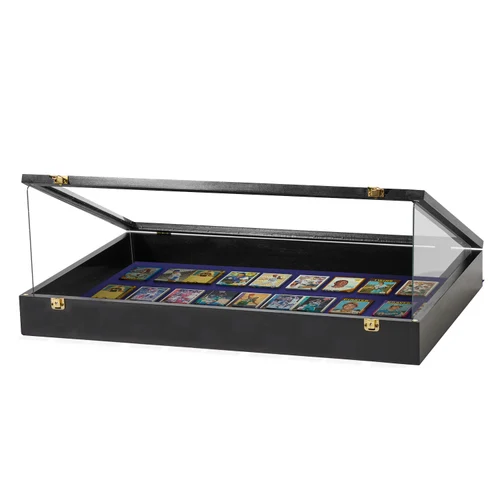
Kaapai's aluminum-framed card display cases feature precision-fit foam inserts and 99.6% UV protection—perfect for the card gallery zone.
Zone 2: The Transition Shelf (Middle Third)
This is where the magic happens—the intersection of cards and figures.
Design strategy:
-
Diorama integration — Place a card display stand in front of a matching figure. A signed Pokémon card behind a Pikachu Nendoroid creates a "card and character" vignette.
-
Riser systems — Use acrylic risers to elevate smaller figures above card displays, creating visual layers
Pro tip: Group by franchise, not by item type. A Demon Slayer shelf with the manga volumes, a Tanjiro figure, and related trading cards tells a story. A shelf with five random figures from five different shows looks like a store display.
Zone 3: The Figure Showcase (Upper Third)
The top section is reserved for your most impressive figures because:
-
Vertical clearance accommodates tall scale statues
-
Overhead lighting creates dramatic down-lighting on sculpt details
-
Less frequent handling reduces accident risk for fragile pieces
Design specs:
-
Integrated LED strips with remote-controlled RGB options
-
Mirrored back panels to create depth and visual expansion
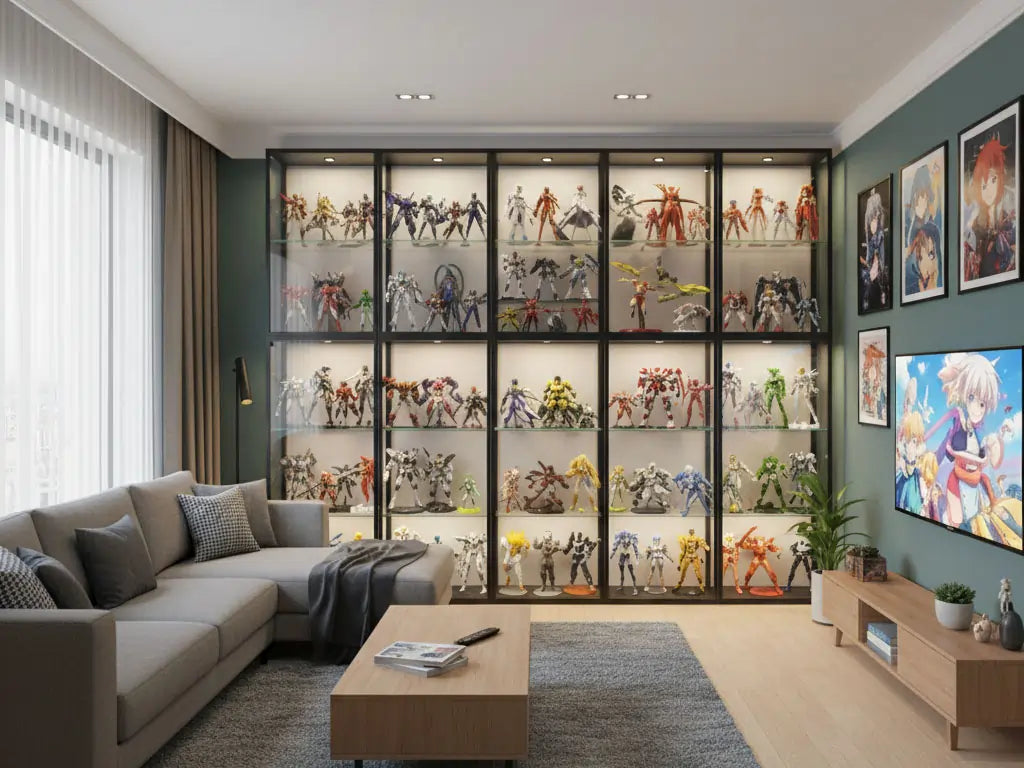
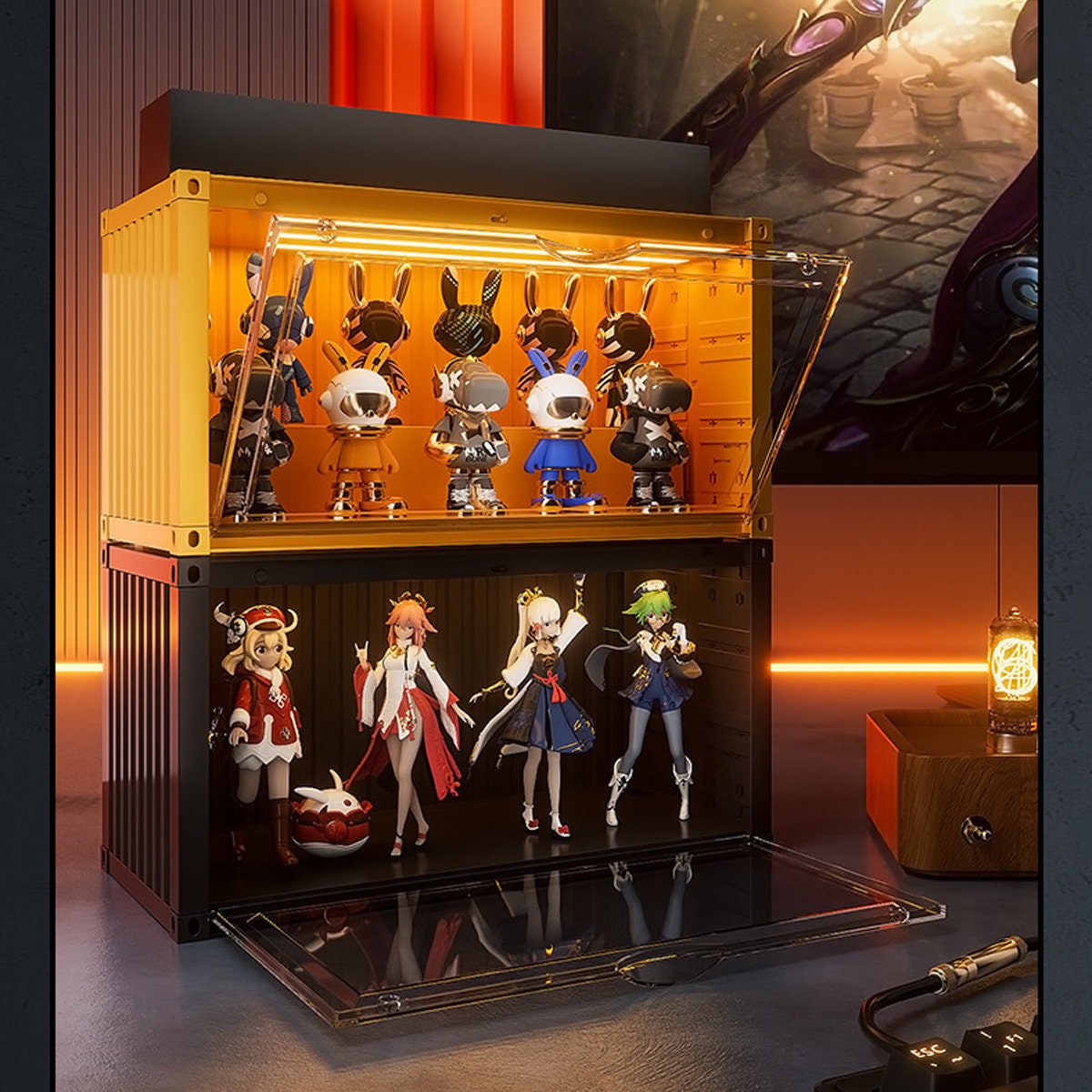
Floor-to-ceiling glass display cabinets with integrated LED lighting create a stunning figure showcase zone—ideal for serious collectors.
3. Material Selection: Building for Longevity
Your cabinet's materials determine both aesthetics and preservation quality.
Frame Materials
| Material | Pros | Cons | Best For |
|---|---|---|---|
| Aluminum | Lightweight, modern, corrosion-resistant | Can feel cold/industrial | Contemporary, tech-forward rooms |
| Wood (Oak/Walnut) | Warm, classic, customizable | Heavy, requires maintenance | Traditional, cozy aesthetics |
| Steel | Maximum durability, lockable | Heavy, expensive | High-security collections |
| Hybrid (Wood + Metal) | Best of both worlds | Higher cost | Premium custom builds |
Panel Materials
Tempered Glass: The classic choice. Crystal-clear visibility, scratch-resistant, but heavy and potentially dangerous if shattered. Best for stationary, floor-standing cabinets.
Cast Acrylic: Our recommendation. 50% lighter than glass, shatter-resistant, and available with 99.6% UV-blocking formulations. Premium cast acrylic maintains 93%+ optical clarity while protecting your collection from fading and yellowing.
Extruded Acrylic: Budget option. Lower optical clarity, prone to scratching, and less UV-stable. Avoid for valuable collections.
Interior Finishes
-
Black velvet/foam backing — Makes colors pop, reduces reflection
-
Mirrored panels — Creates visual depth, makes collections appear larger
4. Lighting Design: The Make-or-Break Element
Lighting is the single most important factor in combined displays. Under flat overhead lighting, even the best collection looks like a garage sale. The right lighting transforms a cabinet into a gallery.
Card Zone Lighting
-
Neutral white 4000K–5000K LEDs — Accurate color rendering for card artwork
-
Angled at 30–45° — Minimizes glare on graded slab surfaces
-
Dimmable — Reduce intensity during non-viewing hours to limit cumulative light exposure
Figure Zone Lighting
-
Cool white 5000K–6500K for crisp, museum-like presentation
Combined Cabinet Lighting Strategy
Use zoned lighting controls so you can illuminate cards and figures independently. A Demon Slayer card display might use neutral white for accuracy, while the accompanying figure uses warm amber to match the anime's color palette.
Critical rule: All LEDs must be low-heat. Even low-power LEDs generate some thermal energy over time, which can warp PVC figures and accelerate card degradation.
5. Themed Display Ideas: Bringing Your Collection to Life
The Pokémon Trainer's Cabinet
-
Bottom zone: Graded Charizard and Pikachu cards in UV-protected acrylic cases
-
Middle zone: Pikachu Nendoroid on an acrylic riser, with a holographic card display angled behind
-
Top zone: Large-scale Charizard figure with warm orange LED backlighting
-
Color scheme: Electric yellow and flame orange RGB accents
The Demon Slayer Shrine
-
Bottom zone: Signed voice actor cards and rare manga panels
-
Top zone: 1/7 scale Rengoku figure with flame-colored LED spotlighting
-
Backdrop: Custom vinyl wall decal of Mount Natagumo
The Sports Anime Crossover
-
Bottom zone: Haikyu!! and Blue Lock trading cards in team-color-coded frames
-
Middle zone: Hinata Shoyo figure mid-spike, with matching character cards displayed on a mini easel
-
Top zone: Limited edition team jersey figure with cool white illumination
-
Accent: Miniature volleyball or soccer ball props
6. Kaapai's Combined Display Solutions
We engineer products specifically for collectors who refuse to choose between cards and figures:
| Product | Features | Best For |
|---|---|---|
| Modular Display Cabinet | Adjustable shelves, 99.6% UV acrylic, zoned RGB lighting, ventilation slots | Full room installations |
| Card + Figure Combo Case | Dual-zone design with card slots below and figure platform above | Desk displays, small collections |
| Wall-Mounted Gallery Frame | Magnetic card mounts + figure shelf with integrated spotlight | Vertical space optimization |
| Floor-Standing Showcase | Lockable doors, mirrored back, 8-tier adjustable shelving | Serious collectors, content creators |
| Travel Display Case | Ribbed aluminum shell, foam inserts for cards, figure-safe padding | Conventions, trade shows |
Available on Shopify, Amazon, and directly at kaapai.com.
7. Environmental Control: The Invisible Foundation
Even the perfect cabinet fails without proper environmental management:
Humidity: Maintain 40–50% relative humidity. Too high promotes mold; too low causes brittleness. Use silica gel packs inside sealed cases.
Temperature: Keep cabinets between 65–72°F (18–22°C). Avoid placement near radiators, windows, or electronics that emit heat.
Positioning: Never place cabinets in direct sunlight. Even with UV protection, heat buildup from sun exposure can damage both cards and figures.
Cleaning: Dust cabinet interiors monthly with a microfiber cloth. Never use aerosol sprays near figures or cards. Handle figures with clean hands or cotton gloves when rearranging.
Final Thoughts: Your Collection Deserves a Stage
A combined anime figure and card display cabinet in 2026 isn't just storage—it's storytelling. It's the difference between a room that says "I own some stuff" and a room that says "I live this passion."
When you design with intention—grouping by franchise, balancing card and figure zones, controlling light and environment—you create something greater than the sum of its parts. You create an experience.
At Kaapai, we believe every collector deserves a stage worthy of their collection. Whether you're starting with a single combo case or designing a full-room installation, we're here to help you build the display of your dreams.
Your cards and figures belong together. Give them a home that proves it.
Shop Kaapai Combined Display Solutions → kaapai.com
Frequently Asked Questions (FAQ)
Q1: Can I really display cards and figures in the same cabinet without damaging either?
A: Absolutely—with proper design. The key is zoned separation: cards in enclosed, UV-protected lower sections with minimal heat exposure, and figures in ventilated upper sections with dedicated lighting. Kaapai's combined cabinets use 99.6% UV-blocking cast acrylic and integrated ventilation to protect both media types simultaneously.
Q2: What's the ideal shelf spacing for a combined card and figure cabinet?
A: For the card zone, 3–4" vertical clearance is sufficient for angled displays. For the figure zone, adjustable shelves with 8–12" spacing accommodate most scale figures, while removable shelves allow space for statues exceeding 12". Always measure your tallest figure before finalizing shelf positions.
Q3: Do LED lights damage trading cards or figures?
A: Quality low-heat LEDs (4000K–5000K for cards, 2700K–6500K for figures) are safe when properly positioned. The danger comes from heat buildup in enclosed cabinets without ventilation, or from high-UV LEDs. Avoid incandescent bulbs entirely—they generate excessive heat that warps PVC figures and accelerates card degradation.
Q4: Should I choose glass or acrylic for my cabinet panels?
A: For combined displays, cast acrylic is superior. It's 50% lighter than glass, shatter-resistant (critical if you have children or pets), and can be formulated with 99.6% UV-blocking properties. Tempered glass is scratch-resistant but heavy and dangerous if broken. Extruded acrylic is cheaper but lacks optical clarity and UV stability.
Q5: How do I prevent dust in a combined cabinet?
A: Look for cabinets with magnetic seals or rubber gaskets on doors. Kaapai's display cases use N52 neodymium magnetic closures that create tight, dust-blocking seals. For extra protection, place small air purifiers near cabinet intakes and clean interiors monthly with microfiber cloths.
Q6: Can I customize the interior layout as my collection grows?
A: Yes—this is essential. Choose cabinets with modular, adjustable shelving and removable dividers. Kaapai's modular display systems allow you to reconfigure card slots, add figure platforms, or integrate new lighting as your collection evolves. Customizable cases are the best long-term investment for growing collections.
Q7: What's the best way to light a combined cabinet without creating glare on cards?
A: Use angled lighting (30–45° from vertical) positioned above and slightly in front of card displays. For figures, use overhead spotlights or backlit LED strips. Zoned controls let you illuminate cards and figures independently. Avoid placing lights directly opposite card surfaces—that creates mirror-like reflections that obscure artwork.
Q8: How do I create a cohesive look when mixing cards and figures from different franchises?
A: The golden rule: group by franchise, not by item type. A Demon Slayer zone with cards, figures, and manga looks intentional. A random mix looks cluttered. Pick a dominant color palette for your room (e.g., purple/blue for Jujutsu Kaisen fans, warm tones for Dragon Ball) and use RGB lighting to reinforce cohesion.
Q9: Are lockable cabinets necessary for combined displays?
A: If your collection includes high-value cards ($500+ slabs) or rare figures, yes. Lockable doors protect against accidental handling, theft, and curious children. Even in private spaces, locks provide peace of mind. Kaapai offers lockable options across our floor-standing and wall-mounted cabinet lines.
Q10: Where can I buy Kaapai combined card and figure display cabinets?
A: Kaapai products are available on our Shopify store, Amazon, and directly through our DTC brand at kaapai.com. We offer worldwide shipping, custom sizing consultations, and a 1-year guarantee against material defects. Contact our team for personalized cabinet design recommendations.