Every collector has a "Starting Lineup"—the one card that defines their collection. Maybe it's a PSA 10 Charizard that took three years to acquire. Maybe it's a signed rookie card of your favorite player. Maybe it's the first graded slab you ever bought, the one that started it all.
This card doesn't belong in a box. It belongs on your desk, where you'll see it every morning, where it can inspire your next hunt, where it reminds you why you collect.
But here's the problem: most desk display stands are afterthoughts. They're flimsy plastic easels that wobble at the slightest touch. They're generic photo holders that obscure the grade label. They're cheap imports that scratch your slab's surface and offer zero UV protection.
In 2026, the single graded card display stand has evolved from a novelty into a precision instrument. At Kaapai, we engineer desk stands that treat your daily grail with the respect it deserves. Here's how to choose the perfect one.
Why the Single Stand Matters: The Psychology of Daily Grails
There's a reason collectors keep one card on their desk instead of twenty. A single, carefully chosen slab creates focused emotional impact—a daily reminder of your collecting journey, your biggest win, or your most meaningful acquisition.
Research in environmental psychology shows that personal objects in workspaces reduce stress and increase motivation. A graded card on your desk isn't just decoration; it's a tangible symbol of achievement. The right stand amplifies that effect by presenting the card as art rather than clutter.
But the wrong stand undermines everything. A wobbly easel that falls over when you bump your desk. A scratched slab surface that drops your PSA 10 to a PSA 9 in appearance. A glare-heavy angle that obscures the holographic foil you paid a premium for.
The stand is the frame. The card is the painting. Choose accordingly.
1. Stability First: The Non-Negotiable Foundation
A desk stand that tips over is worse than no stand at all. Every fall risks edge chips, surface scratches, or—worst case—a cracked slab.
Weighted Base Systems
The gold standard for desk stability is a weighted base. Look for stands with:
-
Metal or dense composite bases (aluminum, steel, or weighted resin)
-
Low center of gravity — the base should be wider than the slab it holds
-
Non-slip pads — silicone or rubber feet that grip desk surfaces
Phantom Display's Magneto Base Stand features a weighted base that "keeps it planted, no sliding or tipping when you swap the card" — a critical feature for active desks.
Angled Support vs. Vertical Mount
| Style | Stability | Visibility | Best For |
|---|---|---|---|
| Angled easel (15–30°) | Moderate | Good from seated position | Standard desks, occasional viewing |
| Vertical mount (90°) | High | Excellent, eye-level from seated | Primary display, permanent placement |
| Floating frame | High | 360° viewing | Corner desks, shared spaces |
Kaapai Recommendation: Our Single-Slab Desk Stand features a solid aluminum weighted base with a 20° angled support, combining stability with optimal seated viewing angle.
2. Slab Compatibility: One Stand, All Grades
PSA, BGS, and CGC slabs have different dimensions. A stand designed for PSA will leave BGS slabs loose and rattling, or force CGC slabs to fit poorly.
| Grading Company | Slab Thickness | Slot Requirement |
|---|---|---|
| PSA | ~3.5mm | Standard slot |
| BGS | ~4.5mm (with subgrades) | Deep slot |
| CGC | ~3.5mm (variable) | Standard to deep slot |
The Problem with Generic Stands: Most budget stands use a single slot width. If your collection spans multiple grading companies, you'll need separate stands—or a universal solution.
The Kaapai Solution: Our desk stands feature adjustable slot inserts with three depth settings. One stand accommodates PSA, BGS, and CGC slabs without modification. The insert system uses precision-molded EVA foam that grips each slab securely without pressure points.
3. Visibility Engineering: Showing Off the Grade Label
The grade label is the most important visual element on a graded slab. It's what separates a $50 card from a $5,000 card. Yet many stands block, obscure, or poorly angle the label.
Label Visibility Checklist:
✅ Unobstructed view — The stand should not cover any part of the label
✅ Optimal angle — 15–20° from vertical shows both card art and label clearly
✅ No reflection interference — Matte or textured finishes reduce glare
✅ Proper height — The label should sit at or slightly above eye level when seated
✅ Optimal angle — 15–20° from vertical shows both card art and label clearly
✅ No reflection interference — Matte or textured finishes reduce glare
✅ Proper height — The label should sit at or slightly above eye level when seated
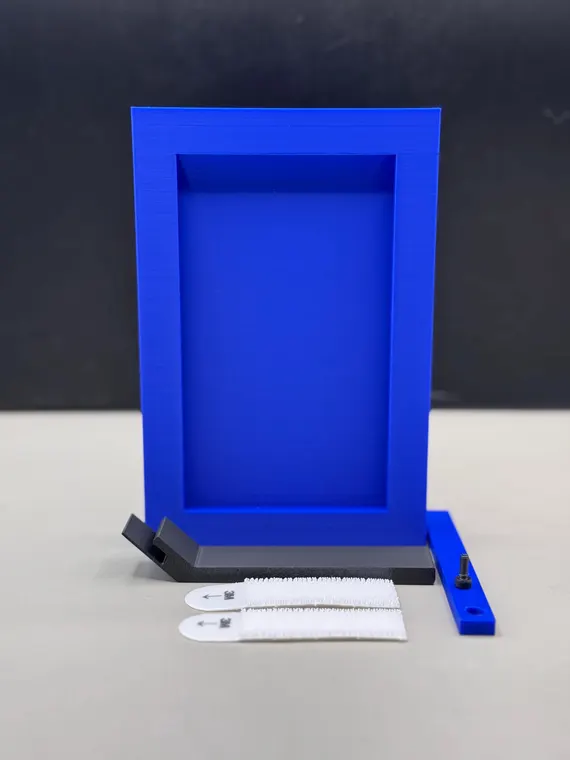
3D-printed and adjustable PSA slab mounts designed for both wall and desk display, ensuring full label visibility.
Pro Tip: Place your desk stand 18–24 inches from your primary seating position. This distance allows natural eye movement between monitor and card without neck strain.
4. UV Protection: The Invisible Shield
Your desk is probably near a window. Or under overhead fluorescent lights. Or bathed in the blue glow of multiple monitors. All of these light sources emit UV radiation that fades card artwork and yellows slab labels over time.
A desk stand without UV protection is like a frame without glass—it looks fine until it doesn't.
UV Protection Standards:
| Protection Level | UV Blocked | Desk Suitability |
|---|---|---|
| < 50% | Minimal | Not acceptable for graded cards |
| 66–80% | Partial | Temporary display only |
| 95–98% | Good | Moderate-value collections |
| 99%+ | Museum-grade | Essential for daily grails |
Kaapai Standard: All our single-slab desk stands feature 99.6% UV-blocking cast acrylic shields — not surface coatings that wear off, but molecular-level UV inhibitors embedded during manufacturing. Your daily grail stays pristine even under constant desk lighting.
5. Material Quality: Cast Acrylic vs. Everything Else
The material of your desk stand determines both aesthetics and longevity.
| Material | Pros | Cons | Kaapai Verdict |
|---|---|---|---|
| Cast Acrylic | Crystal clarity, 99.6% UV block, shatter-resistant | Premium price | Gold standard |
| Extruded Acrylic | Cheaper, consistent thickness | Lower clarity, prone to scratching | Avoid for valuable cards |
| Polycarbonate | Impact-resistant, lightweight | Scratches easily, yellows over time | Not recommended |
| Glass | Scratch-resistant, premium feel | Heavy, dangerous if shattered | Use with caution |
| 3D-Printed Plastic | Customizable, affordable | Variable quality, may off-gas | Budget option only |
The Cast Acrylic Advantage: Cast acrylic transmits up to 92% of visible light while blocking 99.6% of UV radiation. It doesn't yellow, doesn't shatter, and maintains optical clarity for decades. When your daily grail sits behind cast acrylic, it looks like it's floating in air.
6. Design Aesthetics: The Stand Should Disappear
The best desk stand is the one you don't notice—until you look at the card.
Minimalist Design Principles:
-
Clear or neutral tones — Clear acrylic, black, white, or metallic finishes that don't compete with card artwork
-
Thin profiles — Slim edges that frame without overwhelming
-
Hidden hardware — No visible screws, clips, or brackets
-
Clean lines — Geometric simplicity that complements modern desk setups
Phantom Display's Ghost case exemplifies this philosophy: "a more architectural form factor, lower profile, distinctive edge design... the case itself recedes and the card takes over".
Kaapai Design: Our desk stands feature a "floating slab" aesthetic — the card appears to hover within a crystal-clear frame, with no visible supports or distracting elements. The base is solid aluminum in matte black or brushed silver, complementing any desk decor.
7. The Daily Grail Rotation System
One stand. Multiple cards. Here's how collectors use a single stand to showcase their entire "Starting Lineup" over time:
Weekly Rotation Schedule:
-
Monday: The motivator — your highest-grade card, the one that says "I can achieve anything"
-
Wednesday: The sentimental — your first graded slab, the origin story
-
Friday: The showpiece — your most valuable card, the crown jewel
Seasonal Rotation:
-
Sports season: Current star player's rookie card
-
Pokémon releases: Newest chase card or anniversary edition
-
Holidays: Themed cards (red/green borders for Christmas, patriotic for July 4th)
Pro Tip: Keep a small rotation log. Document which card was displayed when, and note any condition changes. This creates a valuable provenance record for high-value pieces.
8. Desk Setup Integration: Creating the Perfect Vignette
Your single card stand shouldn't exist in isolation. It should anchor a cohesive desk aesthetic.
The Collector's Desk Vignette:
Zone 1: The Stand (Center)
-
Positioned 18–24 inches from your primary viewing position
-
Slightly off-center to avoid direct monitor glare
-
At a height where the label is eye-level when seated
Zone 2: Accent Lighting (Above/Behind)
-
Small LED desk lamp angled at 30–45° to illuminate the card without glare
-
Neutral white 4000K–5000K for accurate color rendering
-
Dimmable for mood adjustment
Zone 3: Supporting Elements (Peripheral)
-
Small figurine or prop related to the card's theme
-
A mini easel with the card's story or acquisition date
-
Complementary color elements (team pennant, Pokémon plush, etc.)
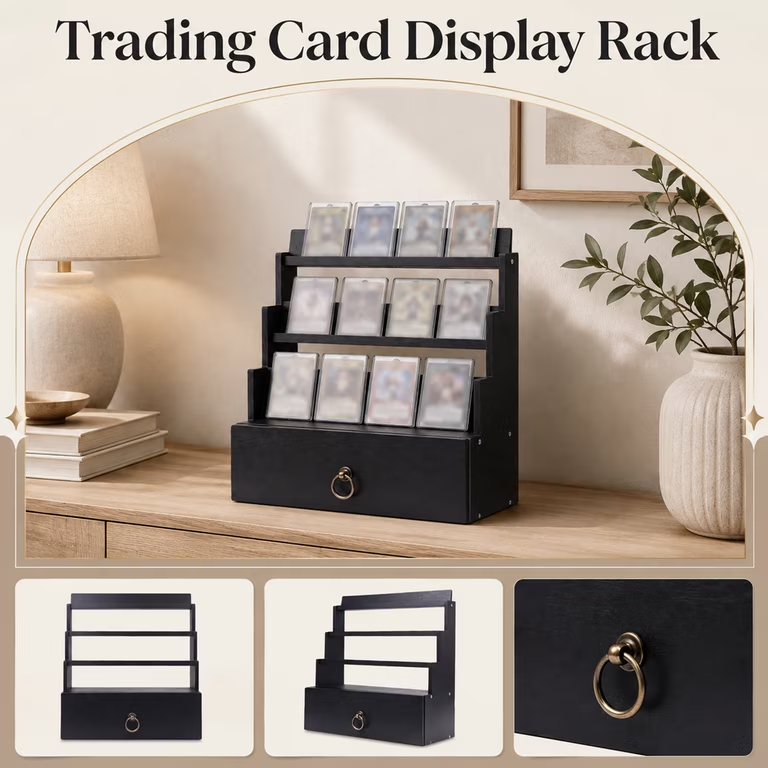
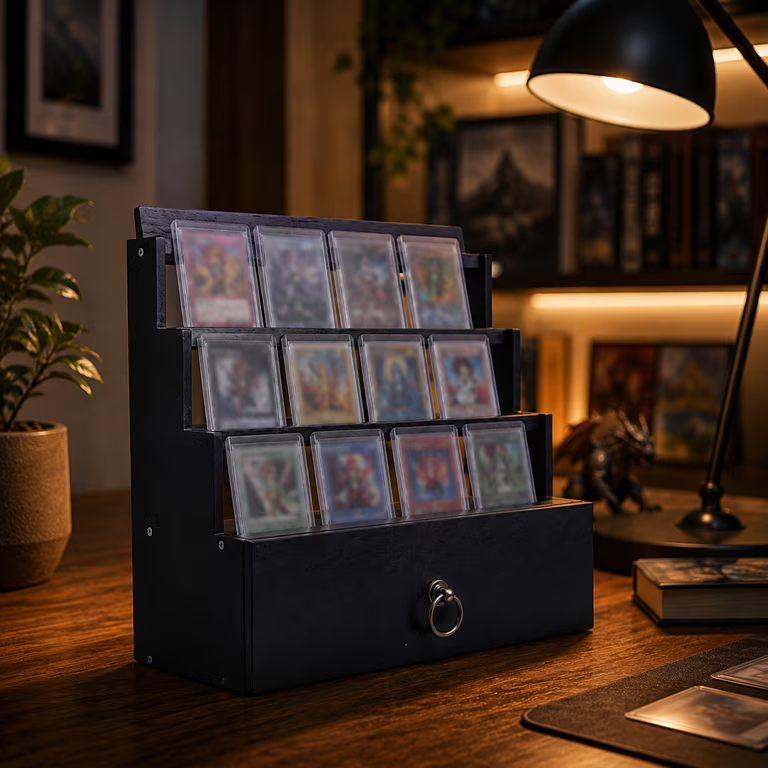
Wooden and acrylic multi-tier desk displays create sophisticated collector vignettes—ideal for rotating your daily grails.
9. Kaapai Single-Slab Desk Stand Product Line
| Product | Material | UV Block | Angle | Base | Best For |
|---|---|---|---|---|---|
| Essential Desk Stand | Cast acrylic + aluminum | 99.6% | 20° | Weighted, non-slip | Daily rotation, starter collections |
| Pro Desk Stand | Crystal acrylic + steel | 99.6% | 15° or 25° | Heavy-duty weighted | Permanent display, high-value cards |
| LED Desk Stand | Cast acrylic + aluminum | 99.6% | 20° | Weighted, with integrated LED base | Content creators, streamers |
| Minimalist Ghost Stand | Ultra-clear acrylic | 99.6% | 20° | Invisible acrylic base | Design-focused collectors |
Available on Shopify, Amazon, and directly at kaapai.com.
Final Thoughts: Your Desk, Your Story
The single graded card display stand in 2026 is more than a holder—it's a statement of intent. It says you value quality over quantity. It says your collection is curated, not hoarded. It says the journey matters as much as the destination.
Every morning, when you sit down at your desk and see that PSA 10 gleaming in its crystal-clear stand, you're not just looking at a card. You're looking at proof that patience pays off. That research matters. That the hunt is worth it.
Choose a stand worthy of that story.
Your daily grail deserves a throne, not a shelf.
Shop Kaapai Single-Slab Desk Stands → kaapai.com
Frequently Asked Questions (FAQ)
Q1: What's the ideal viewing angle for a desk card display stand?
A: 15–20° from vertical is the sweet spot for desk display. This angle shows both the card artwork and the grade label clearly from a seated position, while minimizing glare from overhead lighting. Steeper angles (25–30°) work well for standing desks or taller seating positions. Kaapai's Essential and Pro desk stands offer adjustable angle settings to match your specific setup.
Q2: Can I use a single desk stand for PSA, BGS, and CGC slabs?
A: Only if the stand has adjustable slot inserts. Standard single-width slots will leave BGS slabs loose (causing rattling and edge wear) or force CGC slabs to fit poorly. Kaapai's desk stands feature three-position adjustable EVA foam inserts that securely grip PSA (~3.5mm), BGS (~4.5mm), and CGC (~3.5mm variable) slabs without modification.
Q3: Do I really need UV protection for a desk stand?
A: Yes—especially for daily display. Desk environments expose cards to cumulative UV from overhead lighting, monitor glow, and nearby windows. Even low-level UV exposure adds up over months and years, causing irreversible fading and label yellowing. A 99.6% UV-blocking stand costs marginally more than an unprotected one but preserves your card's value indefinitely.
Q4: How do I prevent my desk stand from tipping over?
A: Look for stands with weighted metal bases (aluminum or steel), non-slip silicone feet, and a low center of gravity where the base is wider than the slab it holds. Avoid lightweight plastic easels that rely on friction alone. Kaapai's desk stands feature solid aluminum bases with integrated silicone pads, tested to resist tipping from typical desk bumps and vibrations.
Q5: Will the stand scratch my graded slab?
A: Not if you choose quality materials. Budget stands often use hard plastic or metal clips that contact the slab surface directly. Premium stands use soft EVA foam inserts or silicone grips that hold the slab securely without scratching. Kaapai stands use precision-molded foam that cradles the slab's edges only—zero contact with the front or back surfaces.
Q6: Can I use a desk stand for raw (ungraded) cards?
A: Most single-slab desk stands are designed for graded slab dimensions. Raw cards in toploaders are thinner and may tilt forward or sit loosely. For mixed collections, Kaapai offers adapter inserts that convert slab slots to toploader-compatible widths, allowing one stand to display both graded and raw cards securely.
Q7: What's the best way to light my desk card display?
A: Use a small LED desk lamp positioned at 30–45° above and slightly behind the stand. Neutral white 4000K–5000K LEDs provide accurate color rendering. Avoid direct overhead lighting that creates glare on the slab surface. Kaapai's LED Desk Stand includes a built-in, dimmable LED base that eliminates the need for external lighting while creating a stunning halo effect around the card.
Q8: How often should I rotate the card in my desk stand?
A: For preservation, rotate every 2–4 weeks to ensure even light exposure (if near a window) and to inspect for any environmental changes. For personal enjoyment, rotate as often as you like—many collectors use a weekly rotation system to showcase different cards from their PC (personal collection). The key is consistent handling with clean hands or cotton gloves.
Q9: Are magnetic desk stands safe for graded slabs?
A: Yes, if the magnets are properly shielded and positioned away from the card itself. N52 neodymium magnets used in premium stands are strong enough to create a secure closure but are housed in the base or frame, not near the card's magnetic stripe or holographic elements. Avoid stands with exposed magnets that could contact the slab surface. Kaapai's magnetic stands feature fully encapsulated magnets with no exposed metal.
Q10: Where can I buy Kaapai single-slab desk display stands?
A: Kaapai products are available on our Shopify store, Amazon, and directly through our DTC brand at kaapai.com. We offer worldwide shipping, a 30-day satisfaction guarantee, and a 1-year warranty against material defects, magnet failure, and structural issues. Contact our team for personalized recommendations based on your desk setup and collection type.